
 E-Paper



Woman can’t be ‘untouchable’ for 3 days a month: SC Justice Nagarathna on Sabarimala entry case
Govt counsel took exception to reasoning that the the exclusion of women in the age group of 10-50 years from the temple was a form of “untouchability”.

 Prefer HTon Google


A woman cannot be treated as “untouchable” for three days a month and then cease to be so on the fourth day, Supreme Court judge BV Nagarathna noted while hearing petitions related to discrimination against women at religious places.
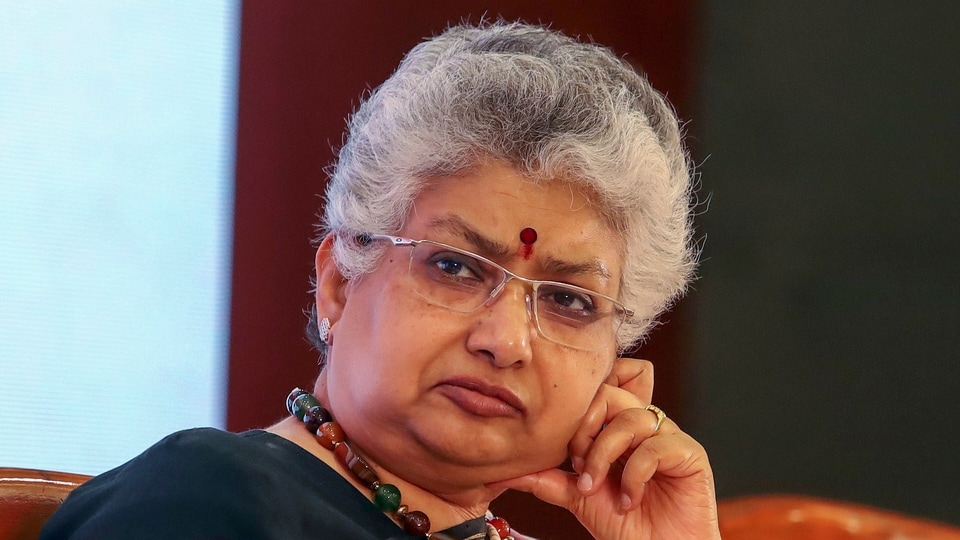
This included Sabarimala temple of Kerala, with petitions also raising questions on the ambit and scope of religious freedom practised by multiple faiths, news agency PTI reported on Tuesday.
Her reference was to the period of menstruation.
Justice Nagarathna is the lone woman on a nine-judge bench, which also comprises Chief Justice Surya Kant, and Justices MM Sundresh, Ahsanuddin Amanullah, Aravind Kumar, Augustine George Masih, Prasanna B Varale, R Mahadevan and Joymalya Bagchi.
Also Read | Question of faith beyond judicial review: Govt to Supreme Court on Sabarimala
What did Justice Nagarathna say?
Justice Nagarathna, while hearing the petitions, said, “Article 17 in the context of Sabarimala, I don't know how it can be argued. Speaking as a woman, there can't be a three-day untouchability every month, and on the fourth day, there is no untouchability.”
Justice Nagarathna was expressing doubts about the application of Article 17 in the case, saying it was made a fundamental right in the context of the long history of untouchability.
Justice Nagarathna made the remark when Solicitor General of India Tushar Mehta, appearing for the Centre, submitted that he has strong objection to an observation in the 2018 Sabarimala judgment.
He took exception to the reasoning the exclusion of women in the age group of 10-50 years from the temple was a form of “untouchability”, violating Article 17 of the Constitution, Live Law reported.
In the Sabarimala case, Justice DY Chandrachud had noted that the exclusion of women from entering the Kerala temple on the basis of age or menstrual status was a form of “untouchability”, putting them in a “subordinate” position. Chandrachud had further stated that this perpetuated “patriarchy” and was “derogatory” to the dignity of women.
Also Read | Just Like That: Sabarimala temple debate on faith, equality and path to reform
What did Solicitor General Tushar Mehta say?
Mehta submitted before court that India is not “patriarchal or gender stereotyped in the way that the West understands.” He said that that the bar on the entry of women in Sabarimala was not related to menstruation, adding that it was only on the basis of age group.
“Let us be clear. Sabarimala concerns only a particular age group. There should be no confusion. Lord Ayyappa temples across the country and the world are open to women of all ages. It is only one temple which has this restriction. It is a sui generis case,” PTI cited Mehta as saying. He further added, “I will defend Sabarimala in my own different way; it does not mean 4 days, it means a particular age group.”


