The Election Commission of India (ECI) on Saturday told the Supreme Court that no eligible voter in Bihar will be removed from the electoral rolls without prior notice, an opportunity to be heard and a reasoned order, stressing that “strict directions” have been issued to prevent wrongful deletions during the ongoing special intensive revision (SIR) in the state.
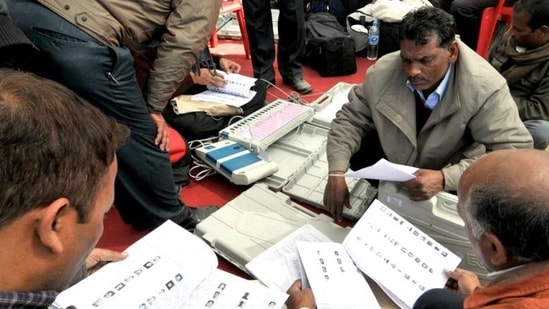
In an affidavit filed in response to an August 6 directive by a bench led by Justice Surya Kant, the Commission said it was “taking every possible step” to ensure that no legitimate elector is excluded from the rolls and outlined a ten-point verification and inclusion mechanism involving booth-level visits, political party participation, targeted awareness campaigns and special assistance for vulnerable groups.
The affidavit came in reply to allegations by NGO Association for Democratic Reforms (ADR) that over 65 lakh names had been deleted from Bihar’s draft electoral rolls without transparency and without disclosure of whether the deletions related to deceased persons, migrants, or other categories. The petitioners alleged that political parties had not been given full access to the draft lists, and that in many cases Booth Level Officers (BLOs) included or excluded names without proper verification of the 11 documents prescribed by ECI.
Rebutting all allegations, the Commission informed the court that the first stage of SIR had been completed and the draft rolls published on August 1 following house-to-house visits by BLOs to collect enumeration forms from existing electors. Lists of electors whose forms had not been received were shared with Booth Level Agents of recognised political parties on July 20 -- well before the draft publication, to allow corrective action. Updated lists were again given to political party representatives later in the process.
{{/usCountry}}Rebutting all allegations, the Commission informed the court that the first stage of SIR had been completed and the draft rolls published on August 1 following house-to-house visits by BLOs to collect enumeration forms from existing electors. Lists of electors whose forms had not been received were shared with Booth Level Agents of recognised political parties on July 20 -- well before the draft publication, to allow corrective action. Updated lists were again given to political party representatives later in the process.
{{/usCountry}}ECI said 7.24 crore of Bihar’s 7.89 crore electors submitted their forms during the drive, with the involvement of over 77,000 BLOs, 2.45 lakh volunteers, and 1.6 lakh party-appointed Booth Level Agents. It highlighted specific measures to avoid exclusions, including SMS campaigns, repeated BLO visits, and provision for any BLA to submit up to 50 forms daily; advertisements in 246 newspapers to reach temporary migrants; urban camps in all 261 urban local bodies; and advance enrolment drives for young voters turning 18 before October 1, 2025.
Special arrangements were made to assist senior citizens, persons with disabilities, and other vulnerable voters in obtaining necessary documents, the affidavit said. It added that any issue flagged through the media was promptly addressed by district officials. Printed and digital copies of the draft rolls have been provided to political parties, with online access for the public during the claims and objections period from August 1 to September 1.
The Commission underlined that “no deletion” from the draft rolls will be undertaken without prior notice to the elector specifying the grounds, a chance to respond and furnish documents, and a reasoned order by the competent authority. These safeguards, it said, are backed by a two-tier appeal mechanism under the Representation of the People Act, 1950.
On August 6, the top court directed ECI to file a “comprehensive reply” after ADR claimed the omissions were carried out without clarity or transparency. The court had reminded the Commission that the SIR must promote inclusion, not mass exclusion, and suggested treating Aadhaar and EPIC cards as having a “presumption of genuineness” to prevent disenfranchisement.
The petitions have also questioned whether ECI is empowered to conduct such a revision for verifying citizenship, arguing that this function rests with the Union government, and challenged the restrictive list of 11 documents demanded as proof of citizenship, saying it risks disenfranchising marginalised voters. The matter will be heard next on August 12.
SIR has become a major political flashpoint ahead of the Bihar assembly elections scheduled for later this year. Opposition parties in the INDIA bloc have staged protests in Parliament and written to Lok Sabha Speaker Om Birla seeking a special discussion on what they call an “unprecedented” revision so close to state polls. Eight parties, including Congress, RJD, Samajwadi Party, DMK, Trinamool Congress and Shiv Sena (UBT), have warned that the exercise could be replicated nationwide.
On Friday, Union home minister Amit Shah, addressing a rally in Bihar’s Sitamarhi, launched a sharp attack on Opposition leader Rahul Gandhi and the INDIA bloc, accusing them of opposing the revision because “names of infiltrators” were being removed from the lists. “Infiltrators have no right to vote. Names of infiltrators must be removed from the voters’ lists. But the Rashtriya Janata Dal and the Congress are opposing SIR in Bihar because the names of infiltrators are being deleted,” Shah said.
While the government has accused the Opposition of politicising electoral reforms, the Opposition contends that the SIR’s timing, methodology and documentation requirements threaten the fundamental right to vote of genuine electors, particularly among the poor, migrants, and minorities.
During an earlier hearing on July 10, a different bench of the apex court had framed three key legal questions for examination: Whether ECI has the authority to undertake a special revision exercise like the SIR; whether the manner in which the SIR is being conducted is legally valid; and whether the timing of the exercise, months ahead of the Bihar Assembly elections, is appropriate. The court had at the time noted that the issues “go to the root of the functioning of a democratic republic” and involve the citizens’ fundamental right to vote.