New Delhi: The Supreme Court on Thursday came down heavily on Noida-based drug maker Marion Biotech, whose cough syrups were linked to the deaths of 18 children in Uzbekistan in 2022, remarking that the company should have faced even graver charges “but for want of jurisdiction” and that the company had brought a “bad name to the country”.
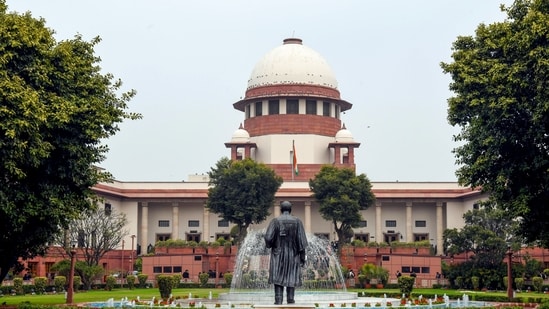
A bench of Chief Justice of India (CJI) Surya Kant and justices Joymalya Bagchi and Vipul M Pancholi dismissed a petition filed by the company and five of its officials, including directors, challenging summons issued to them in connection with alleged violations in drug manufacturing.
“Your syrup was found to be responsible for the death of children. You should be charged with murder too… but for the jurisdiction… go, appear before the authorities. You have been summoned. You must appear and answer. You do not deserve any indulgence,” the bench told the company’s counsel during the hearing.
The court added that appropriate provisions of the Indian Penal Code appeared to be “missing” in the prosecution. “We think the charges under the Indian Penal Code is missing. You should have also been summoned under the provisions of the penal code… So many children have died…Something like this brings a bad name to the country. You should be prosecuted under more stringent sections. We can add those provisions here if you are willing too much to press the petition here,” observed the bench, dismissing the petition.
With the Supreme Court now refusing to interfere, the company and its officials will have to appear before the trial court in Gautam Budh Nagar and face proceedings under the Drugs and Cosmetics Act — even as the top court signalled that the allegations may warrant far more stringent criminal scrutiny.
{{/usCountry}}With the Supreme Court now refusing to interfere, the company and its officials will have to appear before the trial court in Gautam Budh Nagar and face proceedings under the Drugs and Cosmetics Act — even as the top court signalled that the allegations may warrant far more stringent criminal scrutiny.
{{/usCountry}}The plea before the Supreme Court followed a January 14 judgment of the Allahabad High Court, which had rejected criminal revision petitions filed by officials and directors of Marion Biotech against summons issued by the Chief Judicial Magistrate (CJM), Gautam Budh Nagar.
The summons arose from from a complaint filed by a drugs inspector, invoking provisions of the Drugs and Cosmetics Act, 1940. The complaint alleged manufacture and sale of drugs declared “not of standard quality”, including offences relating to adulterated and spurious drugs, procedural non-compliance and vicarious liability of company officials under Section 34 of the Act. This followed after test analysis reports found certain samples manufactured by the company to be “not of standard quality”.
The Noida-based firm came under global scrutiny after the World Health Organization (WHO) issued a medical alert linking the deaths of 18 children in Uzbekistan to Marion Biotech’s Dok-1 Max and Ambronol cough syrups. The reports flagged the presence of ethylene glycol -- a toxic industrial chemical — in the formulations. Following the deaths, India’s health ministry suspended production at the company. Authorities in Uttar Pradesh later permanently cancelled its manufacturing licence.
In his January 14 ruling, Justice Harvir Singh of the high court held that there was no illegality in the magistrate’s summoning order. “It can further be seen that, by statutory provisions, those responsible for the company’s affairs i.e. directors, senior functionaries are within the sweep of Section 34 for offences committed under the Act, and they are wholly and fully responsible for conduct of the business of the company and mere statement that the directors of the company have nothing to do with the business of the company and the day to day working, leads nowhere,” the judge said.
The high court rejected the argument that the complaint lacked specific averments showing that the directors were in charge of and responsible for the company’s business at the relevant time.
“Having considered the entire facts and circumstances of the case and the law, as laid down by the Supreme Court and the high courts, the case of the revisionists is different, and the facts and grounds raised in the revision are mere technicalities, and no glaring mistake or gross irregularity has been noted in the summoning order,” the high court held. It further observed that the accused would have “ample opportunity” to contest the allegations at the stage of framing of charges, which was yet to come.
The prosecution case alleges that ethylene glycol, which is a toxic chemical used in industrial products and not meant to be present beyond specified limits in medicines, was used in the manufacture of the cough syrups. According to submissions recorded before the high court, the applicable British Pharmacopoeia 2020, in force at the time of manufacture in September 2021, prohibited such contamination.