"Hope it doesn’t rain in Harsil when we’re there,” I told my Garhwali friend who had suggested this picturesque spot in the Himalayas as a break from Delhi’s heat. My suspicion was based on a previous experience of a trip to Mana (a village close to Badrinath) two years ago, when the erratic rains had forced us to stop for a day.
“This range is known for landslides,” I told a friend as the cab we hired from Uttarkashi to Harsil (9,000 feet above sea level) negotiated the perilous road. It was in August last year that a rescue operation was carried out in the area after the torrential rains.
In retrospect, it seems that my intuition sensed the impending doom, but as the rains welcomed us when we got off the train in Dehradun, one could hardly imagined what was to befall us later.
On June 15, the early morning rain cancelled our trekking plans to Saat-taal, a lake 3 km up from Dharali, where we were staying. Instead we walked down to Harsil, in the midst of the Bhagirathi valley and later went to Gangotri, 25 km away from Harsil... and the return journey was the beginning of the nightmare.
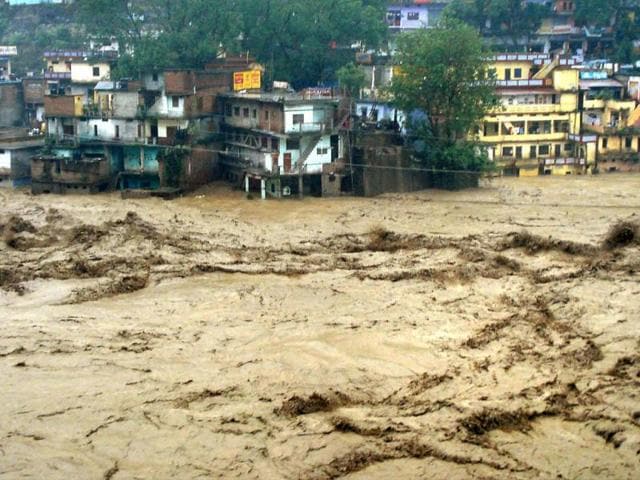
It rained non-stop for three days, isolating us as well as thousands of pilgrims for six days till we were airlifted by the Air Force. And what we saw on the night of June 16 in Dharali, when we should have been on the train to Delhi, was terrifying. Flood waters engulfed the hotel and threatened to wash us away into the Bhagirathi — at any moment, there was no place to run. Tons of silt and rubble were being brought down by the swirling water. All this was burying the vehicles which had become immovable as the road got cut-off on both sides.
{{/usCountry}}It rained non-stop for three days, isolating us as well as thousands of pilgrims for six days till we were airlifted by the Air Force. And what we saw on the night of June 16 in Dharali, when we should have been on the train to Delhi, was terrifying. Flood waters engulfed the hotel and threatened to wash us away into the Bhagirathi — at any moment, there was no place to run. Tons of silt and rubble were being brought down by the swirling water. All this was burying the vehicles which had become immovable as the road got cut-off on both sides.
{{/usCountry}}Several structures in the vicinity collapsed and there was no network to make that ‘last call’ to home. The experience was turning out to be a nightmare. But we were lucky — unlike those in the Kedarnath valley a few kilometres across the mountains, where nature’s fury was worse.
Next morning, the sight of the vehicles, the rubble, the faces of the pilgrims reflected the horror of the night before. It was perhaps the most gloomy day in Dharali. It would stop raining for a few minutes only to start pouring again. We tried to get some sleep at noon, but as luck would have it, the hotel owner and locals rushed to our room. Water had started flooding the hotels again. We managed to move to a safer place.
People went foraging for food — at a few restaurants that had managed to remain open. A hot daal-chawal meal infused energy to hope for things to get better.
It was around six in the evening on June 17 that it suddenly stopped raining. The moon was out, and the skies started to clear. “Jai Bholenath!” pilgrims proclaimed, and a sense of relief limped in.
However, my attempt to walk down to the Harsil Army camp to call home and inform them I was alive failed as the streams were still swelling dangerously. But I kept up hope that tomorrow would be a better day.
On the way back, the sight of the thousands of little stars that lit up the night sky seemed assuring too.