
 E-Paper



Battle for 311 seats: Will it be a BJP coup or Cong miracle?
Past the half-way mark, Elections 2014 now enters a politically-critical stage where the remaining four phases accounting for 311 seats will see polling in the most significant states with big players in the fray — their fates in the hands of 500 million voters.


Past the half-way mark, Elections 2014 now enters a politically-critical stage where the remaining four phases accounting for 311 seats will see polling in the most significant states with big players in the fray — their fates in the hands of 500 million voters.
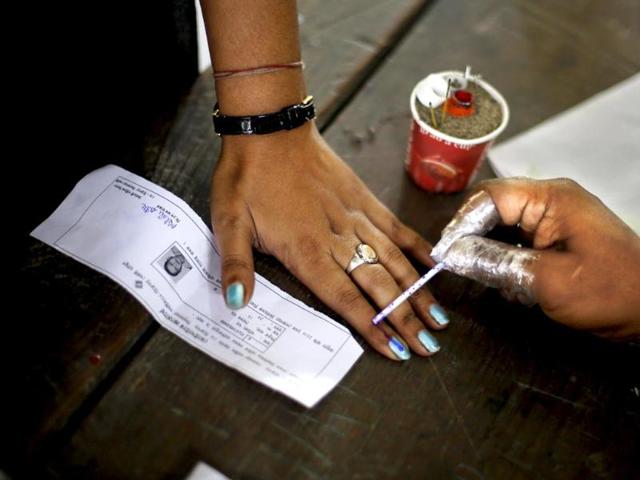
These 311 seats were a happy hunting ground for the Congress in 2009 when it bagged 109 compared to the BJP’s 57. This time around, they will be an acid test for the ‘Modi wave’ while the Congress has the tough task of preventing the saffron party from eating into its pie.
Large chunks (86 seats) of Uttar Pradesh and Bihar — the states together contribute a fifth (120) of the 543 Lok Sabha seats — will go to polls along with Narendra Modi’s home state of Gujarat and Punjab, where the Shromani Akali Dal, the BJP’s oldest ally, has been in power for eight years. Then there is Andhra Pradesh and Tamil Nadu, where the BJP is yet to open its account, and West Bengal, where party veteran-turned-rebel Jaswant Singh was its sole winner in 2009.
Read: Congress targets win at least 120 seats
Read:
Jagan’s YSR Cong says it’s open to working with Modi
In UP and Bihar, the BJP will hope to better its 2009 tally of 13 seats (out of 86). In Bihar’s 27 seats, set to go to polls the Congress-RJD combine is set to improve its tally of four. Pollsters, however, have predicted the Congress will be on the losing side in UP, where it had got 19 of the 59 segments that would go to polls.
These states are also set for some high-voltage campaigns with the three biggest players, Sonia Gandhi (Rae Bareli), Rahul Gandhi (Amethi) and Narendra Modi (Varanasi), facing the electorate on April 30, May 7 and May 12, respectively. Other prominent leaders in the fray include AAP’s Arvind Kejriwal (Varanasi), BJP’s LK Advani (Gandhinagar) and SP’s Mulayam Singh Yadav (Mainpuri and Azamgarh).
Modi’s bid for the PM’s chair may not take off without the BJP making deep inroads in the southern states of Andhra and Tamil Nadu. Traditionally, the BJP has had limited influence here, but is currently riding high on new-found alliances.
In Tamil Nadu, it has a rainbow alliance with five parties with a collective vote share of 20% in the 2009 polls and 22% in the 2011 assembly polls.
Read:There is just BJP wave in India, says Modi
Read:Rahul’s find in Tamil Nadu fights polls on people’s donations
In Telangana and Seemandhra, where parliamentary and assembly elections will he held simultaneously, the BJP is confident of victory in some seats thanks to its topsy-turvy alliance with Chandrababu Naidu’s TDP. But the BJP-TDP still has to overcome Jaganmohan Reddy’s confident YSR Congress. The alliance is looking to gain majorly in Seemandhra (25 LS seats) due to the anti-Congress sentiment but hasn’t lost hope in Telangana too, where it believes the Congress’ failure to tie up with the Telangana Rashtra Samithi may work to its advantage.
The Congress, which won 30 of the 42 seats in Andhra last time, is hoping for a face-saver in Telangana (17 seats).
A keen contest is on the cards in Punjab where the Congress won 8 of 13 seats in 2009 but lost the assembly polls to Parkash Singh Badal’s SAD. The Congress has fielded some of its top leaders, such as Ambika Soni and Amarinder Singh, to take on the BJP-SAD, which has fielded Arun Jaitley as Amarinder’s opponent in Amritsar.
The Big 2, however, will be relegated to the sidelines in Bengal, even though they have fielded candidates from most seats. The contest here is primarily between the Mamata Banerjee-ruled Trinamool Congress and CPM-led Left parties for 38 of the 42 seats that still have to vote.
The two hill states of Uttarakhand and Himachal Pradesh, where the Congress is facing infighting, and four seats in Jammu and Kashmir will also see poll action.
Also read:
Rahul slams Modi's 'toffee model' development
Have Modi, Jaya gone too far by attacking each other?
How 'apolitical' RSS fired up Modi campaign
Full coverage:My India My Vote


