Policemen in Srinagar have stopped stepping out in uniform to avoid being abused and stoned publicly, in the wake of the locals anger against the state.
“The state government has done nothing. Our chief minister has done nothing. It is the army and my local brothers who have come to our help. They must know that they can continue living in their glass palaces, oblivious to the problems of common people in the Valley, we brothers and sisters are enough for each other,” ranted Nilofar Sajjad, a resident of Jawahar Nagar.
The resentment against the state government is so high that those affected do not trust the chief minister Omar Abdullah with the relief aid. “We request those concerned that relief grant must not be handed over to the state government as we do not trust them.
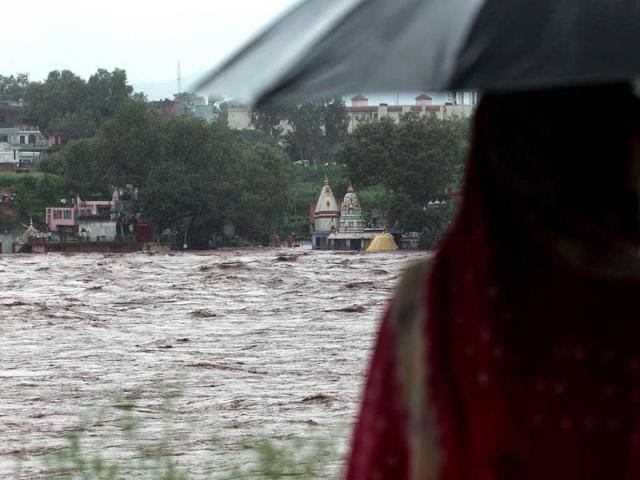
Those corrupt people will take it and nothing will reach those who need help,” said Gauhar Mir, a businessman. Jawahar Nagar is one of the worst affected neighbourhoods in the city, where flood waters have risen to the second floor of two-storeyed houses.
Sajjad was rescued from her flooded house by a National Disaster Response Force (NDRF) team on Wednesday morning.
“I have no clue where other people in my families are. Many houses in our neighbourhood have collapsed and I’m afraid there will be many people trapped under the debris that can be cleared only after the water has receded,” said Sajjad, who lives in a marriage hall converted into a relief camp near the Rawalpora Housing Colony area.
To help the Jammu and Kashmir government tide over the crisis, the Centre released instalments due to it next month. This included around `344 crore as Special Central Assistance and Rs. 174 crore as Non-Plan Revenue Deficit.
{{/usCountry}}To help the Jammu and Kashmir government tide over the crisis, the Centre released instalments due to it next month. This included around `344 crore as Special Central Assistance and Rs. 174 crore as Non-Plan Revenue Deficit.
{{/usCountry}}