Ibina Sohbar took over the coal business in 2006 after her husband's death. She owns a patch of land used as a coal depot in the market place of the Shallang area of Meghalaya's West Khasi Hills. She rents the patch out to other mine owners who use it as a dump for their extracted coal. Ibina also owns a few mine quarries. The money she has made from this micro coal empire has helped her support her family of 20. No wonder then that she is apprehensive of the consequences of the ban on coal mining in the state. While Ibina talks to us, at times comically, it is apparent she doesn't trust us. She repeatedly asks us if we are 'NGT', officials from the National Green Tribunal (NGT). On April 17, 2014, the NGT passed an interim order stopping mining and transportation of coal in the state. Almost a month later, on May 9, the mining ban was formally implemented by the state government. Nearly everyone in the coal belt curses the NGT. "If the ban isn't lifted we won't have anything to eat. Everything here comes from coal," Ibina says. Promise of black gold"It was as if a bomb blast had occurred and they shut the entire thing," remembers S Suchiang, village headman of Shangpung village in the West Jaintia Hills district. "They should have given us some time to look for an alternative means of livelihood. Even the transportation of the coal wasn't executed properly when they allowed us to transport the extracted coal."
Shangpung is a small village in the heavily-mined coal belt of the West Jaintia Hills. Almost everyone here owns a concrete house, beautifully constructed and painted in bright colours. It is difficult to miss the biggest building in the village that houses a church and a school. Maruti cars are ubiquitous and seem to be the preferred choice of personal transport. The money that the coal brought infused a new level of prosperity into the lives of locals. "We agree that the mountains have suffered a lot because of mining, but the situation is not as bad as they claim. It has been going on for around a century now. The pollution is more from the Assam side, from the Dimasa area. The dam on the river Kupli is getting affected by their mining. They mine coal right next to the river and dump the waste water directly into the river," says Suchiang. The NGT's order came after a petition was filed by the All Dimasa Students' Union (ADSU) from the Dima Hasao district in the neighbouring state of Assam. The ADSU petition contested that the mining in the coal belts and the coal stockpiles in the Jaintia Hills area were polluting streams and the rivers flowing into the Dima Hasao district. The student body's claim was based on a study conducted by OP Singh of the North Eastern Hills University (NEHU) in Shillong. The study tested the quality of water in the rivers in the Jaintia hills district to find that the high sulphur content of the coal in the region gets washed into the rivers, making the water acidic. The polluted streams and rivulets merge with the river Kupli which flows from Meghalaya to Assam's Dima Hasao district carrying the acidic water with it. The polluted water not only kills aquatic life, but also renders it unfit for drinking or agricultural use. Digging it DangerouslyIn its order, the NGT had questioned the manner in which the mining is conducted in the state and termed it unscientific and illegal. Meghalaya's mines, concentrated primarily in the Jaintia Hills, are commonly known as 'rat hole mines'. Large cranes are used to dig pits ranging from 100 to 300 feet into the hill until they hit the layer of coal. Labourers then crawl into the holes to dig out the coal. The pits have make-shift bamboo stairs for the labourers to use. Cranes then pull up barrows filled with coal from the tunnels. In the more 'traditional' mines, labourers carry the coal out on their backs in conical bamboo baskets. While the open cast mining done in Jharkhand, Chhattisgarh or Odisha destroys the hills entirely, rat hole mines leave the top cover of the hill intact. But conditions here are much more dire. Safety gear is not used and conditions inside the mines are dangerous. "Manmade pillars or payas are built to prevent the mines from caving in but quite often they collapse," says Elisa Manikken, project manager with Impulse, an NGO. The incident which set off the domino effect which led to the ban was the case of 15 coal miners being fatally trapped inside a mine in July 2012 in the South Garo Hills. Impulse NGO Network is one of the parties that had filed a PIL against illegal coal mining in the state. For the past eight years, they have been demanding an immediate shut down of mining activities which, according to their estimates, employed approximately 70,000 child labourers four years back. The coal seams below the ground vary from 8 inches to 3 ft in height, for which children are used to manually dig out the coal. The burrows are pitch-dark and the ground is slippery with constant water seepage. Stale toxic air makes it difficult to breathe inside.
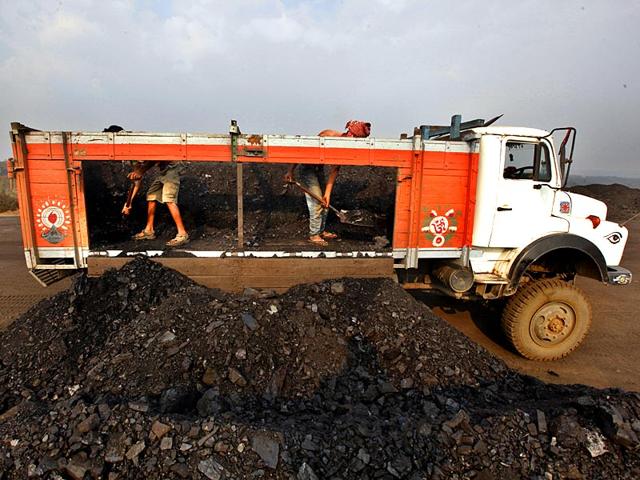
And then there is the environmental devastation. Toxic mine run-off, which has to be constantly pumped out, flows into the streams and rivers. This becomes a major concern during the monsoons. In December 2014, newspapers reported that two rivers flowing to Bangladesh from Meghalaya had turned blue, an annual occurrence apparently due to the high acid content in the water. The colour of the Lukha river in East Jaintia Hills district and Myntdu river in West Jaintia Hills district had changed to a bright sky blue. In its 2012 report, the Meghalaya State Pollution Control board blamed mine run-off and acidic effluents from the mines for this. HH Mohrmen, an environmental activist in Jowai, Meghalaya, has been voicing concerns about the deteriorating environment in the state. According to him, the first incidences of fish dying in the mountain streams were reported in late 1980s by locals living downstream of the river Myntdu. This was when commercial mining picked up in the Jaintia Hills district and spread across Meghalaya. Over the years mining increased in leaps and bounds and so did the acid content in water. The dam on the river Kupli at Umrangso, which gives electricity to Meghalaya and Assam, suffers as well. The water has changed the colour of its surroundings to bright rust, visible with the reduced water level in this season. At the 275MW hydro electric project run by the North East Electric Power Corporation Limited (NEEPCO), officials find it tough to counter the acidity in the reservoir. The government of Meghalaya has been informed of the acidic corrosion of metallic parts and the resultant frequent failures of underwater parts - first noticed in 2006 - but no action has been taken. "If the government is serious about it, all the materials to curb water pollution are available in the state. Limestone is widely used to neutralise the acidic effluent or Acid Mine Discharge from coal mines. Meghalaya is rich in limestone reserves, in a quantity much more than coal," says Mohrmen. Mining PowerThe lack of political will in implementing the state mining policy to check unregulated mining and environmental degradation can be linked to vested interests. In its order, the NGT says that 'by such illegal mining of coal neither the government nor the people of the country are benefited'. The truth is every aspect of life in Meghalaya, including politics, is linked to the coal trade. While declaring his assets ahead of the elections, Mukul Sangma, Meghalaya's chief minister, had mentioned owning several non-agricultural lands including coal mine quarries in West Khasi Hills district, estimatedly worth upwards of Rs 2 crore. His wife and daughter too own several mines. Mining in the region started with the advent of the British but took off commercially in the late 1980s. According to a mine owner it is easy for anyone to get into the coal business. "Businessman from outside the state, mostly Marwaris, finance you to start mining in return for a certain amount of coal. It's like a loan. So, any Tom, Dick and Harry can start if he can find a mine. All you need is a small investment and a lot of luck," he says. The money made from coal mining made it possible for coal barons in the state to kick start their political career. The Directorate of Mineral Resources (DMR) earned royalty at the rate of Rs 675 per metric tonne of coal. As per the 2010 DMR reports, 57 lakh metric tonnes of coal were sent out of the state. Of this, 37 lakh metric tonnes were from the Jaintia Hills alone. In a July 2014 parliamentary session, Vincent Pala, an MP from Meghalaya, mentioned that since the NGT ban on mining, many parents have had to sell their children to survive and that truck drivers and industrialist had stopped work. Pala owns 30 mines in the Sutnga area in the Jaintia Hills. The state faces a severe financial crunch because all along Meghalaya has been dependent on the royalty earned from coal mining. In February, Sangma had said that because the ban on mining, expected revenue generation in the state will go down by Rs 600 crore. A report in the local daily, The Shillong Times, in December last year, mentioned varied ramifications of the ban. The crime graph had spiked in the coal belt areas. It also reported closure of several privately-run schools, local cement factories were affected and a major paper mill in the Assam, Cachar Paper Mill located in Barak valley faces a threat of closure. Money from the coal trade not only gave power to the 'mafia', but also emboldened militants. Once a year before Christmas, mine owners have to pay protection money. For every truck of coal that went from the mine, militants would ask for Rs 15,000. They charged Rs 5000 for every entry door inside the mines. "Now, they have increased it to Rs 25,000 per truck and a flat Rs 50,000 for every mine dug. They charge Rs 3 lakh if machines are used. But you can negotiate with them," says the mine owner. He fears that if the ban continues more people might take up arms or get involved in smuggling coal. Considering the plea of the miners to allow the sale of already extracted coal, the NGT had ruled that all royalties from mining would go to the government which, in turn, would use this money for the rehabilitation of people and restoration of the environment. As indicated in the report, nearly 6.3 million tonnes of extracted coal valued at Rs 3078 crores is lying out in the open in Meghalaya. The royalty payable to the state in reference to the extracted coal would be approximately Rs 400 crores. Locals contest the survey done by the officials to reach the figures mentioned by the NGT. "A lot of money was expected but it hasn't reached the government because they [mine owners] keep asking for more time. So we gave them the option that in case they are not able to sell the extracted coal which is lying out in the open should be put back into the mines," says Makinen. The cost of prosperityHenry Lamin, in his book Pnar Economy and Society in Meghalaya (1995), observed that unlike tribals in other parts of India, the tribals of Meghalaya - the Jaintias in particular - didn't suffer from land alienation and exploitation from outsiders. While that may be true, trends reveal that poor people here too have lost their lands to rich local coal merchants or, as the NGT call them, the coal mafia. Any resource beneath the ground is considered public property but locals people believe that, because of the sixth schedule status of the state, they have exclusive access to these. The schedule also gives the community a right to distribute land to landless tribals. But the lure of coal has led to incidents of land grabbing in many parts of the state. Coal mining and the easy disposable income it brings has also hiked prices of essential commodities. "Children are sent to Delhi or Bangalore to study. Some even go to China and Russia to become doctors. Gambling, alcoholism and prostitution had increased in coal-trade towns like Lad Rymbai," says Dr JN Shullai who runs an organisation called Mih Myntdu Community Social Welfare Association in Jowai. The organisation runs a programs of targeted intervention among sex workers and community monitoring. "There has been a rise in domestic violence in the state. The number of single mothers is going up in the Jaintia communities. For every 1000 sex workers we work with, around 600 turn out to be single mothers," she says. Meghalaya follows a matrilineal system where family property is inherited from the mother by the youngest daughter. However, most of the coal businesses are owned and run by male members. Coal barons spend heavily on consumer goods, automobiles and also on property. All of this is at stake. At Phramer, on the road to Lad Rymbai from Jowai in Jaintia Hills district, people have stockpiles of coal in the depots, lying open on the roadside. The depot had workers, mostly women and children, who separated slate from coal, grinding it and mixing it with coal before the trucks take them away for sale. The labourers are all gone now. The local market which once was swarmed by people holds a deserted look. Shankar Sanuwar who has been working in the coal mines in Jaintia Hills since early 80s as a child labour laments the loss of livelihood. "We don't even have enough money to afford the fare back to our place. It's been around eight months since we received any payment," he says. The loss of livelihood is a major concern for the migrant population in the state which entirely depended on the mines. Now with the mines shut most have gone back but some still remain working in the illegally operated mines. Mine owners protest that similar unscientific mining goes on the Assam's side but the NGT didn't take an action against them. While others fear that once the scientific mining policy is imposed it'll weed out thousands of small players, only the rich politicians and businessmen will be able to tap the reserves left. "There is no doubt that people have lost their livelihoods but we might have also saved many lives," says Rosanna Lyngdoh, board director, Impulse. "People should see this ban as a wakeup call. There are alternatives to livelihood but not life. There is no alternative to the environmental damage. And what happens when the coal reserves finish?" Coal filesEstimates suggest that around 70,000 child labourers were employed in the 'rat hole' mines in the Jaintia Hills.Government of Meghalaya estimates that coal reserves in the state are around 576 million tonnes.Over 57 million tonnes of coal were dispatched from the state in 2009-2010, according to the last updated figure by the Directorate of Mineral Resources in Meghalaya.Last month, CM Mukul Sangma had said that the expected revenue realisation of the state has gone down substantially by Rs 600 crores.
{{/usCountry}}And then there is the environmental devastation. Toxic mine run-off, which has to be constantly pumped out, flows into the streams and rivers. This becomes a major concern during the monsoons. In December 2014, newspapers reported that two rivers flowing to Bangladesh from Meghalaya had turned blue, an annual occurrence apparently due to the high acid content in the water. The colour of the Lukha river in East Jaintia Hills district and Myntdu river in West Jaintia Hills district had changed to a bright sky blue. In its 2012 report, the Meghalaya State Pollution Control board blamed mine run-off and acidic effluents from the mines for this. HH Mohrmen, an environmental activist in Jowai, Meghalaya, has been voicing concerns about the deteriorating environment in the state. According to him, the first incidences of fish dying in the mountain streams were reported in late 1980s by locals living downstream of the river Myntdu. This was when commercial mining picked up in the Jaintia Hills district and spread across Meghalaya. Over the years mining increased in leaps and bounds and so did the acid content in water. The dam on the river Kupli at Umrangso, which gives electricity to Meghalaya and Assam, suffers as well. The water has changed the colour of its surroundings to bright rust, visible with the reduced water level in this season. At the 275MW hydro electric project run by the North East Electric Power Corporation Limited (NEEPCO), officials find it tough to counter the acidity in the reservoir. The government of Meghalaya has been informed of the acidic corrosion of metallic parts and the resultant frequent failures of underwater parts - first noticed in 2006 - but no action has been taken. "If the government is serious about it, all the materials to curb water pollution are available in the state. Limestone is widely used to neutralise the acidic effluent or Acid Mine Discharge from coal mines. Meghalaya is rich in limestone reserves, in a quantity much more than coal," says Mohrmen. Mining PowerThe lack of political will in implementing the state mining policy to check unregulated mining and environmental degradation can be linked to vested interests. In its order, the NGT says that 'by such illegal mining of coal neither the government nor the people of the country are benefited'. The truth is every aspect of life in Meghalaya, including politics, is linked to the coal trade. While declaring his assets ahead of the elections, Mukul Sangma, Meghalaya's chief minister, had mentioned owning several non-agricultural lands including coal mine quarries in West Khasi Hills district, estimatedly worth upwards of Rs 2 crore. His wife and daughter too own several mines. Mining in the region started with the advent of the British but took off commercially in the late 1980s. According to a mine owner it is easy for anyone to get into the coal business. "Businessman from outside the state, mostly Marwaris, finance you to start mining in return for a certain amount of coal. It's like a loan. So, any Tom, Dick and Harry can start if he can find a mine. All you need is a small investment and a lot of luck," he says. The money made from coal mining made it possible for coal barons in the state to kick start their political career. The Directorate of Mineral Resources (DMR) earned royalty at the rate of Rs 675 per metric tonne of coal. As per the 2010 DMR reports, 57 lakh metric tonnes of coal were sent out of the state. Of this, 37 lakh metric tonnes were from the Jaintia Hills alone. In a July 2014 parliamentary session, Vincent Pala, an MP from Meghalaya, mentioned that since the NGT ban on mining, many parents have had to sell their children to survive and that truck drivers and industrialist had stopped work. Pala owns 30 mines in the Sutnga area in the Jaintia Hills. The state faces a severe financial crunch because all along Meghalaya has been dependent on the royalty earned from coal mining. In February, Sangma had said that because the ban on mining, expected revenue generation in the state will go down by Rs 600 crore. A report in the local daily, The Shillong Times, in December last year, mentioned varied ramifications of the ban. The crime graph had spiked in the coal belt areas. It also reported closure of several privately-run schools, local cement factories were affected and a major paper mill in the Assam, Cachar Paper Mill located in Barak valley faces a threat of closure. Money from the coal trade not only gave power to the 'mafia', but also emboldened militants. Once a year before Christmas, mine owners have to pay protection money. For every truck of coal that went from the mine, militants would ask for Rs 15,000. They charged Rs 5000 for every entry door inside the mines. "Now, they have increased it to Rs 25,000 per truck and a flat Rs 50,000 for every mine dug. They charge Rs 3 lakh if machines are used. But you can negotiate with them," says the mine owner. He fears that if the ban continues more people might take up arms or get involved in smuggling coal. Considering the plea of the miners to allow the sale of already extracted coal, the NGT had ruled that all royalties from mining would go to the government which, in turn, would use this money for the rehabilitation of people and restoration of the environment. As indicated in the report, nearly 6.3 million tonnes of extracted coal valued at Rs 3078 crores is lying out in the open in Meghalaya. The royalty payable to the state in reference to the extracted coal would be approximately Rs 400 crores. Locals contest the survey done by the officials to reach the figures mentioned by the NGT. "A lot of money was expected but it hasn't reached the government because they [mine owners] keep asking for more time. So we gave them the option that in case they are not able to sell the extracted coal which is lying out in the open should be put back into the mines," says Makinen. The cost of prosperityHenry Lamin, in his book Pnar Economy and Society in Meghalaya (1995), observed that unlike tribals in other parts of India, the tribals of Meghalaya - the Jaintias in particular - didn't suffer from land alienation and exploitation from outsiders. While that may be true, trends reveal that poor people here too have lost their lands to rich local coal merchants or, as the NGT call them, the coal mafia. Any resource beneath the ground is considered public property but locals people believe that, because of the sixth schedule status of the state, they have exclusive access to these. The schedule also gives the community a right to distribute land to landless tribals. But the lure of coal has led to incidents of land grabbing in many parts of the state. Coal mining and the easy disposable income it brings has also hiked prices of essential commodities. "Children are sent to Delhi or Bangalore to study. Some even go to China and Russia to become doctors. Gambling, alcoholism and prostitution had increased in coal-trade towns like Lad Rymbai," says Dr JN Shullai who runs an organisation called Mih Myntdu Community Social Welfare Association in Jowai. The organisation runs a programs of targeted intervention among sex workers and community monitoring. "There has been a rise in domestic violence in the state. The number of single mothers is going up in the Jaintia communities. For every 1000 sex workers we work with, around 600 turn out to be single mothers," she says. Meghalaya follows a matrilineal system where family property is inherited from the mother by the youngest daughter. However, most of the coal businesses are owned and run by male members. Coal barons spend heavily on consumer goods, automobiles and also on property. All of this is at stake. At Phramer, on the road to Lad Rymbai from Jowai in Jaintia Hills district, people have stockpiles of coal in the depots, lying open on the roadside. The depot had workers, mostly women and children, who separated slate from coal, grinding it and mixing it with coal before the trucks take them away for sale. The labourers are all gone now. The local market which once was swarmed by people holds a deserted look. Shankar Sanuwar who has been working in the coal mines in Jaintia Hills since early 80s as a child labour laments the loss of livelihood. "We don't even have enough money to afford the fare back to our place. It's been around eight months since we received any payment," he says. The loss of livelihood is a major concern for the migrant population in the state which entirely depended on the mines. Now with the mines shut most have gone back but some still remain working in the illegally operated mines. Mine owners protest that similar unscientific mining goes on the Assam's side but the NGT didn't take an action against them. While others fear that once the scientific mining policy is imposed it'll weed out thousands of small players, only the rich politicians and businessmen will be able to tap the reserves left. "There is no doubt that people have lost their livelihoods but we might have also saved many lives," says Rosanna Lyngdoh, board director, Impulse. "People should see this ban as a wakeup call. There are alternatives to livelihood but not life. There is no alternative to the environmental damage. And what happens when the coal reserves finish?" Coal filesEstimates suggest that around 70,000 child labourers were employed in the 'rat hole' mines in the Jaintia Hills.Government of Meghalaya estimates that coal reserves in the state are around 576 million tonnes.Over 57 million tonnes of coal were dispatched from the state in 2009-2010, according to the last updated figure by the Directorate of Mineral Resources in Meghalaya.Last month, CM Mukul Sangma had said that the expected revenue realisation of the state has gone down substantially by Rs 600 crores.
{{/usCountry}}