Eye on China, green rules eased for border projects
Defence projects coming up within 100km of the border with China will no longer require the approval of the central environment ministry, the government said on Thursday.
Defence projects coming up within 100km of the border with China will no longer require the approval of the central environment ministry, the government said on Thursday, virtually clearing the way for dozens of strategic infrastructure plans languishing for years.
{{^htLoading}} {{/htLoading}}
Coming at a time when China has sought to reach out to India’s new Prime Minister Narendra Modi, the move is likely to rile Beijing which in the past has bristled at any suggestion of New Delhi trying to bolster its border infrastructure.
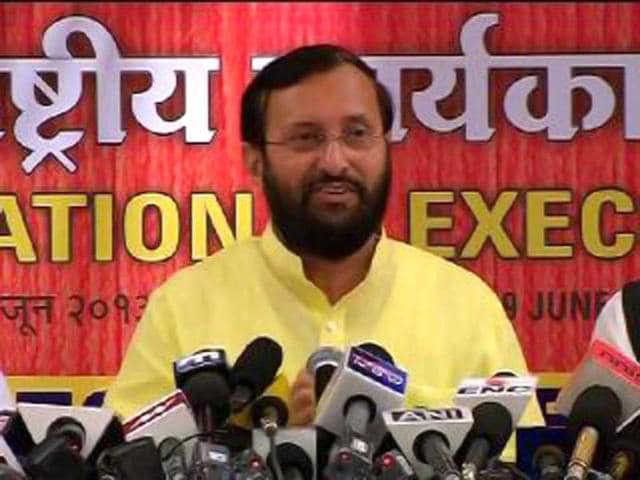
The new policy will be rolled out soon, Union environment minister Prakash Javadekar said. Under the policy, the defence ministry will just have to get the nod of the concerned state government where it is planning projects, stripping away many layers of bureaucratic hurdles.
"Today we met with defence ministry officials at their requests because lot of their projects were held up and were getting delayed approval,” Javadekar said.
“The issue was how to ensure that there won't be delay. The answer is policy-based decision.”
{{^htLoading}} {{/htLoading}}
{{^usCountry}}
India shares a 4,056-km border with China – stretches of which are disputed – straddling the five states of Jammu and Kashmir, Uttarakhand, Himachal Pradesh, Arunachal Pradesh and Sikkim.
{{/usCountry}}
{{#usCountry}}
India shares a 4,056-km border with China – stretches of which are disputed – straddling the five states of Jammu and Kashmir, Uttarakhand, Himachal Pradesh, Arunachal Pradesh and Sikkim.
{{/usCountry}}
Most of India’s border states are a picture of neglect, where strategic infrastructure projects have for years been caught up in bureaucratic red tape and stringent environment laws.
For instance, Arunachal Pradesh, a territory that China claims as its own, still has no airport, the power supply is erratic and telecommunications are far from reliable.
That is in sharp contrast to the modern infrastructure on the other side of the border. China's five highways running to the frontier, backed by railway and modern telecommunications networks provide Beijing the capability to mobilise troops and equipment within hours.
{{^htLoading}} {{/htLoading}}
Distrust lingers between the two economic powerhouses, although ties have eased over strong bilateral trade.
"Delays in defence projects were due to the case-by-case decision-making process,” Javadekar tweeted, referring to the existing method for giving approvals for projects.
"Instead of case-by-case delayed method of approval, we'r making simpler, transparent & predictable process of approvals," the Minister said.
Javadekar said he will discuss the matter with Prime Minister Modi and Defence Minister Arun Jaitley and "the government will have that policy in place so that the clearances will be more on fast-track without compromising the environmental issues".
Earlier in the month, the government granted clearance to a radar station at Narcondam in Andaman and Nicobar Islands, an eco-sensitive zone, and a naval base in Karwar, Karnataka.
{{^htLoading}} {{/htLoading}}
India also wants to build more than 50 new paramilitary outposts along the international border in Arunachal Pradesh, as part of plans to improve border management along a stretch that remains prone to occasional incursions by Chinese troops.
Chetan Chauhan is the National Affairs Editor looking into all aspects of news and features from across India. A Chevening scholar with over three decades of experience in reporting and news management, Chetan has extensively covered all important aspects of the social sector, political economy, environment and climate change nationally and internationally. He did a journalism course at the Reuters Institute of Journalism in Oxford and Digital Media training at Nanyang Technological University in Singapore. He started as a reporter with The Statesman in 1996 and joined the Hindustan Times in 2000 in the metro bureau covering environment, crime and Delhi politics. He covered hot local news, from the Jessica Lal murder case to the rebellion of Delhi Congress MLAs against then Chief Minister Sheila Dikshit, to the replacement of toxic vehicle fuel with cleaner compressed natural gas (CNG) in the national capital. Some of his stories on air pollution became part of the Supreme Court’s landmark MC Mehta versus Government of India case in the National Capital Region (NCR), forcing the government to take corrective measures. As part of the national political bureau since 2004, he covered important central sectors such as environment, education, social justice, labour, rural development, water resources, renewable energy, agriculture, broadcasting and the Planning Commission for more than a decade producing several exclusive and investigative breaking stories. His specialisation is the environment, having covered at least a dozen United Nations global conferences on climate change, biodiversity and wildlife including climate summits in Paris, Copenhagen and Bali. He also covered India’s two five-year plans ---11th and 12th and reported on drafting and execution of right based laws such as Right to Education, Right to Information and rural job guarantee law, MG-NREGA, now being introduced in new format as VG-RAM-G Act. He has in-depth knowledge of social sector issues. He was one of the first to report on tigers vanishing from Sariska and Panna wildlife reserves in 2004 and 2008, respectively, leading to the setting up of the National Tiger Conservation Authority (NTCA) and the introduction of stringent penal provisions for poaching. He has written extensively on the rising human-animal conflict in India and the degradation of India’s biodiversity hotspots because of mining and other activities. Since 2004, Chetan has covered Parliament comprehensively and participated in training on the nuanced coverage of Parliament proceedings. He has travelled extensively across India to cover national and provincial elections since 1998, especially in the Hindi heartland states, considered India’s road to power. He writes a regular column for Hindustan Times, Ecostani, on important national politics, economy, Himalayan ecology and environmental issues. His other responsibilities include providing inputs for edits and edit page articles for the publication, apart from managing news flow from across India.