Largely flat food production this year is expected to keep pulses expensive, prompting the government to take a slew of steps aimed at taming prices.
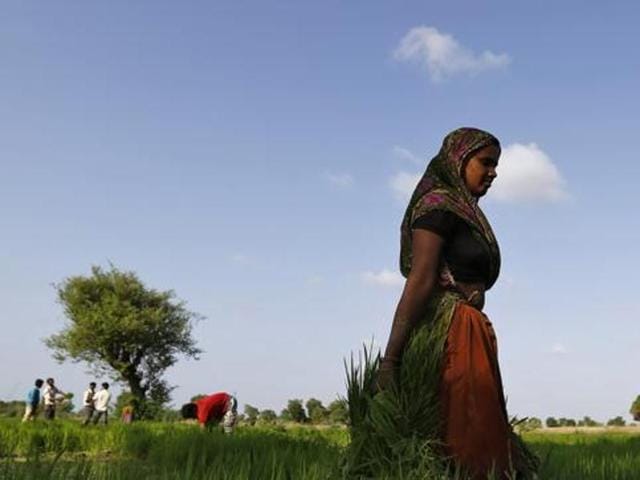
There is a widening demand-supply deficit of one of the commonest protein-rich items on an average Indian’s plate. As overall wholesale prices began picking up in April for the first time after 17 months, pulses could stoke household budgets this summer. In April, retail prices of pulses rose 37%.
Prices were consistently high in the months until March, though the country saw overall wholesale prices progressively dip, a phenomenon economists call deflation. While prices of nearly all food articles have been declined, inflation in pulses has seen the sharpest spiral in a decade. The farm ministry’s third of the four annual projections of food production shows a back-to-back drought will crimp output of rice, coarse cereals and pulses. Overall, foodgrain production is pegged at 252.23 million tonnes for 2015-16 as against 252.02 million tonnes in the previous year. This is below the peak achieved in previous years. The flattening trend is mainly because of the drought.
The only crop likely to register an increase in output is wheat at 94.04 million tonnes in 2015-16 compared to 86.53 million tonnes in the previous year. Rice output is estimated to decline to 103.36 million tonnes from 105.48 million tonnes, while that of coarse cereals is likely to drop to 37.78 million tonnes from 42.86 million tonnes in the same period.
A surplus of cereals will offset any reduced output in grains. However, pulses present a different story. Lentils are widely consumed and more expensive. Pulses and oilseeds are the only two food commodities in which India isn’t self-sufficient and depends on costly imports to meet demand. Output of pulses is estimated to decline to 17.06 million tonnes in 2015-16 from 17.15 million tonnes last year. But that is short of the 27 million tonnes needed. “Over time, supply of pulses has failed to catch up with demand. Production remained stagnant for nearly seven years since 2004, while demand accelerated, causing per-capita availability to decline and prices to spiral,” said Dharmakirti Joshi, chief economist at CRISIL, a ratings firm.
{{/usCountry}}A surplus of cereals will offset any reduced output in grains. However, pulses present a different story. Lentils are widely consumed and more expensive. Pulses and oilseeds are the only two food commodities in which India isn’t self-sufficient and depends on costly imports to meet demand. Output of pulses is estimated to decline to 17.06 million tonnes in 2015-16 from 17.15 million tonnes last year. But that is short of the 27 million tonnes needed. “Over time, supply of pulses has failed to catch up with demand. Production remained stagnant for nearly seven years since 2004, while demand accelerated, causing per-capita availability to decline and prices to spiral,” said Dharmakirti Joshi, chief economist at CRISIL, a ratings firm.
{{/usCountry}}