The government is working on a concept paper to raise a new cadre of spies, the first attempt at restructuring the security architecture since 1968, when the external intelligence agency Research and Analysis Wing (R&AW) was carved out of the Intelligence Bureau (IB).
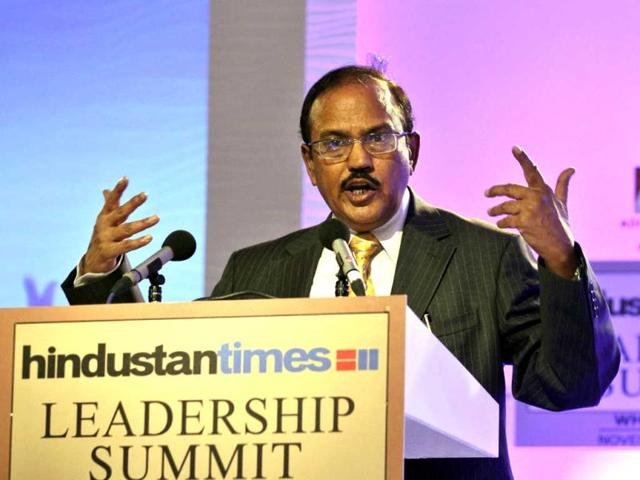
Government sources told HT that the idea was mooted by National Security Adviser AK Doval after discussions with Prime Minister Narendra Modi. The Department of Personnel and Training was initially tasked with writing the policy paper but it has now been shifted to the National Security Council Secretariat (NSCS) that is directly under the Prime Minister’s Office.
“The work is at a preliminary stage but we are examining the feasibility of a specialist service that will feed all three intelligence agencies,” a source familiar with the draft told HT.
The idea to have a dedicated cadre has been borrowed from Western countries like the US, where the Central Intelligence Agency and the National Security Agency draw their resources directly from the open market. The Secret Intelligence Service, popularly known as the MI6, in the UK, also recruits talent from the open market. These agencies pick up recruits with special skills and expertise to ensure they have the best talent.
The government is hoping the new cadre will help deal with the challenges technology is posing to the current crop of intelligence officials. After the terrorist attack on Mumbai on 26/11 Indian intelligence agencies have been looking at ways to deal with technological challenges. From working on cyber security to analysing big data, are some of the challenges that they have grappled with to keep up with its counter terrorism efforts.
The government is hoping the new cadre will help deal with the challenges technology is posing to the current crop of intelligence officials. After the terrorist attack on Mumbai on 26/11 Indian intelligence agencies have been looking at ways to deal with technological challenges. From working on cyber security to analysing big data, are some of the challenges that they have grappled with to keep up with its counter terrorism efforts.
Clearly, the NSCS has its task cut out, as recruitment has been a prickly subject for the Indian intelligence community.
Ram Nath Kao created the R&AW with the support of the then prime minister Indira Gandhi to raise a new cadre of spies drawn from the government and the open market, a pool of the best talent available. His vision produced the Research and Analysis Service (RAS) that began to staff R&AW but was in constant turf battles with other services.
“It was noticed that those being drawn in from other services like the Indian Police Service (IPS) would have an option of going back to their parent cadres. But the RAS had no such option and this created anomalies in career progression,” a former R&AW chief told HT.
IPS officers make up the top ranks of the agency, but those who are recruited directly retire at junior ranks. The last time the R&AW had a non-IPS chief was in 2003, when Vikram Sood, originally from the postal service, retired.
The move has expectedly raised eyebrows, particularly among the intelligence professionals who are from the police service, but have the support of those who joined the service directly. The IPS has traditionally enjoyed a dominant position in the Indian intelligence community. Chances are that the biggest opposition to this move is likely to come from these quarters.
“There is a significant difference between policing and intelligence and it is time we embraced a more plural character within the intelligence community,” a senior security official said.