Some budgets need to stand out from the crowd. For Pranab Mukherjee, this one could have. India’s economy needed an overhaul after sputtering over haywire prices. Mr Mukherjee’s Budget for 2012-13 does identify the kinks that need straightening, but leaves it at that. The reforms that litter his speech are all work in progress: tax simplification, easier entry for foreign capital, imp-roving welfare delivery. But big measures to tame structural food inflation caused by farm supply bottlenecks and suppressed energy inflation created by subsidising transport and cooking fuels remain tantalisingly out of reach. The UPA’s experiences over the last 12 months would have daunted the zeal of even the most-intre-pid reformer. Yet this year presented a window of opportunity that is rapidly closing as the 2014 polls draw closer. Managing a restive alliance will consume more of the Congress’, and Mr Mukherjee’s, time next year and the year after that.
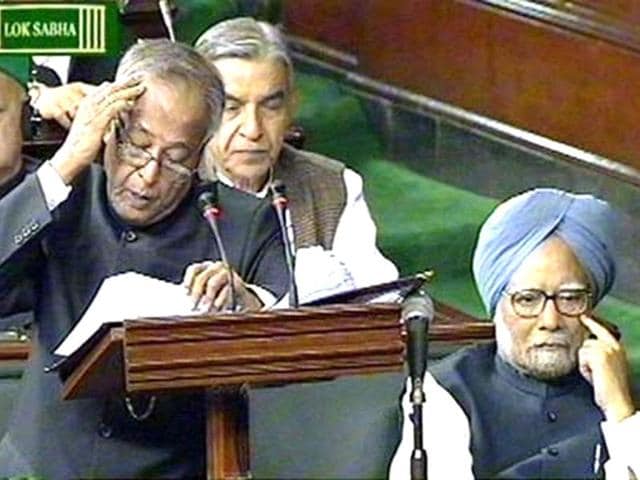
The burden of reform expectations on Mr Mukherjee may not have been too heavy this time around. What the economy needed more immediately was a firm hand on the fisc. Runaway government borrowing — pegged at R4.79 lakh crore next year — is choking India’s growth prospects and a credible intention to cut unproductive expenditure would have stoked the economic engine. Mr Mukherjee, however, chose to repeat a gamble he lost last year. After seeing the fiscal deficit slide from a budgeted 4.6% in 2011-12 to 5.9%, he promises to cap it at 5.1% in 2012-13 with little evidence of extra policy tools to intervene if oil prices play truant, or if western economies continue to languish. Subsidies, which ballooned 26% in 2011-12, are projected to come down to 1.9% of the GDP next year, despite provisioning for a new food bill, and to 1.6% of GDP by 2014-15. Slippage here, by the government’s admission, poses a significant risk to consolidation that anticipates the fiscal deficit will shrink to 3.9% of the GDP by 2014-15.
The government’s revenue projections are historically more realistic than its estimates of expenditure. Taxes yielded marginally less than expected even in a year when the fin-ance minister’s GDP growth assumption went wrong. The budget is pencilling in a modest recovery of 7.6% growth, and the hike in service tax and excise duty to 12% is likely to pull up the tax-GDP ratio next year to 10.6% after slipping to 10.1% in 2011-12. Mr Mukh-erjee has, presumably, factored in the damping effect of the tax hikes on consumption. The circumstances that put paid to plans to sell stakes in State-owned firms and auction natural resources are behind us, and capital receipts ought to hold up. A 13% rise in government spending is in line with trend rates of Mr Mukherjee’s previous Budgets for this government. A lot of things would need to go wrong for this year’s debacle to recur. Continuity is the hallmark of Mr Mukherjee’s Budget-making. A host of micro-tuning that has been on since 2009 is again on display this year. Align-ment of income-tax slabs to the proposed Direct Tax Code, a negative list for service tax, setting up the information technology backbone for a Goods and Services Tax and harmonisation of tax rates for goods and services are steps towards a new system that could form the UPA’s abiding reforms legacy. Expenditure reforms are inching along too. A separate capital component of revenue spending, rolling targets for expenditure indicators, and cuts in the number of central schemes help in tracking the use of funds better. The interventions for industries in distress like aviation and power, and an investor-friendly reduction in the Securities Transaction Tax, will spread cheer.
{{/usCountry}}The government’s revenue projections are historically more realistic than its estimates of expenditure. Taxes yielded marginally less than expected even in a year when the fin-ance minister’s GDP growth assumption went wrong. The budget is pencilling in a modest recovery of 7.6% growth, and the hike in service tax and excise duty to 12% is likely to pull up the tax-GDP ratio next year to 10.6% after slipping to 10.1% in 2011-12. Mr Mukh-erjee has, presumably, factored in the damping effect of the tax hikes on consumption. The circumstances that put paid to plans to sell stakes in State-owned firms and auction natural resources are behind us, and capital receipts ought to hold up. A 13% rise in government spending is in line with trend rates of Mr Mukherjee’s previous Budgets for this government. A lot of things would need to go wrong for this year’s debacle to recur. Continuity is the hallmark of Mr Mukherjee’s Budget-making. A host of micro-tuning that has been on since 2009 is again on display this year. Align-ment of income-tax slabs to the proposed Direct Tax Code, a negative list for service tax, setting up the information technology backbone for a Goods and Services Tax and harmonisation of tax rates for goods and services are steps towards a new system that could form the UPA’s abiding reforms legacy. Expenditure reforms are inching along too. A separate capital component of revenue spending, rolling targets for expenditure indicators, and cuts in the number of central schemes help in tracking the use of funds better. The interventions for industries in distress like aviation and power, and an investor-friendly reduction in the Securities Transaction Tax, will spread cheer.
{{/usCountry}}The initiatives to unearth black money, widen biometric identification of the poor for eventual cash transfers, and spur inclusive growth should dispel the impression of policy paralysis in the finance ministry at least. Mr Mukherjee’s meticulous attention to the minutae of administrative changes to bring the Indian economy closer to its potential has not flagged despite an extremely adverse political environment. A chance may have been missed for big-ticket economic reforms. But add up all the incremental changes over the years, and Mr Mukherjee will have left behind an enviable body of work as India’s finance minister.