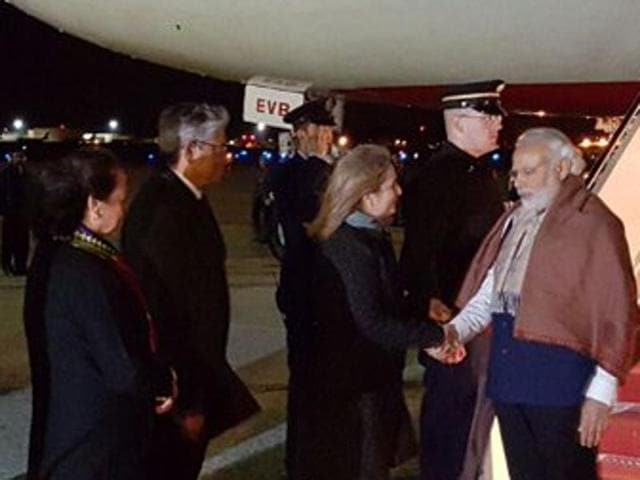
After a hectic one-day schedule in Brussels, Prime Minister Narendra Modi landed in Washington on Thursday to attend the fourth Nuclear Security Summit (NSS). To be held on March 31 and April 1, the summit will likely see discussions on measures to strengthen the global nuclear security architecture, especially to ensure that non-state actors do not get access to nuclear material, Modi said earlier.
Fifty-three nations and four international organisations will participate in the summit being hosted by US President Barack Obama.
Here’s a quick take before the NSS kicks off.
1) Why is there a summit
The possibility of terrorists using nuclear weapons, either by stealing or buying them, increasingly became a global obsession after the 9/11 attack that infamously demolished the Twin Towers in New York. Threats of nuclear terrorism seemed possible as there were many poorly guarded nuclear storage facilities and reactors, aside from radio active waste from hospitals. In 2010, Obama took the lead in organising a summit of key world leaders to come up with concrete action plans to address these concerns. The first nuclear security summit was held in Washington in March the same year.
Read more: Modi in Brussels: Define terrorism or UN may become irrelevant
{{/usCountry}}Read more: Modi in Brussels: Define terrorism or UN may become irrelevant
{{/usCountry}}2) Larger objective of the NSS
President Obama detailed a very ambitious plan at the outset – to secure all nuclear materials that can be used for weapons within four years.
In 2010, it was estimated that there was 2,100 tonnes of nuclear material that could make 120,000 bombs. Six years on, more than 1,800 tonnes of nuclear material remain stored in 24 countries, most of which are vulnerable to theft, according to former US senator Sam Nunn, co-chairman of the Nuclear Threat Initiative. Securing it remains a work still in progress.
Read more: India plays very important role in nuclear weapon stewardship: US
3) How the NSS effects change on the ground
Twelve countries have decreased their nuclear stockpiles in the last six years.They include the US, Russia and France, three of the world’s top nuclear powers. More than 300 seaports, airports and border crossing points have nuclear detention devices to prevent smuggling of nuclear materials.
4) Day 1 of the summit
The summit will begin with a leaders-only dinner at the White House on March 31. Leaders of the 53 countries and the four international organisations participating in the summit will share their assessments of the threat of nuclear terrorism. Prime Minister Narendra Modi is also expected to share India’s assessment of the threat.
5) On the agenda for day two
On April 1, there will be three plenary sessions. At the first session, there will be a focus on national actions to enhance nuclear security. The discussions at these summits are interactive, i.e., there will be no written or read out statements. India’s written National Progress Report will be circulated at the summit and the Prime Minister will intervene in this discussion. There are two more plenary sessions and a working lunch where various aspects of the nuclear safety will come up for discussion.
6) The hypothesis
The final plenary discussion at the summit will be a policy discussion on nuclear terrorism based on a hypothetical scenario. This will allow leaders to engage in a realistic conversation on the challenges posed by international terrorism, in particular the threat of nuclear and radiological terrorism.
Read | PM Modi arrives in US to attend Nuclear Security Summit