
 E-Paper



Polls ahead, don to 'godman' rush to form parties
In the run-up to the 2014 general elections, it’s party time in India. No fewer than 142 political parties have been registered in the past two months with godmen, builders, property dealers and retired bureaucrats driving the rush. Easy entry, free run


In the run-up to the 2014 general elections, it’s party time in India. No fewer than 142 political parties have been registered with the Election Commission in the past two months.
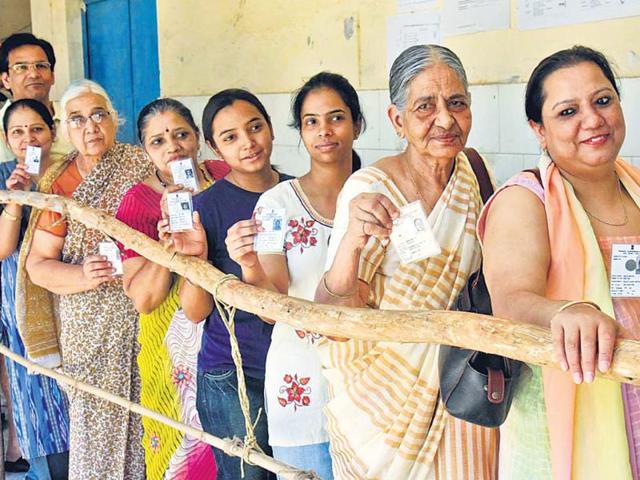
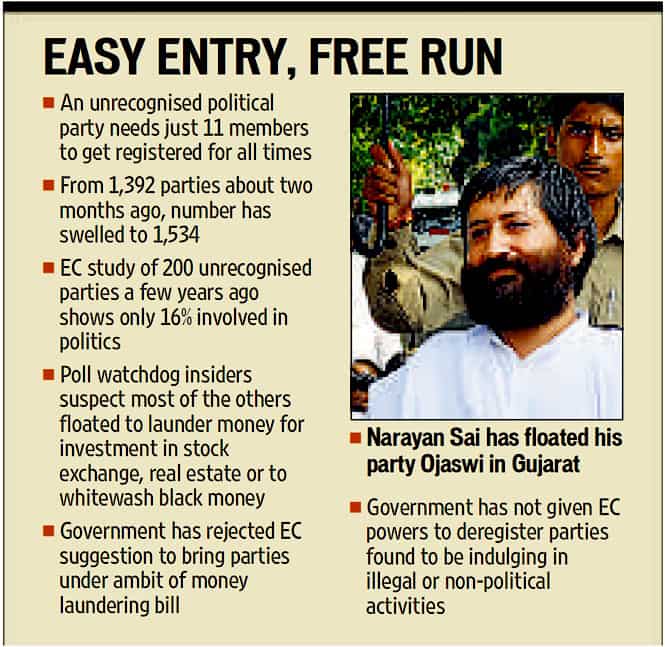
From 1,392 parties in August-September, the number swelled to 1,534 by mid-November.
Godmen, builders, property dealers and retired bureaucrats are among those who have floated the parties, ostensibly to have a say in the world’s largest democracy.
Election Commission insiders, however, fear it may not be all politics, but actually business — even of the shady kind — driving this rush into a field where the entry is all too easy. An unrecognised political party needs just 11 members to get registered for all time.
Self-styled godman Asaram’s son has floated Ojaswi in Gujarat, a former civil servant is now chief of the Bahujan Samajwadi Party (Baba Saheb) in Delhi and a builder in Mumbai is head of the Lok Party of India.
Mahesh Tyagi, reputed to be a don who doubles up as a property dealer in north Delhi’s Burari, claims his Bharat Vikas Party (Secular) has 4,000 members. Tyagi said he would field candidates from 10 Lok Sabha seats in Uttar Pradesh next year.
Sitting in Upkar Properties, the registered office of his party, with a money counting machine next to him, Tyagi has no qualms about his intentions. “Politics helps business. You know that better than I do,” he said on Friday.
A study of reports submitted by parties to the Election Commission shows many of them did not spend a penny on contesting or conducting any political activity between 2009 and 2012.
This inertia is also evident when assessing the 2009 general election results. In the last Lok Sabha elections, 1,150 of the 1,250 registered parties accounted for only about 1% of the total votes polled.
If these parties are not interested in political activity, then why are they floated?
The Election Commission did an analysis of 200 unrecognised political parties a few years ago to track their activities.
The poll watchdog found that only 16% of the parties were involved in politics and suspected that most of the others were floated to launder money for investment in stock exchanges, real estate or to whitewash black money. Analysis of contribution reports of these parties shows some have received donations from known and unknown sources.
The Ghaziabad-based Indian Youth Party received Rs. 15 lakh as donation from an Arunachal Pradesh-based company in 2012.
In another case, the Rashtriya Vikas Party received nearly Rs. 1.25 crore from a company within two months of being floated. Another party claimed to have received gold and diamond jewellery as donation.
Former chief election commissioner SY Quraishi said the commission had evidence that donations to some of these parties were channelled into the stock market and for buying property and jewellery.
“We had written to the government that parties should be brought under the ambit of the money laundering bill,” he added.
The finance ministry, however, rejected the suggestion, saying it would open a Pandora’s box.


