Where should one draw the boundaries between secrecy, openness and security? Probably not by privatising the right to publish, when it comes to the work of the security agencies. It may do for libertarians like Rand Paul to argue the State cannot be trusted with anything, so that government should be vanishingly small, and that it certainly shouldn’t be permitted deep conspiratorial secrets. But it’s an odd position for left-of-centre believers in the State to wish away any credible apparatus of secret intelligence. To express the blindingly obvious, it is an entirely legitimate manifestation of State power in a democratic society to have agencies that, according to strict legal limitations, are permitted to surveil and to intrude in the cause of public safety.
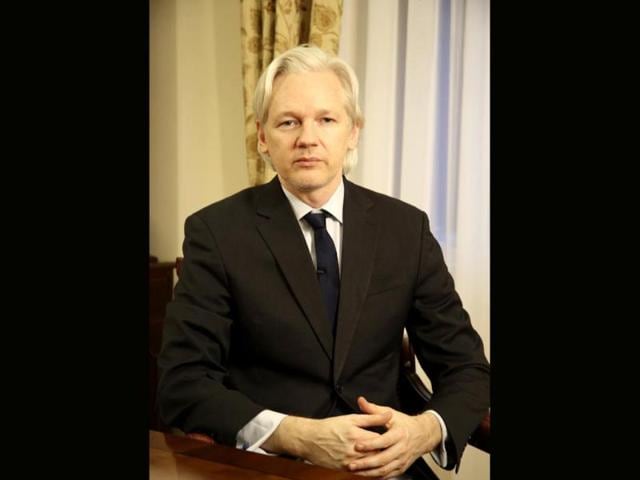
This is why WikiLeaks is a false prophet. And why Julian Assange’s philosophy — such as it exists — is a childish stamp of the feet, and deeply totalitarian. After all, elements of secrecy and discretion are an intrinsic aspect of any human life that retains its dignity. It’s discomforting to consider where fundamentalists for openness might be inclined to draw the line between the public and the private, and how much human identity they’d parade in the open. Is transparency always and in all circumstances good, even when it comes to governments?
The point is that this blinding transformation has careered into a world where legislation is so anti-modern that it struggles to distinguish between miniature bugs screwed into telephone earpieces and remote tapping from old-world, long gone GPO exchanges. And this as we learn that GCHQ, in all its technological majesty, can scoop up every last word that passes through those sleek cables beneath the Atlantic, everything we say and every last key that our fingers stroke. So it seems obvious that when it comes to surveillance and techniques of domestic spying, the law should be the master of technology.
What is the law that defines GCHQ’s power over the Internet; and how many warrants, and signed by whom, does it take to permit our spies access to everything? No one seems to know. Not the least of the inadequacies exposed by fallout from the Snowden revelations has been the sickly character of parliamentary oversight of the security agencies, even after recent reforms.
{{/usCountry}}What is the law that defines GCHQ’s power over the Internet; and how many warrants, and signed by whom, does it take to permit our spies access to everything? No one seems to know. Not the least of the inadequacies exposed by fallout from the Snowden revelations has been the sickly character of parliamentary oversight of the security agencies, even after recent reforms.
{{/usCountry}}There is still great trust placed in the security agencies by the mass of British people. No doubt this results from a confidence that our spooks are in the business of targeting and going after our enemies, that we are on the same side and that they work for us. But nothing could be more damaging to this public support than a notion that, in pursuing a broadening vocation, the spies somehow find themselves squinting through lenses not just at the villains, but at the rest of us too.