Two divergent perspectives compete in new India about the role of the State for social protection of its people. The chasm between these two evaluations is so large that conversations across these except the most caustic have broken down.
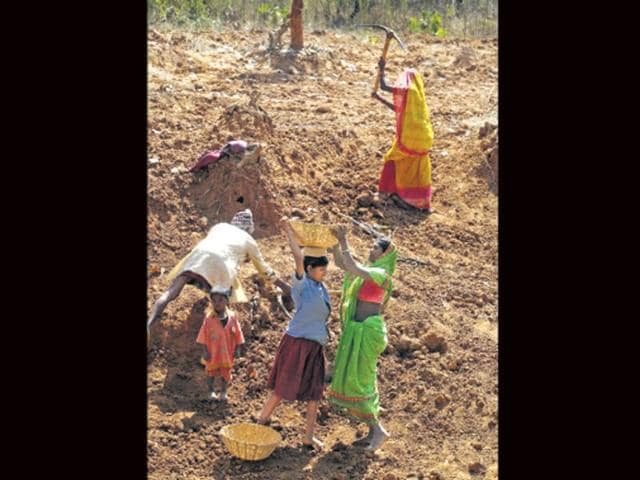
The dominant view of these times is that the best governments can do for addressing poverty is to nurture growth, by freeing markets, encouraging private investment, reducing labour protections and restraining public spending. This will nurture wealth and jobs and, with more money in their hands, people will be able to buy more and better food, quality education and health care, rather than being trapped to depend on State-subsidised cereals, manual work guarantees and substandard State schools and hospitals.
The contrary opinion is that economic growth is both unsustainable and unjust if built on such unequal foundations as prevalent in India. India ignores lessons from those Asian economies which have grown by leaps and bounds that markets work best with massive public-funded schemes. Only if India invests much higher resources on education and health can it reap the benefits of its demographic dividend.
The PM minted his reputation as a champion of growth during his stewardship of Gujarat, mainly by nurturing big business. Today he promises millions of young Indians well-paying jobs in a resurgent economy spurred by mammoth private investment. In Gujarat India’s biggest business houses were assured unprecedented subsidies — free or cheap land and water — and a tamed labour force. The outcome was high growth and expansion of infrastructure by the private sector, but few jobs, low investment in education and health, alarming malnutrition, and some of the highest rates of labour unrest in the country.
{{/usCountry}}The PM minted his reputation as a champion of growth during his stewardship of Gujarat, mainly by nurturing big business. Today he promises millions of young Indians well-paying jobs in a resurgent economy spurred by mammoth private investment. In Gujarat India’s biggest business houses were assured unprecedented subsidies — free or cheap land and water — and a tamed labour force. The outcome was high growth and expansion of infrastructure by the private sector, but few jobs, low investment in education and health, alarming malnutrition, and some of the highest rates of labour unrest in the country.
{{/usCountry}}The hope – or dread – depending on where one stands in this contest of ideas – is that Modi will replicate this model in the country. The early signals are mixed. Labour law amendments have reduced the numbers of workers protected by statutory working conditions and job security, and weakened collective bargaining. Talk is rife of diluting obligations of consent and social impact assessment in land acquisition, and prohibitions on acquiring multi-cropped lands. Already environmental protections have been diluted in the ecologically fragile border zones. The greatest fear is the demolition of the still incipient welfare infrastructure, of the MGNREGA, food security, and the national health mission. But whereas disturbing moves are afoot to convert MGNREGA from a labour-guarantee to a rural infrastructure programme, it is reassuring that there was adequate budget provisioning for the food security act.
I am convinced that goals of both sustained economic growth and social and economic equality require universalising a set of social and economic rights – to food, work, free and publicly funded high-quality education and health care, pensions for single women and the aged, and disability support. All of this is affordable. The total government spending in India as a percentage of the GDP is around 27%, compared to 40% in Brazil and 46% in OECD countries. Prabhat Patnaik calculates these universal rights would require 10% of GDP, possible by raising India’s low tax to GDP ratio to 24%, equal to that of the US.
The real issue is not if we can afford universal rights, but the costs of denying the inclusion of millions in India’s growth story. However, we can nurture little hope that the new government will recognise that universal rights alone can yield universal citizenship.
Harsh Mander is director, Centre for Equity Studies
The views expressed by the author are personal