Three new lentil (dal) varieties belonging to a family of legumes known to be poisonous since Hippocrates’s time could be back on your plates. But should you eat them?
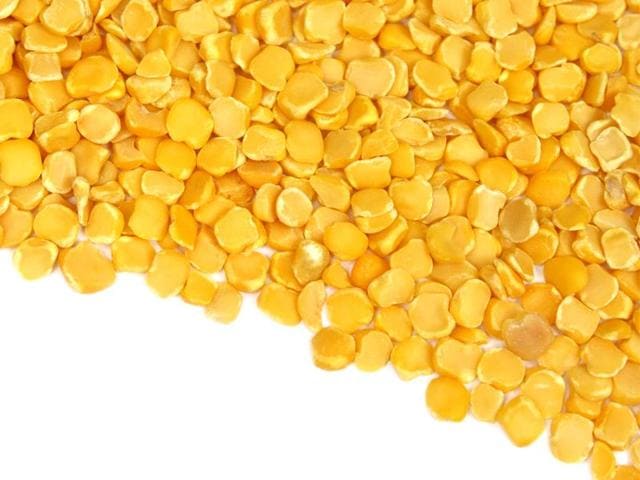
India’s chronic shortage of pulses – the essential soupy item in everyday meals – has made a cheap source of protein for millions very expensive. So, the country is thinking of bringing back khesari dal (scientific name: lathyrus odoratus), which became notorious after it was linked to neurological disorders, leading to a formal ban in 1961.
Yet, khesari had its own advantages. It is a tough guy in the field, highly resistant to drought and floods. If revived, it could sell very cheap because of its coarseness.
The khesari family has been historically notorious. In 1942, an officer at Vapniarca, a concentration camp in the then German-occupied Ukraine, began feeding Jewish inmates bread made of grass pea (lathyrus sativus), a close cousin of khesari, to see its effects. Many began limping within weeks and died. In a Nazi regime trying to push the frontiers of science, Vapniarca’s inmates were guinea pigs.
So, why would India want farmers to grow a crop known to cause lathyrism, a neurological disease from eating legumes of the genus “lathyrus” to which khesari belongs? That’s because the Indian Council of Medical Research has cleared three new varieties developed by farm scientists, in which they have cut the offending toxin “BOA” to safe limits.
“These khesari varieties are mahateora, ratan and prateek. These aren’t the same varieties which caused diseases back in the 1960s that led to a ban. Those varieties are simply gone,” NP Singh, the head at the Kanpur-based Indian Institute of Pulses Research, told HT.
{{/usCountry}}“These khesari varieties are mahateora, ratan and prateek. These aren’t the same varieties which caused diseases back in the 1960s that led to a ban. Those varieties are simply gone,” NP Singh, the head at the Kanpur-based Indian Institute of Pulses Research, told HT.
{{/usCountry}}Khesari is very similar to peas. “When the government imposed a ban nearly five decades ago, there wasn’t such a scarcity (of pulses),” Singh said. The Indian Agricultural Research Institute and Raipur University began working on separate ambitious projects to develop varieties that would be safer.
So, in the light of the ICMR’s findings, the Indian Council of Agricultural Research has sought the ban to be removed by the Food Standards and Safety Authority (FSSAI).
Singh said 11.6 m hectare rice fields remain unused after harvest in eastern India because there is too little moisture to grow anything else. “That’s where these new khesari varieties can be grown. People can consume it in moderation and use it as fodder.”
Moreover, khesari is still widely grown in Bangladesh. Experts believe large quantities of the deadlier variety are anyway being smuggled in every year.
On the three new “safer” varieties, the jury is still out. The FSSAI is planning to run its own set of rigorous tests before allowing them to enter the market.