National Mathematics Day is observed every year on Indian mathematician Srinivasa Ramanujan’s birth anniversary on December 22. It celebrates his valuable contributions to mathematics.
National Mathematics Day
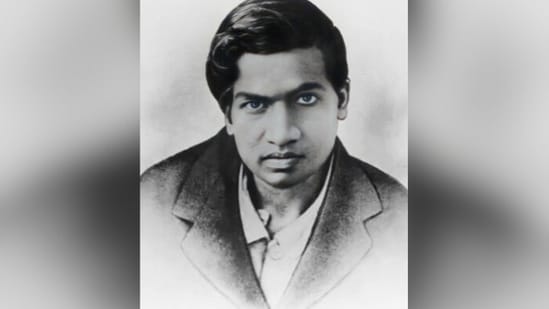
In honour of Ramanujan's accomplishments, the Indian government declared National Mathematics Day in 2012. Prime Minister Manmohan Singh had first spoken about National Mathematics Day on 26 December 2011 at Madras University, to mark the 125th birth anniversary of Srinivasa Ramanujan, as per Akashvani News.
Schools and universities commemorate the day by hosting activities including quizzes, lectures, seminars, exhibitions, and competitions centred on mathematics.
In order to encourage students to learn more about mathematics, schools and institutions all over India commemorate National Mathematics Day with a variety of educational activities. It is a day to honour Mr Ramanujan's legacy and inspire upcoming generations to carry on his mathematical contributions.
About Srinivasa Ramanujan
Indian mathematician Srinivasa Ramanujan Iyengar was active in the early 20th century. He made significant contributions to mathematical analysis, number theory, infinite series, and continuing fractions despite having virtually little formal experience in pure mathematics. He also solved mathematical problems that were thought to be intractable at the time.
Hans Eysenck said Ramanujan “tried to interest the leading professional mathematicians in his work, but failed for the most part”. “What he had to show them was too novel, too unfamiliar, and additionally presented in unusual ways; they could not be bothered,” Eysenck added, per IEEE.
{{/usCountry}}Hans Eysenck said Ramanujan “tried to interest the leading professional mathematicians in his work, but failed for the most part”. “What he had to show them was too novel, too unfamiliar, and additionally presented in unusual ways; they could not be bothered,” Eysenck added, per IEEE.
{{/usCountry}}In 1913, he started writing to the English mathematician G. H. Hardy at the University of Cambridge, England, in an attempt to find mathematicians who could better comprehend his work. Hardy made arrangements for Ramanujan to visit Cambridge after realising how remarkable his work was.
In his notes, Hardy said Ramanujan produced groundbreaking theorems. Hardy admitted that some of Ramanujan’s work “defeated me completely." “I had never seen anything in the least like them before,” he said, per Quanta Magazine.
Also read: Mathematician who tracked down India’s maths heritage
Ramanujan’s death
Ramanujan had been diagnosed with tuberculosis and a severe vitamin deficiency. Ramanujan returned to Kumbakonam, Madras Presidency, in 1919. He passed away there in 1920 at the age of 32, as per Britannica.