
 E-Paper



NASA shares ‘how it started vs how it is going’ images of Stingray Nebula. Here’s the reason for its unprecedented fading
“This is very, very dramatic, and very weird,” said team member Martín A. Guerrero of the Instituto de Astrofísica de Andalucía in an official blog post shared by NASA.

 Prefer HTon Google


It is often said that everything changes. However, the type of change the nebula Hen 3-1357, nicknamed the Stingray nebula, is going through is unprecedented. The images captured 20-years-apart by NASA’s Hubble Space Telescope show the nebula quickly fading. Astronomers have documented variations in planetary nebulae before, but researchers say that witnessing such a fast rate of change is super rare. Here is what scientists note is the reason behind this occurrence.
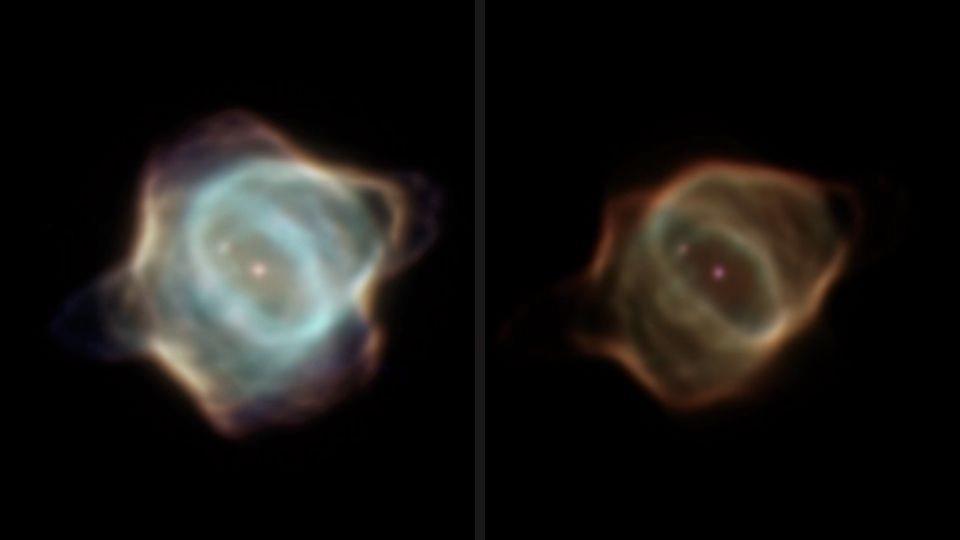
The official Instagram account of NASA’s Hubble Space Telescope shared these two images. Posted on December 3, a descriptive caption accompanies the photographs. It reads, “How it started vs How it’s going. Hubble images of the Stingray Nebula taken 20 years apart show the nebula’s changing shape and a dramatic loss of brightness”.
If you’re pondering over the reason behind the evolving shape and the reduction in brightness, then wonder no more. NASA shared an official blog post discussing the unusual phenomenon.
It said that the nebula’s central star, SAO 244567, is responsible for its rapid changes. The star, more than ten times hotter than the surface of our Sun, is now cooling. SAO 244567’s expansion due to a temperature drop has led to a decrease in ionizing radiation emission.
Check out the post which has accumulated over one lakh likes to see the differences in the snapshots for yourself:
If you’re left baffled by that post, then know that you’re not alone. Here are some comments that netizens left under the share. One person said, “How it started vs how it’s glowing more like”.
The nebula may barely be detectable in 20 or 30 years, given its present rate of fading. However, the team studying the Stingray nebula can only speculate at this time what’s in store for this young nebula.
What are your thoughts on this post?
Also Read | Celestial Christmas decoration: Sky will light up with Geminid meteor shower this December


