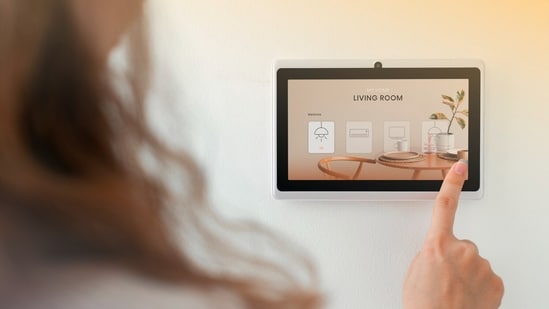
Smart homes are steadily becoming more popular for various reasons, from convenience to enhanced security. But many older apartments in Indian cities have dated layouts that were not designed to support modern technology.
Homeowners may be keen to make their spaces smarter, but traditional electrical appliances and old switchboards can become common hurdles! It may seem that turning an older flat into a smart home may require a lot of expensive renovation and extensive renovation. So, what is the easiest way forward? To modernise an older apartment?ALSO READ: Is your home looking gloomy this monsoon? Designer reveals 4 common decor mistakes that may be making it dull
Neil Savant, co-founder of Nuos Home Automation, shared with HT Lifestyle why older Indian apartments can be difficult to modernise and offered practical recommendations for turning old apartments into a smart home.
Why are older Indian apartments difficult to modernise?
Older apartments were built for the lifestyles of their time, when Wi-Fi-connected devices and automated appliances did not exist. Neil said, "Walk through any older residential building in Mumbai, Delhi, Pune, or Bengaluru, and the signs are familiar. From chunky switchboards, wiring that was never designed to carry today's electrical load, to rooms laid out for a life that had no concept of Wi-Fi or wireless anything.”
{{/usCountry}}Older apartments were built for the lifestyles of their time, when Wi-Fi-connected devices and automated appliances did not exist. Neil said, "Walk through any older residential building in Mumbai, Delhi, Pune, or Bengaluru, and the signs are familiar. From chunky switchboards, wiring that was never designed to carry today's electrical load, to rooms laid out for a life that had no concept of Wi-Fi or wireless anything.”
{{/usCountry}}According to him, most of the older apartments were designed in the 1980s and early 2000s. So, the structure was not designed with modern home technology in mind. So, homeowners automatically have this assumption that integrating automation would involve tearing down walls or replacing the existing wiring. Although he admitted they may have solid concrete, the homes were not constructed keeping technology in mind.
However, Neil clarified that modernising an old apartment does not necessarily require extensive changes. This is a massive relief! As per the expert, the solution is retrofit automation, which ensures smart systems work within the home's existing structure.
He explained the concept of retrofit automation: “The core principle behind modernising an older apartment is something called retrofit automation. Unlike new construction, which can be wired for smart systems from the ground up, retrofit solutions are designed to work within the existing structure of a home. No wall-breaking. No rewiring. No major civil work. These systems essentially slot into what is already there, be it behind switch plates, inside existing junction boxes, or as standalone plug-in devices, and add a layer of intelligence on top.”
Is retrofit automation expensive?
Then the next most common doubt would be the expense. Much to your surprise, it is actually affordable. As per the expert, retrofit automation can be added without needing any large investment.
He said, “India's smart home market is growing at a remarkable pace, which means the range of affordable, India-specific products designed for exactly this scenario has never been wider. The entry price point for a basic smart home setup today starts well under ₹10,000, making this a genuine lifestyle upgrade rather than a luxury exclusive to new-build penthouses.”
This means you don't need to automate everything; not every room or appliance requires blanket automation. A few basic automated features will do fine.
Giving a timeline by when the automation features can start working, Neil added, “With the right approach, a 15-year-old 2BHK can begin functioning with the ease and convenience of a modern smart apartment in a matter of weekends.”
5 ways to turn an old apartment into a smart home
Neil recommended these:
1. Begin with retrofit smart switches
- Retrofit smart switches are small modules that fit behind the existing switch plate on any wall.
- Switch stays the same, wiring stays the same, nothing gets replaced or rerouted, but the circuit underneath is now connected to an app, responds to voice commands, and can be set on a schedule.
- A practical way to begin is to pick two rooms, maybe the living room and the master bedroom.
2. Make smart security the next priority
- A smart video doorbell solves the most immediate gap. It gives visibility of who is at the door from anywhere in the world and stores footage.
- Pair this with a retrofit smart lock on the main door, which device that replaces the existing lock mechanism with one.
3. Automate your existing AC and appliances
- Smart climate control does not mean buying a new AC. It means adding intelligence to what is already there.
- A smarter IR blaster, which is a small device that plugs into any USB port or power socket, learns the remote signals of existing air conditioners, televisions, and other IR-operated appliances.
- Once set up, it allows the homeowner to control all of these through a single app, set schedules, and run automations like ‘turn off the AC when the front door opens.
4. Build a strong mesh Wi-fi network
- Older apartments were not built with wireless signals in mind. The concrete is thick, the walls are many, and a single router tucked near the main door simply cannot push a reliable signal into every corner of a 3BHK.
- The fix is a mesh Wi-Fi network. Instead of one router doing all the work, a mesh system uses two or three small nodes placed across the home.
- Together, they create a single, seamless network that covers the entire flat. No dead zones, no corners where the signal drops, no devices that only work when standing next to the router.
5. Create automated scenes and daily routines
- A scene groups a set of actions together so they fire from a single trigger.
- The 7 am alarm goes off, and the curtains pull back, the geyser kicks on, and the kitchen light comes on. All without touching anything.
- Heading out for work is one tap: lights off, AC down, door locked, camera on.