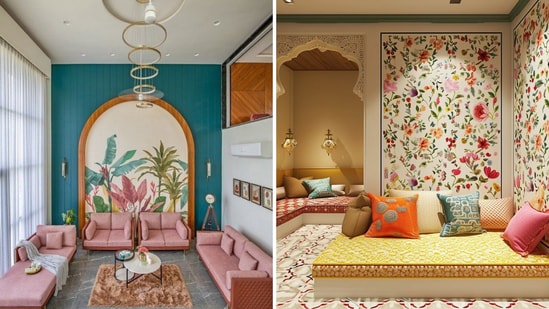
While traditional mud houses remain part of India's rural architectural landscape, they are far less typical of contemporary metropolitan construction, where factors such as limited land, multi-story development, modern building requirements, and changing lifestyles influence material choices. Today, a home may need to function as a workspace during the day, a place to exercise in the evening and a space to relax or entertain guests later.
As homes take on multiple roles, the way Indians choose interior materials is also evolving. Beyond color, finish and price, material selection can also involve factors such as acoustic comfort, durability, maintenance, moisture resistance and sustainability. This shift is particularly relevant for multifunctional spaces, where materials need to perform without compromising the overall look of the home.
According to Ajay Garg, Managing Director, E3 Group, the changing nature of everyday life is influencing how homeowners and designers evaluate materials.
1. Acoustic comfort is becoming part of material selection
Working, studying, and spending more leisure time at home has made noise an important consideration in interior design. Sounds from adjoining rooms, appliances, traffic or conversations can affect concentration and relaxation, particularly when one room serves several purposes.
“Special materials that help absorb and control sound must be used in home interior design, including acoustic panels, fabric wall systems, wooden acoustic solutions and many other sound-absorbing surfaces,” says Garg.
However, he points out that the objective is not necessarily to make a home completely soundproof. Different spaces have different acoustic requirements. A study or work area may benefit from reduced reverberation and clearer speech, while a family room may benefit from a livelier acoustic environment.
2. Everyday use is influencing material choices
A material may look appealing when it is newly installed, but its practicality becomes evident with everyday use. Indian homes can experience dust, humidity, cooking fumes, heavy foot traffic, and seasonal changes, making durability and maintenance important considerations.
Garg says homeowners should look beyond appearance and evaluate factors such as durability, cleanability, moisture resistance, and ease of replacement.
{{/usCountry}}Garg says homeowners should look beyond appearance and evaluate factors such as durability, cleanability, moisture resistance, and ease of replacement.
{{/usCountry}}This becomes even more relevant in multifunctional homes. Rather than choosing materials solely based on traditional room-by-room divisions, designers can consider surfaces that work across different requirements in home interior design.
3. Sustainability is moving beyond the ‘eco-friendly’ label
Sustainability is also becoming a more practical consideration when selecting materials. Rather than simply choosing a product marketed as eco-friendly, homeowners can consider what it is made of, how long it is expected to last, and how easily it can be maintained, repaired, or replaced.
“Materials that contain recycled or responsibly sourced material can definitely be considered if they meet the technical requirements of the space,” Garg explains. He also recommends evaluating sustainability across a material’s entire lifecycle, rather than looking only at whether a product has a green label. This means considering its durability, maintenance requirements, and what happens to it at the end of its useful life.
4. Aesthetics are increasingly connected to how a space feels
While appearance remains an important part of interior design, homeowners are also considering how materials contribute to a room's feel. Natural textures, wood-like finishes, and softer surfaces can help introduce warmth into interiors. This is relevant for materials designed to solve problems. Acoustic treatments, for instance, no longer have to look purely functional.
5. Homeowners are asking different questions before choosing materials
The bigger change may be in how materials are selected. Instead of choosing something simply because it appears appealing, homeowners can consider how it will work in their specific environment.
Garg recommends asking three questions:
- What does this space need to do?
- What environmental conditions will the material face?
- How will it perform five or 10 years from now?
The material needs to work as hard as the home
As Indian homes evolve into workplaces, classrooms, entertainment zones and personal retreats, materials are increasingly expected to do more than add visual appeal. The focus is shifting towards materials that can quietly solve everyday problems while fitting naturally into the design.
From acoustic comfort and easy maintenance to durability and lifecycle considerations, functionality is becoming part of the aesthetic decision itself. For homeowners, this means the question is no longer simply “Does this material look good?” but also “Will it continue to work for the way I live?”
Frequently Asked Questions:
How are lifestyle changes affecting home material choices?
What should homeowners consider when choosing durable materials?
Do functional materials have to compromise on aesthetics?
Disclaimer: At Hindustan Times, we help you stay up-to-date with the latest trends and products. Hindustan Times has an affiliate partnership, so we may get a part of the revenue when you make a purchase. We shall not be liable for any claim under applicable laws, including but not limited to the Consumer Protection Act, 2019, with respect to the products. The products listed in this article are in no particular order of priority.