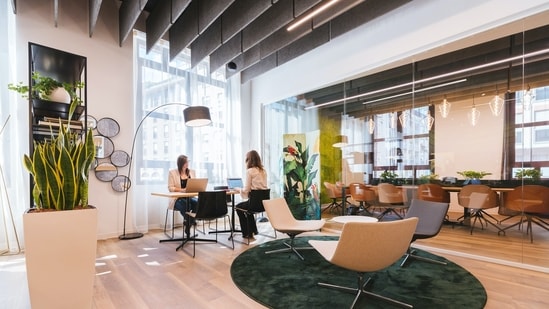
Interiors actively influence your mood. At home, a cluttered, gloomy space with gaudy colours can be visually distressing and make you feel more irritated than usual. A space with a well-planned layout and a style that is easy on the eyes can make you feel calmer. ALSO READ: Pinterest-inspired interiors: 5 ways to create a home that outlasts trends, from curved furniture to layered lighting
Similarly, at work, regulating mood is essential for employee mental health, productivity and work output. Employees spend the lion's share of their waking hours in the office, so interiors need to be more accommodating than generic neutral palettes and monotonous layouts allow. The right interiors can be invigorating and help employees feel motivated to work.
We asked an expert how offices are gaining more personality. Priyanka Bhagat Jain, design director at Onward Workspaces, told HT Lifestyle that colour, lighting and flexible layouts can give a workplace more character.
How are interiors becoming more playful and dynamic?
A flat palette of beige, grey and white can feel monotonous. The design director suggested introducing an unexpected element to give office interiors more personality. She pointed to the growing role of dopamine decor in workplaces.
She said, "One unexpected decision can change a room with a cobalt ceiling, sculptural light, graphic door or bright furniture against a quieter backdrop. This is where dopamine décor is finding a place: intentional bursts of saturated colour and playful details that introduce energy. A bold orange seating palette against teal ceilings, for example, can create an immediate shift.”
{{/usCountry}}She said, "One unexpected decision can change a room with a cobalt ceiling, sculptural light, graphic door or bright furniture against a quieter backdrop. This is where dopamine décor is finding a place: intentional bursts of saturated colour and playful details that introduce energy. A bold orange seating palette against teal ceilings, for example, can create an immediate shift.”
{{/usCountry}}Now even ceilings, floors, and furniture can serve as canvases for expression, adding to a workplace's visual language. "A plain corridor can become an art-led passage through lighting, archways or ceiling treatments. In a Connaught Place workplace, archways, warm colour palettes and heritage-inspired details can be paired with contemporary finishes to connect traditional character with a modern office,” Jain added.
Colours can also help set the mood. The expert recommended deeper tones to support focus and brighter shades to make cafe and collaboration areas feel more social. She also mentioned colour drenching, an interior design technique that involves using a single colour or closely related shades across almost every surface in a room. Extending the same palette across the walls, ceilings, and furniture can give a zone stronger visual identity.
Next for lighting, Jain advised British-inspired pendant lighting for quiet sophestication. It also lends an almost residential quality to a workplace without feeling formal.
Lastly, circling back to the element of surprise, she said, “Give people something to discover. An artwork at the end of a corridor, a reading nook behind a meeting room or a lounge distinct from the workstation area can create moments of surprise.”
How to design an office around the working day?
Jain suggested five ways to give an office more personality:
- Plan for the minutes between meetings: Consider where someone can spread a few minutes before a meeting, have a quick discussion with a colleague or work on a laptop away from their desk.
- Make coffee point informal meeting point: Position it along a route employees already use and add a high counter or comfortable seating.
- Give people a choice of workspaces: Conventional desks, high tables, quiet booths, sofas, and casual meeting corners can accomodate different tasks and working styles.
- Make use of overlooked spaces: Staircase landings, wider passages, and areas outside meeting rooms can accomodate artwork, seating, lighting or small work surfaces.
- Plan distinctive features from the outset: Distinctive entrance, expressive ceiling, lounge-like meeting room.
Giving an office more personality does not mean abandoing functionality or turning it into a visual spectacle. Jain revealed that the aim is to create a dynamic workplace that feels considered, flexible and human. As she put it, “A thoughtful mix of colour, material, light, art and furniture can give a workplace character while supporting the people who use it.”