
 E-Paper



Rashid Khan’s little-known role in the film industry had an oversize impact

 Prefer HTon Google


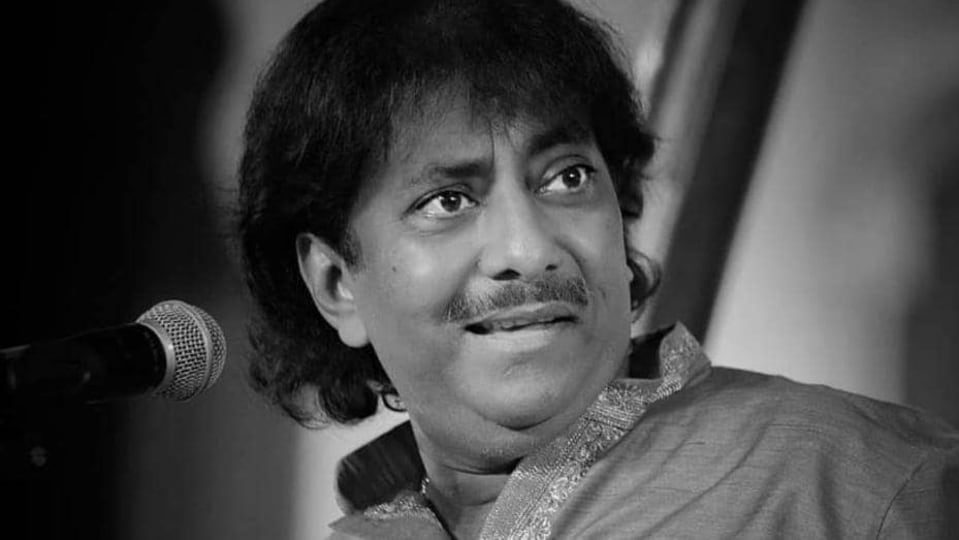
The classical musician passed away on January 9, but his Hindi and Bengali film music will continue to enthrall generations of listeners
Images of Kareena Kapoor and Shahid Kapoor come to mind as the magic of Ustad Rashid Khan’s voice fills the air. The song, Aaoge Jab Tum, composed by Sandesh Shandilya and written by Faaiz Anwar in the 2007 film Jab We Met, remains the singer’s biggest film hit. Though Khan’s forte lay in Hindustani classical vocals, this tune became so popular that it gets regular radio airplay even today.
The news of the Rampur-Sahaswan gharana maestro’s death in Kolkata on January 9 has naturally led to a revival of this song. Other film songs that made waves were the Sufiana piece Allah Hi Reham, composed by Shankar-Ehsaan-Loy in the 2010 Shah Rukh Khan film My Name Is Khan, and Kabhi Aayine Pe, sung by KK and composed by Khan himself in Hate Story 2 (2014). These are besides his Coke Studio renditions of Jogi, Cheene Re Mora Chain and Kaatyaayani, besides his version of Naina Thag Lenge in MTV Unplugged.
Yet, many of his film songs never earned the popularity they probably deserved. Whether he sang or composed, Khan had a unique style that was aesthetically appealing and technically flawless. If one looks at his film discography, a few things become obvious. The first is that he sang for a limited number of films, sticking to one or two songs per soundtrack. The second is that he sang for various music directors, and wasn’t confined to the style of one or two composers. However, since many films didn’t do well at the box office, the songs got limited exposure.
Industry observers attribute his “choosy” nature to his hectic classical schedule. Tabla maestro Bickram Ghosh, who composed Khan’s songs in the Bengali films Kadambari and Mitin Mashi said, “We had been friends for over 35 years growing up with similar dreams. But our musical collaborations were only incidental. He would be busy with his classical concerts and I with mine. It was only when director Suman Ghosh insisted that we decided to do the song in Kadambari together. This song, Bhara Badra, had a different traditional feel and old-style lyrics, but the Mitin Mashi number Barsat Sawan was more his style.”
Music director Shantanu Moitra, who recorded him in Aiyo Piyaji in Prakash Jha’s Chakravyuh, points out that Khan’s first response to film offers would often be sceptical. “It wasn’t that he felt it was below his dignity. It’s just that he was so used to singing classical, where he could freely improvise and use his voice openly. Film music had restrictions on structure and time," he said.
Tapas Relia, who composed Khan’s song Chanda Se Chhup Ke in last year’s release Goldfish, said, “He just liked to sing on. For a five-minute 40-second song, he gave me nearly 40 minutes of recorded footage. He picked up Kaisar Munir’s lyrics fast and insisted I sit with him in the dubbing studio.”
Khan was first noticed in the film world in Subhash Ghai’s 2005 film Kisna: The Warrior Poet, where he sang two traditional compositions arranged by Ismail Darbar. Kahe Ujaade More Neend was in Raag Sohoni and Tore Bina Mohe Chain Nahi was in Kirwani. He was an established name in classical music, and these were seen as an extension of his musical personality.
The success of Aaoge Jab Tum two years later made Khan a household name even among those who didn’t follow classical music. There’s an interesting story behind this song. Shandilya had actually composed the opening lines in 1993 and kept them aside. It was only 14 years later that director Imtiaz Ali suggested he complete the song and invite Khan to sing it.
After its success, other music directors approached Khan, keeping in mind his style and their fitment in the film. Besides Shankar-Ehsaan-Loy in My Name Is Khan, he sang two songs 'Bhor Bhayo' and 'Manwa' for Jeet Ganguli in Morning Walk, and Poore Se Zara Sa Kam Hai for Pritam in Mausam. Shandilya worked with him again on Sakhi Ri in the 2017 film Vodka Diaries.
Both Poore Se Zara Sa and Moitra’s Aiyo Piyaji are considered by fans to be among Khan’s most underrated gems. “Lyricist Irshad Kamil was both nervous and excited that Rashid Bhai would sing his song. The thing about Rashid Bhai is that despite all the trepidation, once he begins singing, he’s in another zone. He’ll make slight modifications that enhance the effect," Moitra said.
Like Aaoge Jab Tum, Aiyo Piyaji is based on raag Tilak Kamod. Another known use of a classical raag is Marwa in the Marathi film Me Vasantrao, with music by Rahul Deshpande. Here, he was accompanied by vocalist Saurabh Kadgaonkar, sarangi player Murad Ali Khan and tabla exponent Vijay Ghate. In fact, music directors would bring in seasoned artistes to accompany Khan. As Relia explains, “My song in Goldfish wasn’t based on any raag as such, but I ensured Rashid Bhai had the best musicians. Yogesh Samsi was on tabla, Paras Nath on flute and Sabir Khan on sarangi.”
While many songs suited his classical style, there were times he diversified too. His rendition of Faiz Ahmed Faiz’s Bol Ke Lab, composed by Sneha Khanwalkar and featuring singer Vidya Shah in the 2018 film Manto, displays his command over Urdu. On the title song of City Lights, composed by Jeet Ganguli, he is accompanied by Usha Uthup’s English lines. In Bidesia – The Stranger, composed by Abhishek Ray in the film Wedding Anniversary, Shirsha Chakravarthy sings the English part.
As a composer, Khan did songs in Raaz 3, Shaadi Mein Zaroor Aana and Ishqeria, but KK’s rendition of Kabhi Aaine Pe in Hate Story 2 stands out. It’s a melodious love song with melodious guitars and simple lyrics by Tanveer Ghazi, a complete departure from Khan’s classical style. Interestingly, the Raaz 3 song Deewana Kar Raha Hai seems to be a rehash of Egyptian singer Mohammed Himaki’s 2008 hit Ana Law Azeto.
While his busy concert schedule and classically-oriented style may have restricted Khan’s film assignments, those who worked with him remember his cooperation in the studio. As Relia says, “He never treated me like a junior. In fact, he insisted I sit in the dubbing studio with him.”
“His strength was his voice. If the composer gave him a song that suited him, he would do wonders. And he made sure everyone around enjoyed," recalls Ghosh. The music world will surely miss that camaraderie now.
Narendra Kusnur is a music journalist


