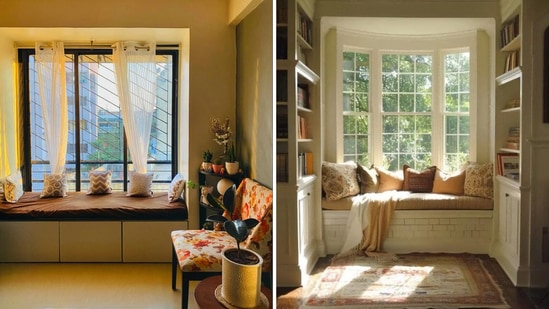
Window design can significantly change the look of your room. From bringing in natural light to shaping your interiors, the right window design can do more than just add a simple feature. A well-planned window can make your space feel brighter, more spacious and stylish without requiring a major renovation.
“Window installation and its finishing can be crucial in determining the overall style of your interior. If you have installed proper windows, you will be able to get a luxurious and spacious interior of your house by spending minimal money on decoration,” says Dinesh Chandra Pandey, managing director, Shankar Fenestrations & Glasses.
1. Install floor-to-ceiling windows
Floor-to-ceiling windows can make a room feel brighter and more open by letting in the maximum amount of natural light. They can also connect the indoors with a garden, balcony, or outdoor view, making the room feel less enclosed. These windows can work particularly well in living rooms and bedrooms where natural light and an unobstructed outdoor view are desirable. If privacy is a concern, you can use curtains and blinds.
2. Choose thin and simple window frames
A window does not necessarily need an elaborate frame to look expensive. In fact, bulky frames can sometimes make a room appear visually heavier. Slim-profile frames can create a cleaner, more contemporary appearance while allowing a larger area of glass to remain visible. This can help maintain an open look, particularly when the windows are large. For modern home interior design, neutral frame finishes like black, charcoal, white, or metallic shades can complement the surrounding furniture. The frame colour can also be matched with other elements such as door frames, handles, or lighting fixtures for a more cohesive look.
3. Install large sliding glass windows
Large sliding glass windows can blend functionality with a contemporary appearance in the home decor. Their wide glass panels allow natural light to enter, while their sliding mechanism can be useful where there is limited space for conventional shutters to open inward or outward. They can work well in living rooms that open towards balconies, terraces or gardens. In smaller rooms, a broad glass surface can also create the look of a more open space by visually extending the room towards the outdoors.
4. Think about bay or bow windows
If a room feels plain, a bay or bow window can give another layer of visual interest. Unlike conventional windows that sit within the wall, these designs project outward and can create additional usable space. The extended area can be turned into a small reading corner, seating area or display zone, depending on the size and structure of the window.
{{/usCountry}}If a room feels plain, a bay or bow window can give another layer of visual interest. Unlike conventional windows that sit within the wall, these designs project outward and can create additional usable space. The extended area can be turned into a small reading corner, seating area or display zone, depending on the size and structure of the window.
{{/usCountry}}Bay and bow windows can also bring light into the room from different directions. Their architectural character makes them particularly useful when you want the window itself to become part of the room's design rather than simply blend into the wall.
5. Go for floor-length drapes
Window design does not end with the frame and glass. The treatment around a window can significantly change how it looks within a room. Floor-lengthcurtains installed close to the ceiling can draw the eye upwards and create the impression of greater height. They can also soften the hard lines of large windows and add texture to the room.
For a more streamlined appearance, choose curtains that extend all the way to the floor rather than stopping several inches above it. The fabric, colour, and texture should complement the rest of the room's interior rather than compete with the window itself in a room makeover.
6. Try decorative glass
Decorative glass can add visual character while also addressing privacy requirements. Frosted, textured, ribbed, fluted, tinted or patterned glass can be considered depending on the room and the desired level of privacy. Decorative glass can therefore serve both an aesthetic and functional purpose, adding detail to the window while maintaining its basic role of allowing light into the space, says Dinesh Chandra Pandey.
7. Match the window trim with your interiors
A window can look disconnected from the rest of a room if its frame and trim clash with the surrounding finishes. Coordinating these details with the furniture, flooring, doors, and other architectural elements can make the overall space feel more thoughtfully designed. The aim is not necessarily to make every element identical but to create a visual connection between the window and the rest of the room.
8. Consider arched or differently shaped windows
Not every window has to be rectangular. Where the architecture allows it, an arched, circular, triangular or other unconventional window can become a distinctive design feature. These shapes can be particularly effective when used selectively. Instead of installing unusual windows throughout the entire home, consider using one in a particular room, passageway, staircase or architectural corner for a home makeover. A uniquely shaped window can act almost like an architectural artwork, drawing attention to an otherwise overlooked part of the home. It can also give the home interior a more personalised character.
9. Choose modern and practical window solutions
Automated blinds, motorised curtains and smart glass solutions can provide greater control over light and privacy. Depending on the product and installation, these solutions can be operated using switches, remote controls or smart-home systems. Such features are a great addition for windows that are difficult to reach.
10. Make a statement window
Instead of giving every room the same window treatment, consider making one window the focal point of a particular space. A statement window can therefore add character without requiring extensive decorative additions to the room.
The right window design can make all the difference
Creating a luxurious-looking home does not always require expensive furniture, elaborate decor or major architectural changes. Sometimes, the details that are already part of the structure can have a significant impact on the overall appearance. Windows are one such detail. Their proportions, frame profiles, glass type, colour, curtains and functionality can collectively influence how a room looks and feels.
As Dinesh Chandra Pandey, Managing Director, Shankar Fenestrations & Glasses, explains, the right window design should be selected according to both the architectural style of the home and the functional requirements of the room. A good window should do more than look attractive. It should allow appropriate levels of natural light and ventilation, provide the required privacy and insulation, and work well with the surrounding home interior's style.
Frequently Asked Questions:
Which window design makes a home look more luxurious?
Do large windows make a room look bigger?
Are floor-to-ceiling windows suitable for bedrooms?
Disclaimer: At Hindustan Times, we help you stay up-to-date with the latest trends and products. Hindustan Times has an affiliate partnership, so we may get a part of the revenue when you make a purchase. We shall not be liable for any claim under applicable laws, including but not limited to the Consumer Protection Act, 2019, with respect to the products. The products listed in this article are in no particular order of priority.