Of the many changes wrought by Covid-19, the first pandemic of the 21st century, the most notable would have to be the mask. It too is being embraced, customised, embellished. PR executive Sami Sayyed, 30, for instance, has ten face masks and counting. He keeps collecting new ones to suit different occasions. He has masks to complement his Western formals and his traditional formal outfits, masks that go with his casual wear, others that match his gym clothes. “I see face masks as providing me with an avenue to express my personality and sense of style,” he says.
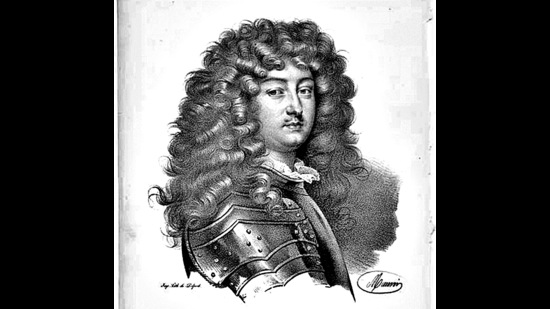
It was another contagious-disease outbreak — of syphilis — that caused the cascading, poofy men’s periwig to catch on in the 17th century. King Louis XIV of France and Charles II of England took to wearing the big wigs to hide — and overcompensate for — hair loss and premature greys (one of the effects of the sexually transmitted infection they both reportedly contracted ). Soon their noblemen were following suit and wearing the wigs and, in the manner of all court fashions, the trend spread and the wigs became aspirational wear among the upper classes outside the palace walls.
Many nobles had already taken to wearing gloves indoors and all year round at this time, to cover other marks associated with the disease. Wigs and gloves then went from rather embarrassing essentials to customisable accessories. Periwigs began to be ordered in a range of weaves and styles, in varying lengths or with added curls. Some were embellished with jewelled pins or pearls. Wearers went to great lengths to set theirs apart and have their style and status reflected in the wigs.
Since periwigs were hard to make and maintain, they became markers of affluence. The grander and more stylised the wig, the wealthier the wearer was assumed to be.
{{/usCountry}}Since periwigs were hard to make and maintain, they became markers of affluence. The grander and more stylised the wig, the wealthier the wearer was assumed to be.
{{/usCountry}}“Clothes play a crucial role in the way we present ourselves to the world,” says Lucy Adlington, costume historian and author of Women’s Lives and Clothes in WW2 (2019). “We turn to clothes for a boost in morale, or to nurture a sense of security and solidarity. They become tools to express defiance or challenge embedded ideas about gender, decency, shame and ridicule.”
During World War 1, for instance, identity and nationalism became somewhat linked to the cholera belt. In the 1830s, the second cholera pandemic popularised this item of clothing — a broad flannel waistband worn under the shirt.
The cause for cholera, still unknown then, was linked to a chilly abdomen. So people, especially soldiers posted in tropical regions, wore the cholera belt to keep from contracting the disease. During the War, knitting these body warmers became a way for citizens — particularly the women left behind — to express solidarity and support.
The Second World War had a more sweeping impact on fashion, particularly in the UK and US. Due to shortages caused by the War, clothing and fabric were rationed. This pushed designers to innovate and create designs that required less fabric. Hemlines rose, silhouettes became slimmer.
Another consequence of the war was that women entered the workplace to fill up the slots left vacant by the men who’d enlisted, and this gave rise to a whole range of women’s clothing that had not existed until this time—trousers for women, overalls, jackets and shirts.
“Fashion helps us stay hopeful in turbulent times, because it reminds us that there are always ways to make bad times bearable,” says Toolika Gupta, fashion historian and director of the Indian Institute of Crafts & Design. “Our instinct to create pushes us to work around shortages, embrace new ways of dressing, no matter how strange they might seem in the beginning. No matter what happens, we will always find ways to stay inspired and being fashionable is one representation of that.”
Turkish fashion designer Bora Aksu has drawn on this pandemic and the 1918 influenza one as inspirations for his Spring/Summer 2021 collection. The influenza pandemic infected over a third of the world’s population and claimed more than 50 million lives over two years.
Aksu’s new collection uses relaxed silhouettes and pastel hues to represent the frugality that permeated fashion at the time. Gauze caps and veils are reminiscent of the chiffon influenza veils women wore in the US to prevent infection. Newspaper clippings of the time trace how women sought to integrate these into their wardrobes with customised veils in matching colours and patterns. This marked a return of an item of clothing that had faded away over the previous decades, especially in the cities.
Aksu captures the optimism of the post-pandemic world of the 1920s too, in the ruffles, layers and airy fabrics like organza and tulle. “Cataclysmic events like wars and pandemics push people find new ways to find beauty and self-expression in the clothes they wear,” Aksu told Wknd. “Fashion allows for this expression of individuality. It has the power to inspire hope and signal change.”
Catch your daily dose of Fashion, Taylor Swift, Health, Festivals, Travel, Relationship, Recipe and all the other Latest Lifestyle News on Hindustan Times Website and APPs.
Catch your daily dose of Fashion, Taylor Swift, Health, Festivals, Travel, Relationship, Recipe and all the other Latest Lifestyle News on Hindustan Times Website and APPs.