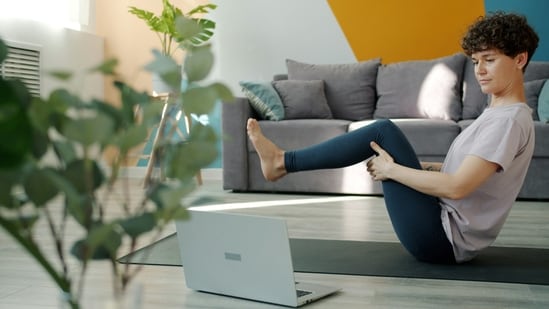
In an era where AI can generate a 12-week fitness programme in seconds, complete with sets, repetitions, rest periods and progression plans, it is tempting to believe that technology can replace the expertise of a personal trainer. But is a generic AI-generated workout programme really enough to ensure safe and effective training?
In an interview with HT Lifestyle, Sumit Dubey, fitness expert and founder of Sumit Dubey Fitness (SDF), explains why AI-generated fitness plans should be treated as a starting point rather than a substitute for professional guidance. (Also read: Neurologist explains the science behind sugar cravings and how mental fatigue, stress and sleep affect your appetite )
Why is a personal trainer still important in the age of AI?
According to Sumit, AI may be able to generate a comprehensive workout schedule, but a qualified trainer offers much more than a spreadsheet of exercises.
“During your first session, an experienced trainer observes your squatting movement, lifting patterns, posture and breathing. They may notice movement limitations or imbalances that you might not even recognise yourself. They will also ask about previous injuries, recurring discomfort and your training history. An AI model will only base its programme on the information you provide, and most people do not share enough details,” he says.
What are the risks of following generic AI-generated workout programmes?
Sumit points out that one of the biggest limitations of AI-generated fitness plans is their inability to account for every individual's physical history and requirements.
{{/usCountry}}Sumit points out that one of the biggest limitations of AI-generated fitness plans is their inability to account for every individual's physical history and requirements.
{{/usCountry}}According to him, one of the most common reasons people struggle with training is relying on generic programmes or poorly framed prompts. “If you are programming based only on age, weight and fitness goals, you may overlook previous injuries such as ACL repair, disc irritation, hypermobility or even a sedentary lifestyle involving 10 hours of sitting,” he says.
"Recommending deep barbell back squats and overhead presses without understanding someone's physical capabilities and limitations is taking a gamble with their joints. Exercise selection should always consider an individual's movement ability, training experience and physical limitations,” he explains.
Can AI help correct exercise technique?
According to the fitness expert, technique is among the most important aspects of safe and effective strength training, and written instructions alone cannot replace practical coaching.
Sumit explains, “Technique is a major factor in preventing avoidable training injuries. You cannot fully correct movement issues through text. Telling a beginner to maintain a neutral spine means very little if they are unable to understand what that position feels like."
"A trainer can demonstrate the movement, observe how an individual performs it and provide appropriate cues to improve their technique. Although video-based applications are getting better at tracking repetitions and movement, they still lack some of the fine-tuning an experienced coach can provide, particularly when teaching movements such as a hip hinge,” he says.
Does AI understand individual recovery and progression?
Sumit cautions against following fixed progression schedules without considering the body's changing recovery requirements. “Many programmes created by AI will increase training volume at a set rate. However, this does not take into consideration how well you are sleeping, how stressed you are, how sore you feel or whether you have had a particularly demanding week," he says.
"Progressive overload is important, but it will only work effectively when balanced with adequate recovery. Consistently pushing through fatigue without adjusting your training can increase the risk of overuse injuries and burnout. Your training programme should evolve according to your recovery and ability to handle the workload,” he explains.
Can AI-generated fitness advice always be trusted?
While AI makes fitness information more accessible, Sumit believes users should be careful about accepting every recommendation without question.
“These tools can be quite confident and rarely say that they don't know something. Sometimes, they can suggest outdated methods or approaches that are not well supported by evidence. If you do not have sufficient training knowledge, you may not know the difference between reliable fitness advice and a recommendation that may not be suitable for you. This is why blindly following an AI-generated programme without understanding its limitations is not advisable,” he adds.
How can AI be used effectively in fitness training?
Rather than dismissing AI altogether, Sumit believes it can be a useful supporting tool when used responsibly.
“AI can be a good tool for brainstorming. You can use it to understand the differences between hypertrophy and strength training, suggest alternative exercises when the gym is busy or organise a weekly workout split that you can take to a qualified coach for review. These tools can save time and help you become more informed. However, any programme created by AI should be treated as a draft rather than a final training prescription,” he says.
What is the safest way to follow an AI-generated workout programme?
Sumit recommends seeking professional guidance, particularly for beginners and individuals with a history of injuries or existing medical conditions.
“The safest option is to treat any programme created by AI as a starting point. Begin with manageable weights, focus on learning the correct movement patterns and get your technique assessed by a qualified trainer or physiotherapist when needed. This is especially important if you have an injury history, medical conditions or are new to strength training. Never push through sharp, persistent or worsening pain. Your programme should be appropriate for your individual needs and physical capabilities,” he advises.
The bottom line
AI is undoubtedly transforming the fitness industry by making workout information and programme creation more accessible. However, convenience should not be confused with personalised coaching.
As Sumit puts it, “The programme can be created by software, but you can't see you doing it!”
Note to readers: This article is for informational purposes only and not a substitute for professional medical advice. Always seek the advice of your doctor with any questions about a medical condition.
Catch your daily dose of Fashion, Taylor Swift, Health, Festivals, Travel, Relationship, Recipe and all the other Latest Lifestyle News on Hindustan Times Website and APPs.
Catch your daily dose of Fashion, Taylor Swift, Health, Festivals, Travel, Relationship, Recipe and all the other Latest Lifestyle News on Hindustan Times Website and APPs.