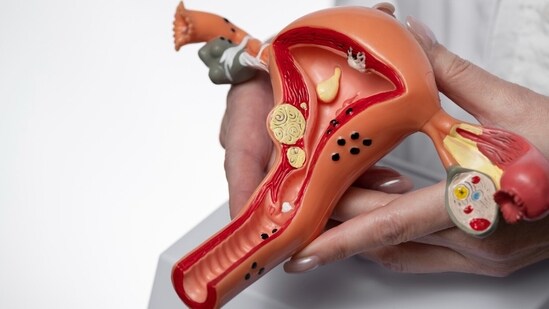
The National Institutes of Health (NIH) defines uterine fibroids, or leiomyomas or uterine myomas, as benign monoclonal tumours that are the most common benign tumours found in people who have a uterus. It is generally associated with heavy or prolonged menstrual bleeding, abnormal uterine bleeding, resultant anaemia, pelvic pain, infertility, and/or recurrent pregnancy loss.
In an interview with HT Lifestyle, Dr Swatee Gaggare, consultant - obstetrics and gynaecology, Manipal Hospitals Baner, Pune, explained why it often hides in plain sight and the warning signs one should watch out for. Also Read | Samantha Ruth Prabhu shares 1 skincare tip she swears by; stresses sunscreen and retinol are must at her age
Stressing that for many, the first signs of uterine fibroids can be confused for an entirely less serious problem, Dr Swatee said, “Since they can appear suddenly, many might erroneously assume that weight increase or a digestive issue is the cause of their persistent bloating, tight clothing, and growing belly circumference.” However, the presence of fibroids, which are benign tumours growing in or on the uterus, is often indicated by these hints.
Why is it hard to detect fibroids? They hide in plain sight
Hormones like estrogen and progesterone are the main drivers of fibroid growth, Dr Swatee stressed. They can go unnoticed for years while silently getting larger every year. “Fibroids can stay small, but others can get so big that they change the structure of the abdomen and uterus. A pelvic exam or imaging for an unrelated problem is typically when one discovers they have a fibroid,” she explained.
{{/usCountry}}Hormones like estrogen and progesterone are the main drivers of fibroid growth, Dr Swatee stressed. They can go unnoticed for years while silently getting larger every year. “Fibroids can stay small, but others can get so big that they change the structure of the abdomen and uterus. A pelvic exam or imaging for an unrelated problem is typically when one discovers they have a fibroid,” she explained.
{{/usCountry}}Warning signs to watch out for
Therefore, it is essential that you look out for warning signs. Dr Swatee points out that while some discover they have fibroids through pelvic exams, sometimes it gets detected when one has:
- Persistent pressure in the lower abdomen
- Fatigue from blood loss
- Heavy clots during the first two days of menstruation
- An extended menstrual flow could also be the first indication
- Others might talk about constipation brought on by fibroids pressing against the rectum or frequent urination because of bladder pressure.
- Pregnancy belly that isn't actually pregnancy: One of the most deceptive symptoms is abdominal heaviness. Dr Swatee explains: “It is reasonable to assume that extra weight or bloating is being experienced because a large fibroid can have effects that are strikingly like pregnancy. In certain case studies, fibroids grew for months or years until they reached the size of a grapefruit or more, causing significant discomfort and identifiable abdominal distension.”
“These symptoms can slowly interfere with day-to-day functioning, but because they develop gradually, they could be accepted or ignored,” Dr Swatee said.
Tests that help in diagnosis
Pelvic ultrasound and magnetic resonance imaging (MRI) are often used to show the size, quantity, and location of fibroids. “They are frequently used to confirm the diagnosis. With identification, treatment options will be dependent on the severity of the symptoms, the age, desire to become pregnant in the future, and general health,” she added.
Note to readers: This article is for informational purposes only and not a substitute for professional medical advice. Always seek the advice of your doctor with any questions about a medical condition.
Catch your daily dose of Fashion, Taylor Swift, Health, Festivals, Travel, Relationship, Recipe and all the other Latest Lifestyle News on Hindustan Times Website and APPs.
Catch your daily dose of Fashion, Taylor Swift, Health, Festivals, Travel, Relationship, Recipe and all the other Latest Lifestyle News on Hindustan Times Website and APPs.