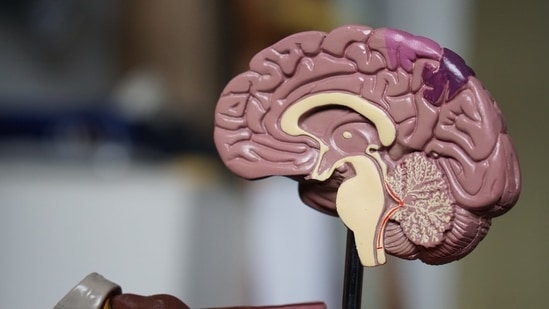
A team of researchers have found small clusters of cells in the brain that identify locations where tumours could become malignant. The study led by King's College London Institute of Psychiatry, Psychology and Neuroscience, in collaboration with King's College Hospital NHS Foundation Trust, was published in the journal Neuro-Oncology Advances.
Published in Neuro-Oncology Advances, the research analysed pieces of living human brain tissue from 20 people undergoing brain tumour surgery at King's College Hospital, the largest neuro-oncology centre in Europe. The researchers found groups of tumour cells clustered around blood vessels and believe that these sites could be the seedbeds for malignant progression, the process by which a tumour becomes a fast-growing and uncontrolled cancer.
To study the brain tissue, neurosurgeons cooled the surface of the brain. They then took a sample and placed it into a cerebrospinal fluid solution. Once it had been transported to the lab, the tissue was then placed into a miniaturised incubation chamber specially designed for this study, where it was bathed in a solution that makes the living tumour cells fluoresce and more easily studied under a microscope.
Dr Gerald Finnerty, Lead author at King's IoPPN and Honorary Consultant Neurologist at King's College Hospital said, "This research is hugely significant. The "hotspots" we found exhibited many of the hallmarks of cancer. The ability to pinpoint areas at high risk of malignancy gives us a much better chance of establishing why the brain tumour becomes malignant."
{{/usCountry}}Dr Gerald Finnerty, Lead author at King's IoPPN and Honorary Consultant Neurologist at King's College Hospital said, "This research is hugely significant. The "hotspots" we found exhibited many of the hallmarks of cancer. The ability to pinpoint areas at high risk of malignancy gives us a much better chance of establishing why the brain tumour becomes malignant."
{{/usCountry}}Brain cancers are difficult to treat because they are so invasive. Even after surgery and chemoradiotherapy, there is still a high risk that some cancerous cells can be left behind, increasing the likelihood that cancer will return. This unfortunately means that many of the young adults it affects do not survive beyond a year.
Dr Alastair Kirby, the first author of the study said, "It has been a privilege to work with brain tumour patients and our neurosurgical team to deliver this highly innovative research. Live human brain tissue offers great opportunities to study how a person's brain tumour responds to treatments. This will revolutionise the therapy and bring precision medicine of brain cancer one step closer."
Catch your daily dose of Fashion, Taylor Swift, Health, Festivals, Travel, Relationship, Recipe and all the other Latest Lifestyle News on Hindustan Times Website and APPs.
Catch your daily dose of Fashion, Taylor Swift, Health, Festivals, Travel, Relationship, Recipe and all the other Latest Lifestyle News on Hindustan Times Website and APPs.