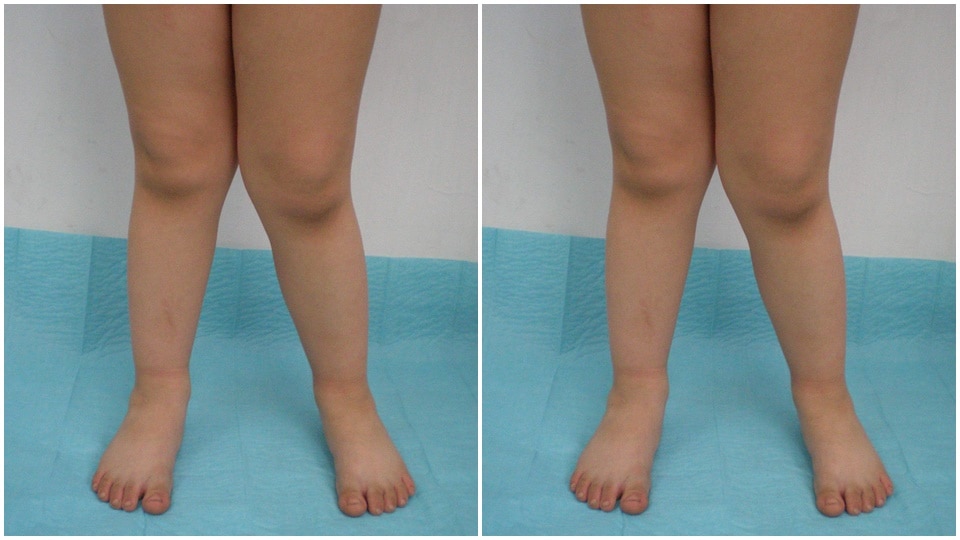
Knock knees, also known as genu valgum, is a deformity which occurs when there is a large gap between the ankles when standing with the knees together, as the knees bend inwards and knock together. Though the condition can impact all age groups, it is more common in young children in their development years. While most knock knees correct on their own, for some it may indicate an underlying condition like rickets or other bone diseases. It is more commonly seen in obese adolescents and children with flat feet or those with hypermobile joints. (Also read: Expert on best exercises to manage arthritis pain)
Dr Debashish Chanda, Department of Orthopaedics, CK Birla Hospital, Gurugram in a conversation with HT Digital talks about causes, symptoms and prevention of knock knees.
Causes
Primarily, knock knees are common among young children during their basic growth and development years. However, the legs usually straighten as the child grows. Knock knees could highlight an underlying condition if left unresolved at an age typically above 6 years and progresses into adulthood, which can be problematic. The major cause of knock knees is deficiency of Vitamin D in these children. Vitamin D helps in calcium absorption and assimilation of calcium in the bones, making them strong. Other reasons for knock knees are knee/ ligament injuries, fractures, etc. Patients with osteoarthritis and rheumatoid arthritis may also develop knock knees.
Symptoms
{{/usCountry}}Symptoms
{{/usCountry}}- Visible symptoms include a greater distance between feet and ankles than normal when knees are positioned together, usually 8 cm.
- The most typical symptom of knock knee in children is the inability to run, if attempted, they fall immediately.
- Other symptoms include pain in the ankle, foot, hip, knee, knee instability, limping, joint and hip stiffness and soreness and progressive knee arthritis.
- Some may experience other knock knee associated conditions’ symptoms, including pain and progressive joint problems which only happen after 25 or 30 years of age.
Prevention
Dr Chanda says it is very much a preventable disorder if diagnosed at the correct time.
"Since the primary cause is lack of Vitamin D, 90% of children below the age of 8 years are successfully treated only by giving Vitamin D after diagnosing the levels through basic X-rays. If not treated by Vitamin D, a daycare procedure is done for children between the age of 8-10 years, called selective epiphysiodesis, which straightens the leg of the child within 4-5 months and the child can continue with normal activities. Awareness among parents of children with knock knees is very essential for timely diagnosis and treatment," says the expert.
Follow more stories on Facebook & Twitter
Catch your daily dose of Fashion, Taylor Swift, Health, Festivals, Travel, Relationship, Recipe and all the other Latest Lifestyle News on Hindustan Times Website and APPs.
Catch your daily dose of Fashion, Taylor Swift, Health, Festivals, Travel, Relationship, Recipe and all the other Latest Lifestyle News on Hindustan Times Website and APPs.