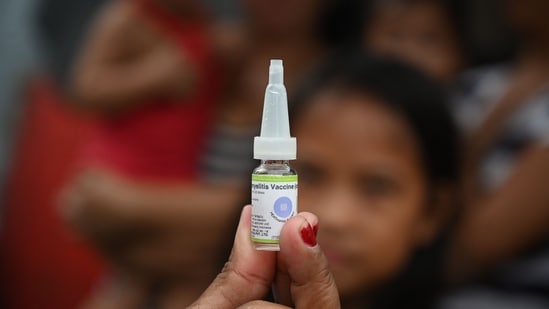
When we think of the polio vaccine, it is usually the popular advertisements that come to mind – a veteran Bollywood actor reminding us to make sure that babies receive their ‘two drops for life’. So when one encounters an injectable polio vaccine on the immunisation chart, it is reasonable for them to wonder why both are necessary.
Also Read | Clinical researcher explains the effect of diabetes on foot health, lists 5 warning signs not to be ignored
In an interaction with HT Lifestyle on the occasion of World Polio Day, which was observed on October 24, paediatrician Dr Rohini Nagarkar explained how the two polio vaccinations differ, and why both are important in the effort to eradicate the disease.
How do the two polio vaccines work?
There are three distinct types of poliovirus and two types of vaccines. The more popular one is the OPV, or oral polio vaccine. The second one, which needs to be injected, is IPV or inactivated poliovirus vaccine.
“Poliovirus enters through the mouth, multiplies in the intestine and spreads mainly through contaminated hands, food or water,” explained Dr Nagarkar. “Most infections cause little or no noticeable illness, but approximately one in 200 can lead to irreversible paralysis. Once this damage occurs, there is no cure to reverse it.”
{{/usCountry}}“Poliovirus enters through the mouth, multiplies in the intestine and spreads mainly through contaminated hands, food or water,” explained Dr Nagarkar. “Most infections cause little or no noticeable illness, but approximately one in 200 can lead to irreversible paralysis. Once this damage occurs, there is no cure to reverse it.”
{{/usCountry}}The OPV contains a weakened form of the virus and helps build immunity in the intestine, where poliovirus multiplies, reducing the chances of it spreading from one child to another. The OPV used in India protects against poliovirus types 1 and 3, shared the paediatrician.
On the other hand, the IPV contains an inactivated form of the virus and helps the body produce antibodies against all three types. These antibodies prevent the virus from reaching the nervous system and causing paralysis.
“However, IPV produces relatively limited intestinal immunity, which is why OPV remains important in preventing transmission,” stated Dr Nagarkar, noting that OPV and IPV together provide complementary protection.
Safety considerations of OPV and IPV
Dr Nagarkar highlighted that there are also important safety considerations with the two types of polio vaccines.
“IPV cannot cause polio because it contains no live virus,” she stated. “OPV carries an extremely rare risk of vaccine-associated paralysis. In communities with poor immunisation coverage, the weakened vaccine virus can circulate over time and occasionally develop into a disease-causing strain.”
Therefore, maintaining high vaccination coverage is essential to preventing such outbreaks. But despite the limited risk, OPV remains an important tool for controlling and containing polio outbreaks when required.
The paediatrician added that apart from the vaccinations done as an infant, children should also receive additional OPV doses during Pulse Polio campaigns, regardless of their previous routine vaccinations. While the last wild polio case was recorded in India over a decade ago, the virus continues to circulate internationally, so one should not let their guard down at any time.
Note to readers: This article is for informational purposes only and not a substitute for professional medical advice. Always seek the advice of your doctor with any questions about a medical condition.
Dr Rohini Nagarkar is a senior consultant in the paediatrics department at Surya Mother and Child Super Speciality Hospital, Pune.
Catch your daily dose of Fashion, Taylor Swift, Health, Festivals, Travel, Relationship, Recipe and all the other Latest Lifestyle News on Hindustan Times Website and APPs.
Catch your daily dose of Fashion, Taylor Swift, Health, Festivals, Travel, Relationship, Recipe and all the other Latest Lifestyle News on Hindustan Times Website and APPs.