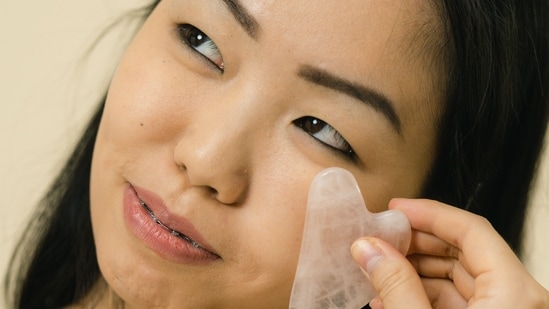
Gua sha is a traditional Chinese practice that involves using smooth-edged tools to massage the face, improve circulation and reduce puffiness. Among several skincare trends gaining popularity online, gua sha has emerged as a favourite, with many claiming it can sculpt facial features and give the jawline a more defined appearance. In this edition of ‘Internet vs Reality,’ HT Lifestyle spoke to Dr Akila R, consultant dermatologist and cosmetologist at Manipal Hospital Electronics City, Bengaluru, to understand how much of these claims are actually backed by science.
Also read | The internet says walking after eating can help you burn fat: Here's what expert wants you to know
Does gua sha work in sculpting jawline?
According to Dr Akila, gua sha cannot permanently sculpt or alter the structure of your jawline. While the technique has surged in popularity on social media as a natural alternative to cosmetic procedures, these claims are largely overstated.
What does gua sha do?
“Gua sha involves gently gliding a smooth-edged tool across lubricated skin using controlled pressure to massage the underlying tissues,” highlighted Dr Akila. Mechanically, it promotes lymphatic drainage and mobilises pooled interstitial fluid, particularly in individuals prone to fluid retention. While this can temporarily reduce puffiness and give the jawline a crisper, more defined appearance for a few hours, it does not alter the underlying anatomical framework.
What determines jawline?
{{/usCountry}}“Gua sha involves gently gliding a smooth-edged tool across lubricated skin using controlled pressure to massage the underlying tissues,” highlighted Dr Akila. Mechanically, it promotes lymphatic drainage and mobilises pooled interstitial fluid, particularly in individuals prone to fluid retention. While this can temporarily reduce puffiness and give the jawline a crisper, more defined appearance for a few hours, it does not alter the underlying anatomical framework.
What determines jawline?
{{/usCountry}}Dr Akila highlighted that true jawline definition is determined by deep structural factors: the morphology and position of the mandible (jawbone), the volume and distribution of subcutaneous and submental fat, masseter muscle thickness, and connective tissue elasticity. Gua sha cannot reduce adipocytes (fat cells), reposition bone, or stimulate sufficient neocollagenesis to yield a clinically significant lifting effect.
It is essential to distinguish between transient de-puffing and structural facial contouring. While facial massage helps relieve fluid-related swelling, it will not reshape a jawline dictated by genetics, prominent fat pads, or age-related tissue laxity. “Claims that regular gua sha can permanently eliminate a double chin, dissolve fat, or sharpen bone structure lack credible clinical evidence,” said Dr Akila.
When performed correctly, gua sha is generally safe and well tolerated. However, excessive pressure, friction, or poor technique can cause skin barrier disruption, bruising, petechiae, and broken capillaries. Individuals with active acne, rosacea, eczema, or compromised skin barriers should avoid it or consult a dermatologist first, as the mechanical friction can exacerbate inflammation. Using a sanitised tool, adequate facial oil, and light, directional strokes is essential to prevent micro-trauma.
Note to readers: This article is for informational purposes only and not a substitute for professional medical advice. Always seek the advice of your doctor with any questions about a medical condition.
Catch your daily dose of Fashion, Taylor Swift, Health, Festivals, Travel, Relationship, Recipe and all the other Latest Lifestyle News on Hindustan Times Website and APPs.
Catch your daily dose of Fashion, Taylor Swift, Health, Festivals, Travel, Relationship, Recipe and all the other Latest Lifestyle News on Hindustan Times Website and APPs.