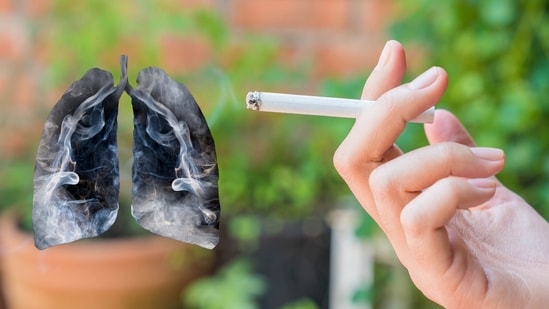
Your lungs work around the clock to supply oxygen to your body, helping every organ function properly. But smoking exposes them to thousands of harmful chemicals that can damage the airways, affect breathing, and increase the risk of serious conditions such as lung cancer and chronic obstructive pulmonary disease (COPD). The best part is that your body begins to recover soon after you quit smoking. Coughing may gradually decrease, breathing may become easier, and the risk of further damage may begin to fall. However, recovery has its limits, particularly if smoking has already caused permanent damage. This World Lung Day, here is what happens to your lungs when you quit smoking, how long recovery takes, and what you can do to support it.
How does smoking damage your lungs?
Cigarette smoke contains more than 7,000 chemicals, including toxic substances that irritate the airways and damage lung tissue. Over time, smoking weakens the lungs' natural cleaning system, making it harder to clear mucus and harmful particles.
"It can also damage the alveoli, the tiny air sacs where oxygen enters the blood and carbon dioxide is removed. This may lead to emphysema, a form of COPD that causes breathlessness and can permanently reduce lung function," Dr Samir Garde, Director of Dept of Pulmonology and Lung Transplant, Gleneagles Hospital, Parel, tells HealthShots.
Smoking is also a major risk factor for lung cancer. Indian cancer statistics cited in medical literature estimate that lung cancer accounts for 6.9% of new cancer cases and 9.3% of cancer-related deaths in both sexes between January 2008 and March 2020.
Can your lungs repair themselves after you quit smoking?
Yes, the lungs can recover from some smoking-related damage, but not all of it. Quitting reduces continued exposure to harmful chemicals, allowing airway irritation and inflammation to ease.
{{/usCountry}}Yes, the lungs can recover from some smoking-related damage, but not all of it. Quitting reduces continued exposure to harmful chemicals, allowing airway irritation and inflammation to ease.
{{/usCountry}}"Smoking tends to take a toll on the lungs every time a person inhales tobacco smoke. The smoke can irritate the airways, damage the tiny air sacs where oxygen exchange takes place, and affect the lungs’ natural ability to clear mucus and even harmful particles," says Dr Garde.
After quitting, tiny hair-like structures called cilia can gradually regain their ability to move mucus and trapped particles out of the airways. Immune cells in the lungs can also function more effectively.
However, damage from advanced emphysema or extensive scarring may be permanent. Quitting cannot restore destroyed air sacs, but it can help prevent further damage and improve quality of life.
What research says about lung recovery after quitting
A 2020 study published in Nature analyzed 632 colonies of airway cell colonies from 16 people. Researchers found that some cells in former smokers had mutation levels similar to those expected in people who had never smoked. These less-damaged cells were four times more common in former smokers than in current smokers, suggesting that quitting allows healthier cells to replenish the airway lining. This does not mean every damaged lung cell is repaired, but it shows that the airways retain some capacity to recover.
How long does it take for lungs to improve after quitting?
Recovery begins sooner than many people expect. According to the American Cancer Society, circulation and lung function can improve within two weeks to three months of quitting. Within one to nine months, coughing and shortness of breath may decrease.
The US Smokefree program also notes that carbon monoxide levels in the blood return to normal within about 12 hours. After one year, the risk of coronary heart disease is about half that of someone who continues smoking. The risk of stroke also falls over the following two to five years.
Is it too late to quit after 20 or 30 years of smoking?
No. Even after decades of smoking, quitting can offer meaningful health benefits. A 2024 study in the American Journal of Preventive Medicine, estimated that people who quit at 65 could avoid an average of 1.7 years of life lost compared with continuing to smoke. Those who quit at 75 could avoid 0.7 years of work. The study shows that quitting can still improve life expectancy in older adults.
What can help your lungs recover after quitting?
There is no instant lung detox, but a few habits can support respiratory health:
- Stay physically active: Build up regular walking or other activity as your breathing allows.
- Practice gentle breathing exercises: Ask a clinician or respiratory physiotherapist for techniques suited to your condition.
- Drink enough water and eat a balanced diet: Adequate fluids can help keep mucus less thick; include a variety of fruits and vegetables.
- Avoid smoke and polluted air: Keep away from second-hand smoke and reduce exposure to dust and fumes where possible.
- Stay up to date with vaccinations: Ask your doctor which respiratory vaccines are appropriate for you.
- Arrange a lung health check-up: Seek medical advice if you have a long smoking history or ongoing symptoms.
How can you manage cravings and when should you seek help?
Cravings can be difficult, but they usually pass. Try taking a short walk, drinking water, practicing slow breathing, or keeping a healthy snack handy. Notice and avoid personal triggers, such as alcohol or situations where you usually smoke. If cravings persist, a healthcare professional can help you access smoking-cessation counseling and suitable treatments.
Do not ignore a cough lasting more than eight weeks, blood in your sputum, unexplained weight loss, persistent wheezing, chest pain when breathing, worsening breathlessness or repeated chest infections. Seek prompt medical assessment; severe breathing difficulty or significant chest pain needs emergency care.
Dr Garde stresses that quitting is beneficial even for people who have smoked for years!
(Disclaimer: This article is for informational purposes only and is not a substitute for professional medical advice. Always seek the advice of your doctor with any questions about a medical condition.)
Catch your daily dose of Fashion, Taylor Swift, Health, Festivals, Travel, Relationship, Recipe and all the other Latest Lifestyle News on Hindustan Times Website and APPs.
Catch your daily dose of Fashion, Taylor Swift, Health, Festivals, Travel, Relationship, Recipe and all the other Latest Lifestyle News on Hindustan Times Website and APPs.