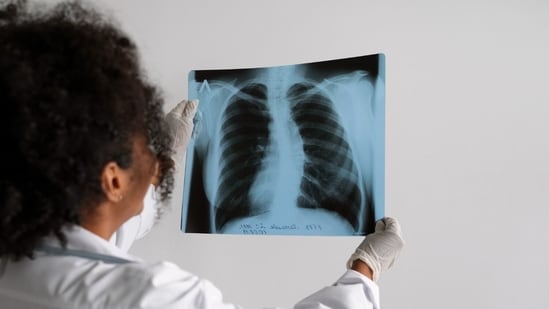
Your chronological age and organ age may not always go hand in hand. Sometimes, younger people have organs that have aged beyond their years, and the lungs are no exception. This means you may be young, but your lungs could be functioning like those of someone much older.ALSO READ: Can non-smokers get lung cancer? Pulmonologist shares 5 preventive habits
Much like chronological age, lung age is expressed in years, but it tells how well your lungs are functioning and whether they have sustained premature damage. What does a specialist have to say on this?
Dr Souparna Saha, pulmonologist at Naryana RN Tagore Hospital, Mukundapur, Kolkata, described what lung age means, why younger adults may have older lungs, and which factors accelerate the decline in lung function.
He raised concern over premature lung ageing: “Your birthdays tell you how old you are, but they can’t tell you how well your lungs are working. It has been found that some 30- and 40-year-olds have lung function that is similar to someone much older, while others have good lung function into much later life.”
The situation is alarming, as the pulmonologist cited the World Health Organization's finding, which estimates that 50 to 55 million people in India have chronic obstructive pulmonary disease (COPD), a primary condition linked to prematurely aging and damaged lungs.
{{/usCountry}}The situation is alarming, as the pulmonologist cited the World Health Organization's finding, which estimates that 50 to 55 million people in India have chronic obstructive pulmonary disease (COPD), a primary condition linked to prematurely aging and damaged lungs.
{{/usCountry}}So, you cannot judge your lung health from chronological age alone.
What is lung age?
Your chronological age cannot tell how well your lungs are working. Lung age is a way to understand lung capacity, based on what is expected for someone with your physical profile.
Dr Saha described,“It's a measure of how well your lungs are working compared with the lungs of a healthy person of the same age, sex, and height."
He said it is measured with a spirometry test, a simple breathing test that measures how much air you can breathe out and how fast. But he also clarified that lung age is not a projection of life expectancy. It is just that a significant gap between lung age and chronological age requires medical evaluation.
What causes premature lung ageing?
There are several lifestyle, environmental, occupational, and biological factors that cause the lungs to age faster than expected:
1. Smoking
- Smoking is one of the most well-documented causes of premature lung ageing.
- Triggers oxidative stress, chronic inflammation, and cellular damage.
- Repeated exposure to tobacco smoke can also damage the lining of the airways and tiny air sacs responsible for exchanging oxygen.
2. Second-hand smoke
- Passive smoking can be as harmful as smoking itself.
- The damage may develop gradually and remain asymptomatic for a long time, making it difficult to identify the decline in lung function during its early stages.
3. Outdoor air pollution
- Fine particulate matter and irritating gases produced by fuel combustion, traffic and industrial activities can keep the airways chronically inflamed.
- Prolonged exposure may eventually cause lasting damage to lung function.
4. Indoor air pollution
- Smoke from poorly ventilated cooking spaces, solid fuels and tobacco use can accumulate indoors.
- Along with outdoor pollution, these pollutants may have an additive effect on the lungs.
5. Occupational exposure
- Construction workers, miners, healthcare workers, textile workers, and factory employees may regularly encounter dust, chemicals, or fumes.
- Without adequate protective equipment and ventilation, prolonged exposure can contribute to chronic lung problems.
6. Repeated respiratory infections
- Frequent or severe respiratory infections, especially during childhood, can scar lung tissue and create chronic inflammatory conditions.
7. Genetic predisposition
- Some people may be genetically more susceptible to lung damage.
Where do the earliest signs of lung damage appear?
Lung damage may begin in the smaller, less noticeable parts of the respiratory system, even before more serious symptoms or conditions develop. One such is small airways disease.
Dr Saha shared, “The small airways represent the terminal portion of the respiratory airway system and may be among the earliest parts of the lungs to show abnormalities before the development or progression of chronic lung diseases such as COPD.”
What happens when your lungs age faster?
Declining lung health shows up in some signs. The pulmonologist said, “The first signs of lung deterioration can be invisible and dismissed. You may start to become sedentary and take the elevator instead of the stairs. Slowing down and avoiding activities you once loved become the new norm because you feel fatigued and out of breath. The causes of your symptoms should be examined before you assume it is age.”
Declining lung function may quietly make routine physical activities feel more exhausting. You may begin avoiding stairs or walking more slowly because you feel breathless and fatigued. If you experience these signs, your lung age may be higher than your chronological age, and it may be time to consult a doctor.
Note to readers: This article is for informational purposes only and not a substitute for professional medical advice. Always seek the advice of your doctor with any questions about a medical condition.
Catch your daily dose of Fashion, Taylor Swift, Health, Festivals, Travel, Relationship, Recipe and all the other Latest Lifestyle News on Hindustan Times Website and APPs.
Catch your daily dose of Fashion, Taylor Swift, Health, Festivals, Travel, Relationship, Recipe and all the other Latest Lifestyle News on Hindustan Times Website and APPs.