
P.G. Sittenfeld is a writer and public speaker who lives in Cincinnati with his wife and three sons.
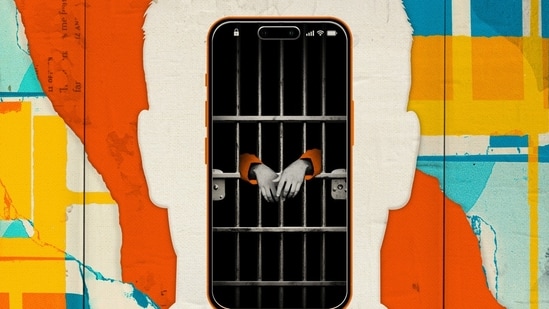
Sitting in a car in a McDonald’s parking lot in January 2024, I made a final call to my wife, Sarah, to tell her I loved her. It was the last time I’d be in possession of my iPhone before self-surrendering to the Federal Correctional Institution in Ashland, Ky.
My aunt and my sister Curtis were with me; the prison was just
P.G. Sittenfeld is a writer and public speaker who lives in Cincinnati with his wife and three sons.
Sitting in a car in a McDonald’s parking lot in January 2024, I made a final call to my wife, Sarah, to tell her I loved her. It was the last time I’d be in possession of my iPhone before self-surrendering to the Federal Correctional Institution in Ashland, Ky.
My aunt and my sister Curtis were with me; the prison was just a five-minute drive away.
Sarah had stayed behind in Cincinnati, where we live, in part to preserve as much normalcy as possible for our young sons. Saying goodbye to them had been the single most anguishing moment of my entire life.
Before incarceration, I was a member of Cincinnati’s city council for a decade. In 2018 and 2019, I’d been gearing up to run for mayor when the FBI targeted me in an elaborate sting operation. Undercover agents posing as real-estate investors made campaign donations, which I believed to be ordinary and routine and disclosed in public filings. Federal prosecutors nonetheless indicted me on public corruption charges, alleging a quid pro quo. After a three-week trial, I was acquitted on four counts and convicted on two, after which a judge sentenced me to a 16-month term of incarceration. (Later in this surreal saga, I was pardoned by the president in 2025 and in April of this year the U.S. Supreme Court unanimously vacated my convictions.)
Going to prison meant many things: an immediate loss of freedom, bruising reputational damage and powerlessness over how it would affect my family. It also meant that for the first time in the decade and a half since I first got a smartphone, I’d be forced to disconnect.
As is the case for the majority of Americans, my cellphone was practically a bodily appendage. According to screen time surveys and data analysts, adults in the U.S. now spend north of four hours a day on our phones; we check them more than 10 times an hour and don’t stop even while watching TV, out on dates or driving.
I was no exception. Whenever mine would buzz or chirp, I’d immediately shift my attention from whatever I was doing to the incoming stimuli, even though the pings were not always time-sensitive: work emails, updates from our children’s school, relentless spam from political campaigns (yes, even people who’ve held office hate these). Sarah and I would also exchange at least a dozen text messages in the course of coordinating our days, her from her hospital job as an oncologist, me from City Hall and from around town as I met with constituents, visited neighborhood business districts and did community safety walks. As my sentence loomed, the messages between us were often shot through with tenderness: an unprompted “I love you” for no particular reason.
At the prison, one of the first things I saw was a poster warning inmates and their visitors against—and threatening punishment for—bringing contraband, including phones, onto the compound. I felt my inability to reach Sarah acutely.
Following a customary invasive strip search, an inmate led me on a tour of the prison compound, introduced me to other inmates, and took me to my cell—an 8-by-10-foot cubicle that I was to share with another man, in prison parlance known as one’s “celly.” As I took in my new surroundings, all I wanted was to call (or at least text) Sarah to say: I feel physically safe…The men I’m meeting so far are being kind to me…and most of all: I miss you so, so much.
But I had no means of doing so. At first.
Soon, I’d see inmates unveil smartphones all around me. The economy inside prisons is an incredible testament to the power of capitalism, and how creatively goods will flow to those who want them, so long as the buyer can make it worth it for the seller.
Several men, knowing I was new, offered to let me use their smartphone to FaceTime Sarah. The idea of seeing her made me feel anxious desperation.
But I’d decided ahead of time on a handful of priorities for navigating prison, and number one on the list was: Get home. I wouldn’t do anything that could risk extending my stay or prolonging my sentence. I would not physically fight with another inmate, even if provoked. I would not mess around with any contraband, including phones.
Being caught with a phone was the most frequent reason that inmates at my prison were sent to the Special Housing Unit—also commonly called the hole—where prisoners could be kept for 23 hours a day in a small cell.
But it was clear from that first night on that many men chose to have a contraband phone, accepting the risk in large part to keep in touch with their families.
In the evenings—when there were fewer guards around and their patrols were more predictable—my housing unit was filled with the sounds of men sharing the latest prison gossip with their wives and girlfriends, asking their children what they did at school that day and checking in on aging parents. I especially empathized in these moments with the men whose sentences put them in the category of “long-termers.”
Of course smartphone usage wasn’t exclusively wholesome. Men would also scroll YouTube videos, partake in online sports betting and convince women on the outside to date them, sometimes seemingly to get those women to wire money into their commissary accounts.
Still, part of the demand was the unappealing conditions of the alternative: the prison phone room.
Just off the yard, this small, dingy room contained 10 partitioned payphone-style phones along three of the walls. On any given day, between two and five of them were broken.
Especially during high-traffic times, after waiting in line, you’d pick up a phone still warm from the grip of the inmate who’d just been using it, the receiver still smelling like his breath. You’d stand just inches from another man, while you both had conversations with loved ones which were often deeply personal.
The connection was frequently lousy, and every five minutes, an automated voice would interrupt to announce “This call is from a federal prison”—as though either party on the line needed reminding. My ability to speak to and hear Sarah and our sons’ voices was limited to around 15 minutes a day, and talking to them for that period of time, often around dinner, left zero minutes to speak with my mother, my three sisters or any other family members or friends.
Prison guards would spend hours every weekend tearing literal holes in the walls of the housing units looking for spots where men might be storing their smartphones. Sometimes, before the daily tallies that occurred to ensure all inmates were accounted for, they would jokingly call out, “It’s count time, guys—go ahead and hide your cellphones.”
The prison I was kept in was nowhere near one of the worst. I was detained in a minimum-security “camp.” But I saw, up close, how thoroughly the system deprives people from the lifelines of family connection they need.
Through months without a smartphone, I learned another thing much more unexpected: My brain—if not my heart—felt a lot better without it.
At first I thought it was a function of wide-open days unfurling before me. I had gone from a high-intensity profession, a full family and social life and various volunteer commitments—all frenetically coordinated through my smartphone—to the unstructured rhythms of prison. But as my confinement continued, even through my longing to be home, I felt an indisputable change that could only be tied to the lack of a smartphone.
Phone-induced distractedness, flusteredness, and agitation had been constants in life before prison. Without a device constantly jostling my brain and interrupting my thoughts, I became more alert to what was happening around me. I sensed my surroundings. I became better at noticing.
As winter gave way to spring, I tracked the almost hourly change in blossoming trees beyond the fences, grateful to see the physical manifestation of new beginnings. I discussed and debated life’s big questions and foundational topics with my celly: the complication of family dynamics, our greatest fears and regrets, our deepest longings for the future. I wrote poetry—something I’d never done before (or since).
In prison, every night, as phones emerged from their hiding places and my housing unit filled with the cacophony of men FaceTiming and watching YouTube clips and playing music videos, I’d think of a simple piece of advice another inmate gave me soon after I’d arrived in prison: “Do your time, bro, rather than letting your time do you.”
Alas, this is not a tale of transformation.
Four and a half months into my incarceration, in an incredibly rare occurrence in our legal system, three federal judges ordered my immediate release after hearing oral arguments in my appeal. The outcome of my case was still pending, but I was home. As I resettled into the life I had so missed, I at first tried to avoid the agitating, distracting and intrusive pull of my phone. I simply did what so many of us always have the option to do but can’t or won’t: I kept my phone on “Do Not Disturb,” put it in another room, and left it behind at home when we went out for a family walk or meal.
But within just a few months, I’d reverted to my old habits—immediately glancing at and engaging with every ping and alert, and reflexively picking up my phone to scroll through my rotation of go-to websites.
It’s an irony I’m still grappling with: That a kind of freedom I learned in prison, I couldn’t manage to bring back home with me.
One Subscription.
Get 360° coverage—from daily headlines
to 100 year archives.
Archives
HT App & Website