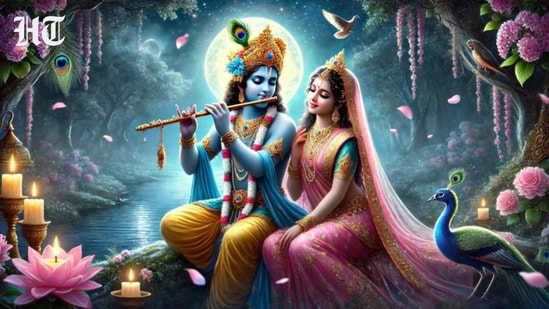
For many devotees, Janmashtami ends after the midnight celebration of Lord Krishna’s birth. The fast is completed, prasad is shared, and the day gradually returns to normal. But according to astrologer Sidhharrth S Kumaar of NumroVani, the spiritual journey can continue beyond Janmashtami, leading into Radha Ashtami 15 days later.
Radha Ashtami commemorates the divine appearance of Radha Rani. When the two vrats are observed as a pair, they can be seen as a meeting of purpose and love, action and devotion, strength and emotional surrender. In 2026, Krishna Janmashtami will be observed on Friday, September 4, while Radha Ashtami falls on Saturday, September 19.
Why Janmashtami and Radha Ashtami belong together
Janmashtami is observed to honor Lord Krishna’s birth, as he is traditionally regarded as Solah Kala Sampurna, representing all 16 divine kalas. His life is associated with wisdom, courage, leadership, playfulness and the ability to perform your duty without becoming attached to the outcome. Radha Ashtami brings another part of that spiritual journey into focus.
In the Vaishnava tradition, Radha Rani represents pure devotion and the divine energy of love. Her devotion is not based on demand, control or possession. Instead, it represents complete emotional surrender without giving up inner strength.
{{/usCountry}}In the Vaishnava tradition, Radha Rani represents pure devotion and the divine energy of love. Her devotion is not based on demand, control or possession. Instead, it represents complete emotional surrender without giving up inner strength.
{{/usCountry}}You can therefore see Janmashtami as a reminder to find direction and purpose, while Radha Ashtami brings devotion and love into that journey. One gives you a sense of purpose, while the other reminds you not to let that purpose become harsh, dry or driven entirely by ego.
What to ask for on Janmashtami
On Janmashtami, make a sankalp, or personal resolve, connected to action. It could be the courage to change your career, the discipline to leave an unhealthy habit or the clarity to make a decision you have been putting off.
Write down your sankalp before beginning the puja and keep it practical. Instead of asking only for success, ask for the wisdom to recognize the right opportunity and the courage to act when it appears. After the midnight puja, carry that promise into the next day. Take one clear, visible step toward it within the following 24 hours.
The 15 days between the two Vrats matter
The period between Janmashtami and Radha Ashtami does not have to be a time of simply waiting for the next festival. Use these 15 days to pay attention to how you respond when things do not go your way. Notice when pride enters your conversations, when impatience affects your relationships or when fear stops you from taking an honest step.
ALSO READ: Nishita Kaal on Janmashtami 2026: What each zodiac sign could manifest at midnight
Choose one small daily discipline. You could chant Krishna’s name, read a few verses from the Bhagavad Gita, feed an animal, offer food to someone in need or make an effort to avoid speaking negatively about others. The goal is not to have 15 perfect days. It is worth noting the moments when you begin to act in ways that are different from the person you prayed to become.
What to ask for on Radha Ashtami
On Radha Ashtami, turn your attention toward the heart. You can pray for the ability to love without constantly testing another person. If you are confused about a relationship, ask for emotional clarity. If you are single, seek a connection built on mutual respect.
Couples can offer flowers to Radha-Krishna and make a shared sankalp for their relationship. This could mean deciding to stop bringing up old mistakes in every argument, spending more uninterrupted time together, or speaking honestly before resentment grows. However, the vrat should not be used to control another person or to force reconciliation. Love and devotion cannot grow through emotional pressure.
Completing the Vrat Pair
Break the Radha Ashtami fast according to your family tradition. Offer a simple bhog, express gratitude and return to the sankalp you made on Janmashtami.
Ask yourself two simple questions:
- Did you take action toward the life you prayed for?
- Did you become more loving while taking that action?
This is the balance represented by the two vrats. Janmashtami reminds you to stand up and perform your duty. Radha Ashtami reminds you not to lose tenderness while doing it.
If you are pregnant, have diabetes, take regular medication, or are managing a health condition, avoid strict fasting without medical guidance. A fruit-based or sattvic fast can also be observed with sincere devotion.
The divine union of Radha and Krishna is not simply a story of worldly romance. It represents the meeting of consciousness and devotion. When direction and love begin to work together, you may find that life does not have to be a choice between achievement and emotional peace.
ALSO READ: Which chapter did the August 2026 lunar eclipse close for you, according to your zodiac sign?
Disclaimer: Spiritual and astrological interpretations are based on traditional beliefs and should not be treated as scientific or medical advice. Fasting practices should be adapted to your individual health needs and followed with appropriate medical guidance when necessary.