Wellness is taking a softer turn this year, especially for the youth. Instead of always trying to work harder, move faster or track another health goal, more people are learning to slow down and pay attention to how they actually feel.
That shift has helped bring somatic exercises into the wellness conversation. The practice focuses on body awareness, slow movement and noticing physical sensations. The Global Wellness Summit has also identified “neurowellness” as a major 2026 trend, pointing to growing interest in practices that connect the body, mind and everyday wellbeing.
For some people, this is more than another wellness routine. It can also become a quiet way to feel more present and connected with themselves.
Also Read A new wave of wellness is taking over Gen Z. Here are spiritual practices you can explore
What are somatic exercises?
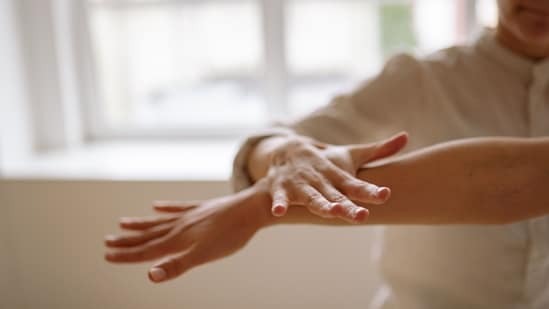
Somatic exercise asks you to pay attention to your body while you move.
{{/usCountry}}Somatic exercise asks you to pay attention to your body while you move.
{{/usCountry}}Instead of counting repetitions or trying to perfect a pose, you notice sensations such as tension, ease, pressure or movement. Harvard Health describes somatic workouts as exercises that focus on internal sensations and the body's response to movement. Body scanning, breath awareness and small, slow movements can form part of the practice.
You might slowly roll your shoulders, shift your weight or move your spine while paying attention to each sensation. The goal is not necessarily to make the movement more difficult. It is to become more aware of what you are doing.
Why is somatic workout trending now?
The growing interest comes as wellness culture moves away from constant optimisation.
The Global Wellness Summit has identified nervous-system regulation and “embodied care” among the themes shaping wellness in 2026. Its report describes a shift from measuring results and performance towards paying greater attention to how people feel in their bodies.
The trend also appears across social media, where people increasingly discuss breathwork, slow movement, mindfulness and other ways of coping with everyday stress.
Where does spirituality come in?
Somatic exercise is not automatically a spiritual practice. You can use it simply as mindful movement.
But body awareness has a long history in traditions that connect physical practice with inner attention. Yoga, for example, has roots in Hindu, Jain and Buddhist traditions and has traditionally brought together the body, mind, breath and awareness. Modern Western yoga does not always retain that spiritual context.
According to Cleveland Clinic, somatic movement can encourage reflection, acceptance and a deeper sense of connection, which some people may experience spiritually. It also makes clear that you do not have to add a spiritual element to the practice.
That makes somatic movement interesting for people who do not follow a particular religion but still want a sense of inner connection.
Can an ordinary movement become a spiritual ritual?
It can, if you choose to approach it that way.
You could spend five minutes sitting quietly and noticing your breathing. You could stretch slowly before bed without checking your phone. You could take a walk and focus on your footsteps, breathing and surroundings instead of rushing to reach a destination.
The movement itself does not have to be complicated.
What should you know before trying it?
Somatic exercise is gaining popularity, but research specifically on somatic workouts remains limited. Harvard Health notes that early research has explored possible benefits, while Cleveland Clinic also points out that more research is needed.
So it is better to view somatic movement as a mindful approach to movement, rather than a cure or treatment.