The Uttar Pradesh Control of Organised Crime Act (UPCOCA), which was waiting to happen for a decade now, is likely to see the light of the day after the state cabinet on Wednesday gave its approval to the bill.
Incorporating the provisions of the Maharashtra Control of Organised Crime Act (MCOCA) legislated in 1999, the bill will be tabled in the winter session of the state legislature commencing from Thursday.
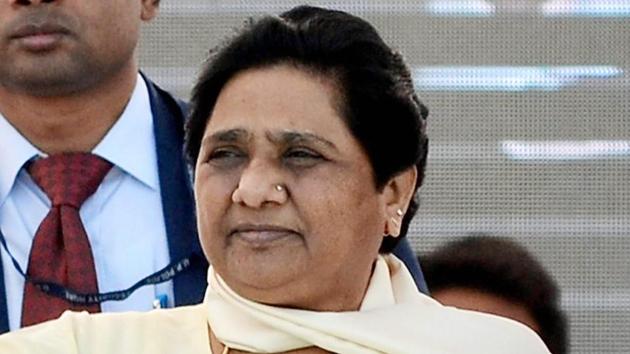
The BSP government had in 2007 decided to bring UPCOCA to check organized crime. A team of senior officers was then sent to Maharashtra to study the implementation of MCOCA. In March 2008, the then chief minister Mayawati tabled the Bill in the legislative assembly.
The BSP government sent UPCOCA to the centre for presidential assent but the then Congress led UPA government opposed the Act fearing that it might be misused against the minority community. Denial of the President approval and scathing attack launched by arch rival Samajwadi Party terming the BSP anti-Muslim put Mayawati on the back foot. It was dumped silently before the 2009 Lok Sabha elections.
“Also, the BSP, which grabbed power in 2007 riding on the law and order issue, saw top gangsters, including Mukhtar Ansari, Brijesh Singh, Dhananjay Singh, Bhagwan Sharma alias Guddu Pandit, Umakant Yadav, Jitendra Singh Babloo and Abhay Singh, joining the BSP rank, forcing the party to go slow against organized crime,” said RK Prasad, a teacher in VBS Purvanchal University.
A senior state government officer said the deliberation for the law actually started during the BJP government under Kalyan Singh (September 1997- November 1999). Singh constituted the Special Task Force to eliminate top gangsters active in the state and planned to break the nexus between criminals-politicians-contractors-government officers. Officers were directed to study MCOCA passed by Maharashtra government in 1999. But before the orders could be put on a roll, Kalyan Singh resigned as CM.
{{/usCountry}}A senior state government officer said the deliberation for the law actually started during the BJP government under Kalyan Singh (September 1997- November 1999). Singh constituted the Special Task Force to eliminate top gangsters active in the state and planned to break the nexus between criminals-politicians-contractors-government officers. Officers were directed to study MCOCA passed by Maharashtra government in 1999. But before the orders could be put on a roll, Kalyan Singh resigned as CM.
{{/usCountry}}Now once again the BJP government led by Yogi Adityanath has taken it up expressing its desire to break the backbone of the crime syndicates flourishing in the state.
“The state government has already directed the state police to launch a drive against hardened criminals. Already, police have killed around 30 criminals in encounters in various districts. The UPCOCA will help the state government in breaking criminal-politician-contractor-government officer nexus,” said a senior police officer.
Talking to HT, former DGP and architect of police reforms Prakash Singh said, “UPCOCA is necessary as there is no law in the state to deal with organized crime. The fear that the law will be misused cannot restrain the state from enacting the legislation.”
MCOCA is in force in Maharashtra since 1999. Other states, including Andhra Pradesh, Karnataka and Delhi, have enacted a similar law.
Singh said the Second Administrative Reforms Commission headed by Veerappa Moily (2007) had stated that the incidents of organized crime was on the rise in the country and if not checked they had the potential to threaten national peace and security.
Along with a central law, the Commission had suggested setting up of special courts, enhanced punishment, special evidence rules, circumstances under which confession to police officers could be admissible in trials, protection of witnesses, forfeiture and attachment of property of the criminals and authorization for interception of communication, Singh said.