
 E-Paper



In Lucknow slums, TVs ‘dish’ out smiles on faces of the underprivileged
With antennas shining bright in a row atop huts covered with used polythene and discoloured banners of political parties, it is the noise of Bollywood songs and dialogues of daily soaps which


Amidst cacophony and stink along a nullah near a busy Lucknow road, dish antennas on rooftops of temporary shelters in a slum catch the eye.
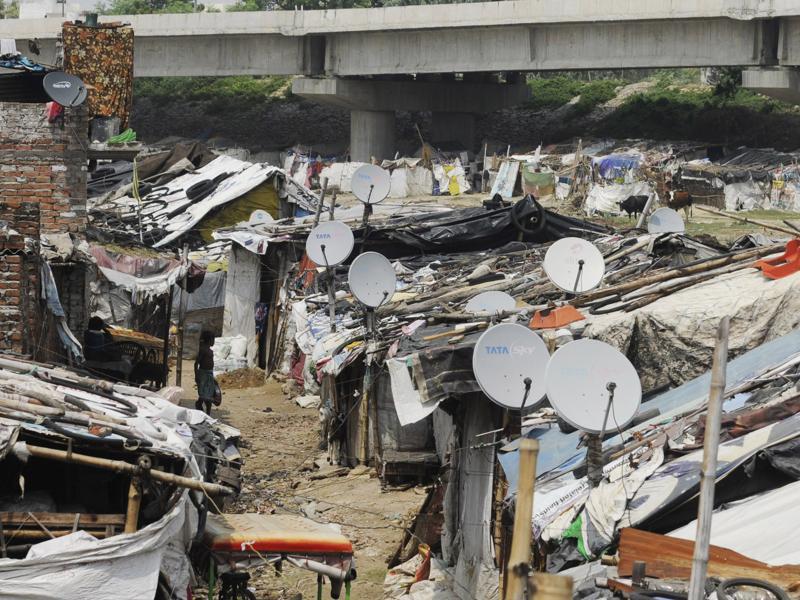
With antennas shining bright in a row atop huts covered with used polythene and discoloured banners of political parties, it is the noise of Bollywood songs and dialogues of daily soaps which indicate that life isn’t that monotonous for slum dwellers.
The love for television is above everything and thus even with a minimal income to feed on two square meals a day, the families do not mind shelling out a major portion of their income to DTH service providers.
Gulafsha, 10, says, “My father has died and we three sisters depend on our mother’s income. My mother works as a domestic help in two houses where she gets Rs 700 and Rs 500, respectively.”
The family primarily depends on the leftover food from the houses where the woman works as domestic help. The remaining requirements are met with Rs 700.
And this is not a one-off story. Arjun, who collects waste from residential areas, says: “On an average, my daily income is Rs 100. There are days when I do not earn anything at all. Out of the total income, Rs 200 goes as payment for water, Rs 200 for electricity and Rs 500 is the monthly bill for dish television,” he said.
Living conditions are bad in the slum. Children do not go to school. There is no authorised electricity and water supply.
“We have ‘jugaad’ for everything. We get our electricity supply through our tricks. Since there are no taps and water supply we have to fetch water from a distant place and that too for a price,” says Noor Bano, who has been living in the same slum for years.
Many slum dwellers are voters too. Election times leave them with hopes of better roads and water supply but nothing has changed in Akbarnagar for years.
“We have been living here for years but the conditions have remained the same. Every time there is rain, nullah water leaves our homes flooded. There are diseases and deaths every year during the season. But life moves on,” says Arjun.
Most of the people in the slum are those who collect garbage, work as domestic help or pull rickshaws. Most of them have televisions which they have bought from trash pickers.
“People sell off their old televisions to door-to-door trash collectors and we buy it from them at cheap rates,” says Mehwish.
Children and young boys in the slum may be illiterate but all are masters in television circuits. That is why televisions in the area remain functional.
“We are poor. But does that mean we have no right to live our lives? It is only television that is our property and it keeps our homes lively,” said a woman in the slum.
Read more: Defecating in the open? Be ready for a floral public welcome


