From some ‘godmen’ piercing a trident into their tongue to others of their ilk walking on coal-fire and eating fire-balls, such sights are not rare in India – the land of ‘miracles’ and ‘superstitions’, which are passed on from one generation to another.
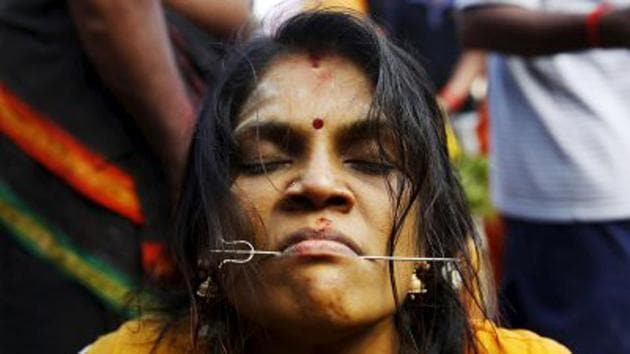
Not only in far-flung rural areas of the state but even in villages on the outskirts of the state capital, self-styled godmen try to ‘trick’ unsuspecting villagers with their supposed ‘magical’ powers.
But now, the Council of Science and Technology, Uttar Pradesh (CSTUP), is spearheading a campaign to dispel such myths and superstitions and expose the ‘godmen’ through its project named ‘district plan for science popularisation’.
The council has identified some common ‘magical’ powers displayed by these ‘godmen’ in villages across the state.
S M Prasad, joint director, CSTUP is looking after the project.
“Through our district science coordinators, we have identified the so-called ‘miracles’ that are performed by ‘godmen’ to trap unsuspecting villagers,” said Prasad.
He added: “With the help of scientific explanations of these ‘miracles’ we are trying to dispel myths and superstitions and expose the godmen.”
The council is also providing training to resource persons, who are also acting as master trainers and teaching people in villages how to dispel myths and expose ‘godmen’.
Raj Kamal Srivastava, who is also known as ‘Dabholkar’ of Uttar Pradesh, is spearheading a campaign against ‘godmen’ by educating people about superstitions.
Narendra Dabholkar was a Pune-based rationalist, who was shot dead in 2013.
{{/usCountry}}Narendra Dabholkar was a Pune-based rationalist, who was shot dead in 2013.
{{/usCountry}}Raj Kamal organises workshops and seminars in schools and villages to scientifically explain the ‘godmen’s’ miracles.
“Self-styled godmen are active in villages where people are less educated. Not only far-flung villages are grappling with this problem, but villages in the vicinity of the state capital are also facing such an issue,” said Raj Kamal.