The famous blockchain technology, currently largely used in the transactions of cryptocurrencies such as bitcoins, may soon find its application in the electricity sector too with Uttar Pradesh considering giving the new technology a try.
The blockchain is a series of data records, each connected to the one before it. The newest record in this chain would contain the history of the entire chain. And thus, the blockchain was created.
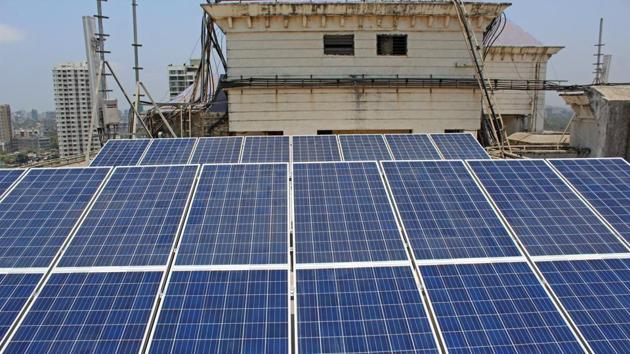
Using this technology, for an example, a person can sell the surplus power generated from his solar rooftop to his neighbour rather than sell it back to the grid without the involvement of any middleman, including a power distribution company. All this can be done in a completely decentralized system, automatically balancing demand and supply and transacting against a set of pre-coded set of rules.
To set the ball rolling, the UP Electricity Regulatory Commission (UPERC) is organising a daylong conference on “Creation of Eco System using Block Chain Technology for Renewable Energy Distributed Energy Generation & Supply,” here on October 10.
{{/usCountry}}To set the ball rolling, the UP Electricity Regulatory Commission (UPERC) is organising a daylong conference on “Creation of Eco System using Block Chain Technology for Renewable Energy Distributed Energy Generation & Supply,” here on October 10.
{{/usCountry}}“We are holding a conference with a lot of experts participating in it here on Wednesday to explore the possibility of using the revolutionary blockchain technology in the field of electricity generation and distribution,” UPERC chairman RP Singh said. This technology, he said, was already being successfully used in the energy sectors in some foreign countries.
“UP is going to produce a lot of solar power in the years to come, making the state the greenest pasture for investment in the renewable energy and distribution sector. Blockchain technology is an important tool, which is expected to play a significant role in extending the benefits of these investments and change in ecosystem to the consumers,” Singh said.
As some consumers are also producers who not only consume power but also dispose of surplus, blockchain technology, it is said, can enable them to sell the energy they generate directly to their neighbours.
“Blockchain platforms which are basically public ledgers initiate and transmit transactions while recording them in a tamper-proof manner. All transactions made between individual parties are directly executed through a peer-to-peer network,” said UPERC member SK Agrawal.
Implementation of the idea, he said, would require smart meter technology and blockchain with inbuilt smart contract functionality.
“The blockchain-enabled smart meters that know when to buy and sell power will record all the transactions between various households and payments will be made using traditional methods or crytocurrencies in a transparent, secure and decentralized set up without any intermediaries,” Agrawal explained.
To facilitate a threadbare discussion on the subject, the UPERC has divided the seminar into four sessions, namely, business model for increasing metering billing & collections in rural area using blockchain technology,use of blockchain technology to scale up distributed rural energy generation and supply in rural area, use of blockchain technology in providing quality reliable uninterrupted power by mini grids having different generating technologies (Solar PV/Wind/Bio Mass etc.) and the last regulatory framework for creating enabling environment for distributed renewable energy developers.
Sources, however, said, executing the idea might not be that easy in the state which had not been able to fully operationalise the open access system (where buyers have a choice) even 15 years after it was provided in the Electricity Act.
“The state will have to tackle various legal and regulatory issues before the lofty blockchain idea is put to practice,” they said.
WHAT IS BLOCKCHAIN?
Before it was ever used in cryptocurrency, it had humble beginnings as a concept in computer science — particularly, in the domains of cryptography and data structures.
The very primitive form of the blockchain was the hash tree, also known as a Merkle tree. This data structure was patented by Ralph Merkle in 1979, and functioned by verifying and handling data between computer systems. In a peer-to-peer network of computers, validating data was important to make sure nothing was altered or changed during transfer. It also helped to ensure that false data was not sent. In essence, it is used to maintain and prove the integrity of data being shared.
In 1991, the Merkle tree was used to create a “secured chain of blocks” — a series of data records, each connected to the one before it. The newest record in this chain would contain the history of the entire chain. And thus, the blockchain was created.
In 2008, Satoshi Nakamato conceptualized the distributed blockchain. It would contain a secure history of data exchanges, utilize a peer-to-peer network to time stamp and verify each exchange, and could be managed autonomously without a central authority. This became the backbone of Bitcoin. And thus, the blockchain we know today was born, as well as the world of cryptocurrencies.