
 E-Paper



#WomensDay: Slut Walks, Januhairy and the fight to reclaim women’s bodies


The battle for rights has continued to be powerful and creative. Here are some of the defining movements of the last decade.
Some battles have been won — the fights for the right to vote, work, own property have borne fruit. Some continue: the fight for access to contraception, legalisation of abortion, equal pay, equal representation. The big battle for the near future is over perception. Who gets to tell women how to dress, live, behave? The answer, women will tell you, is no one. Here’s how that battle is playing out.
Slut Walks
This global movement calls for the end of rape culture – which typically uses victim-blaming and slut-shaming to discredit survivors of sexual assault. It also seeks to reclaim the word ‘slut’ to keep it from being used to control a woman’s sexuality and discourage women from taking control of their bodies.
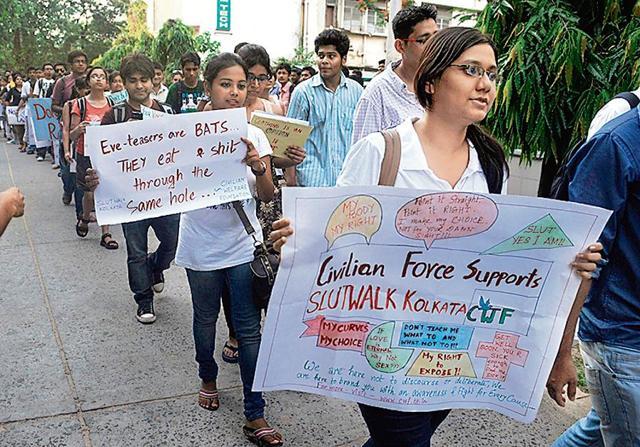
The first Slut Walk was held in Toronto in 2011, in response to a Toronto police officer’s statement that if women want to avoid rape, they shouldn’t dress “like sluts”. Since then, around the world, women have taken to the streets in plunging necklines, skimpy tops, tiny skirts and other such apparel, often accompanied by men also holding placards about the irrelevance of clothing when it comes to sexual assault.
In India, the first slut walk, or Besharmi Morcha, was held in Bhopal in 2011; since then there have been similar marches in Delhi, Lucknow and Kolkata. Many women walked in saris and salwar-kameezes, as a reminder that women are sexually harassed no matter what they wear.
Pussy Marches
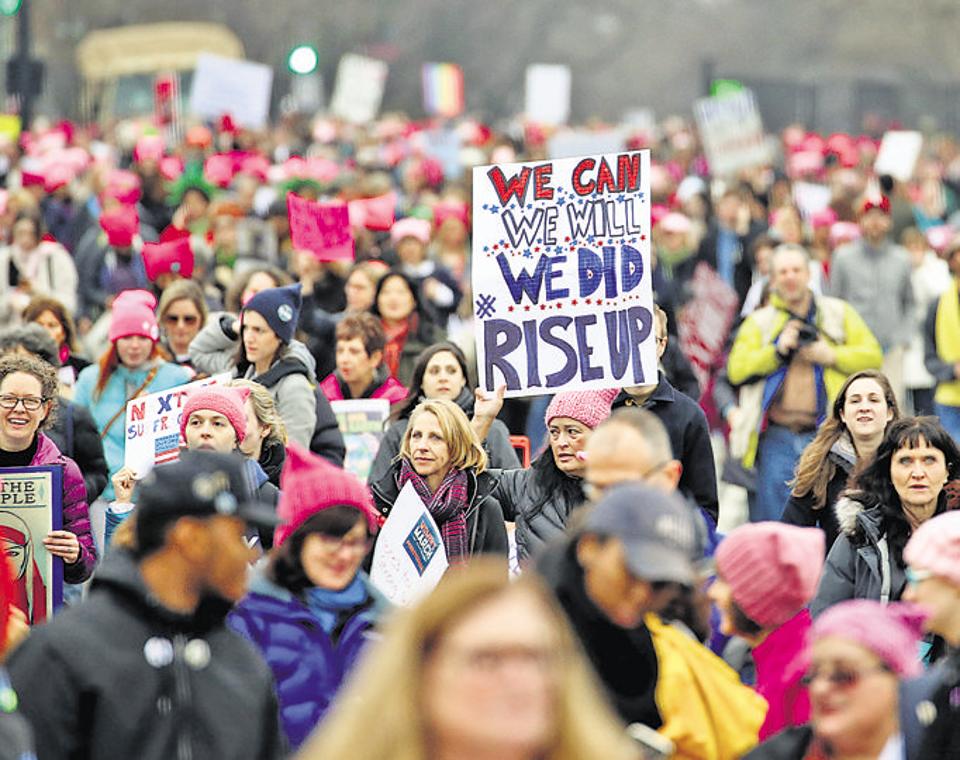
In 2017, a subversive pink cap or ‘pussyhat’ became a new symbol of women’s resistance. It was worn widely at the Women’s March/Anti-Trump Protests of January 21, the day after Donald Trump was sworn in as President. The protest was a reminder that the man now in the Oval Office had in 2005 said that women would let him “grab them by the pussy” because he was famous. It was also an attempt to reclaim the word, which is usually used in a derogatory sense. According to organisers of the march, the goal was to “send a bold message to our new administration on their first day in office, and to the world, that women’s rights are human rights”. Over 400 marches were simultaneously carried out across the US on the same day.
The Free the Nipple campaign
This campaign aims to end the discrimination that allows bare-chested men to be shown on social media, but censors bare-breasted women. The movement was launched by filmmaker Lina Esco in 2012, who decided to promote a film of hers by posting clips of herself topless in New York, every day. She used the hashtag FreeTheNipple. As Facebook continued to take down her posts, celebrities from Miley Cyrus and Rihanna to Chrissy Teigen joined in and posted photos of their own. The movement has since spread around the world, with women in India joining in too.
The Big Latch On
Around the world campaigns such as the The Big Latch On, Free The Feed, Breast is Best, are global campaigns run by mothers to de-stigmatise public breastfeeding and remove the shame associated with it. In India, mothers have even moved the Mumbai and Delhi High Court to fight for their right to breastfeed freely in public spaces. Althought it is not illegal to breastfeed in the county, women in India are expected to dress modestly, and even a glimpse of a breast during feeding is all too often termed obscene, inviting disgusted demands to desist and even unwanted sexual advances.
Januhairy
In 1999, actress Julia Roberts made headlines for wearing a dress that exposed unshaven armpits. These days, body hair on women is a much more mainstream political statement. It’s in Nike ads, Miley Cyrus videos. Last year, UK-based students Laura Jackson and Ruby Jones launched a campaign they called Januhairy, urging women to stop spending precious time, money and mindspace trying to rid every inch of their bodies of hair. The campaign urged women to do this all through January and post images of themselves online. Januhairy was celebrated again this year and is set to be an annual feature.


