PoornaDirector: Rahul BoseCast: Rahul Bose, Aditi Namdar, Dhritiman ChatterjeeRating: 3/5
The recipe for an underdog movie is simple: An improbable hero, depressing surroundings, a crushing defeat – usually by interval – and a fighting victory against all odds. Poorna’s strength is in its ability to weave a strong narrative within this limit. Its tragedy is that the story never soars beyond the cage of this formula.
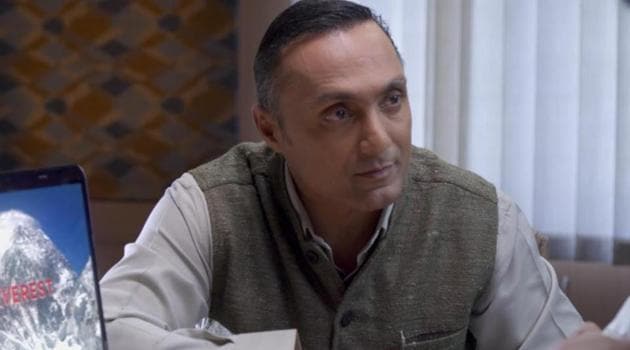
Poorna marks the return of Rahul Bose to direction after 15 years as he tells the story of Poorna Malavath, a 13-year-old girl from a tribal village in remote Telangana who became the youngest girl to scale Mount Everest in 2014. Bose plays the role of her mentor Praveen Kumar, a state government official who nurtures and encourages the girl to leave her home and worries behind as she prepares for the difficult expedition. In the process, the underlying story of Bose’s struggle to turn around the state government school system plays out.
Sounds like the formula of every inspirational movie you’ve seen? Pretty much, playing out over a length of more than two hours.
{{/usCountry}}Sounds like the formula of every inspirational movie you’ve seen? Pretty much, playing out over a length of more than two hours.
{{/usCountry}}The first half of the film is terrific as the camera lovingly dwells upon Poorna (Aditi Inamdar) and her sister Priya (S Mariya) as they negotiate with abject penury, hostile parents and a broken education system that is designed to keep out the most underprivileged. Some of the movie’s best moments are here, as the tribal girls talk, laugh, and draw the audience into their daily lives. The director’s gamble of using Telugu interspersed with Hindi and English works the best here, and it is a relief to hear languages other than Punjabi spoken in Hindi movies – though it sounds very off when Bose tries to use language offhand. In one heart-rending sequence, a group of impoverished young girls joke about their poverty – the humour about starvation hitting the audience right in the gut.
Unfortunately, it’s all downhill from here. As Poorna climbs higher and higher, so does the rhetoric pitch in the movie. There are jarring songs in Hindi that clash with the Telugu dialogues and the rural Telangana setting of the movie, formulaic plants like a letter from a dead relative and the compulsory rousing song at the climax. Most of all, Poorna cannot bear the weight of Bose’s savior character who is going to change people’s lives and a state’s education all single-handedly – the talented girls and the amazing support cast of Dhritiman Chatterjee and Heeba Shah all recede to the background.
Subhransu’s cinematography is gorgeous as the viewer is taken from the remote tribal village to the dilapidated government schools with starkness and little brush-up, but the Hindi songs break both the rhythm of the movie and the mood of its setting. The support cast is good but hardly has any screen time.
Bose gave several interviews before the movie about how he thought Poorna would be a commercial success but the pursuit of this goal appears to have scotched the movie’s real potential. Bose’s direction retains none of the delicious eccentricity of Everybody Says I’m Fine but must be commended for directing Inamdar and Priya’s performances to perfection. It is a pity his character takes up so much script space to do what SRK did so much better in Chak De India.
Biographies have the challenge of remaining true to their original story, and in devoid of a punch that can surprise the viewer. But successful biographies – think the Iron Lady or even this year’s Dangal or Florence Foster Jenkins – compensate by diving into the lead character, exposing sides of a public figure that people thought they knew intimately. It is in this crucial test that Poorna fails – we leave the hall with little insight into the extraordinary girl as the director is happy to wrap her struggles in tired tropes, and offers multiplex-like solutions to endemic problems such as school dropouts.
Malavath’s real-life victory was epochal because a tribal girl from one of India’s most backward regions struggled past structural and systemic inequalities. She was joined at Everest by a Dalit boy and was helped and inspired by a Dalit police officer who hailed from the same region and had faced similar discrimination. In scaling the highest peak, the duo made a powerful statement about defeating bias meted out to two of India’s most discriminated communities.
Poorna shows little of this, choosing to hide the import of the movie behind giant photographs of Ambedkar in the background at government office shots. Poorna is well intentioned and but in its hunt for ticket revenues and be palatable for a Hindi-speaking city audience, it sabotages what could have been a great film. Watch it strictly for the newbies.
Follow @htshowbiz for more