The Navi Mumbai International Airport (NMIA), which is in the early stages of construction, will handle more passengers than the Chhatrapati Shivaji Maharaj International Airport (CSMIA) by 2031-32, when both runways of the new airport will be functional, revealed a comprehensive transport study (CTS) released by the Mumbai Metropolitan Region Development Authority (MMRDA).
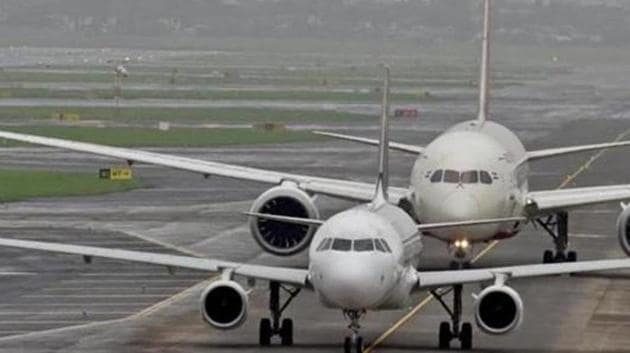
Construction of the new airport crossed a crucial landmark last week, when L&T Construction bagged the contract to build the new facility, which is expected to come up at an investment over Rs16,700 crore.
The CTS said the airport will cater to 10 million passengers per annum (MPPA) in 2021, when the first phase of the project is expected to be completed. This will subsequently be enhanced to 20 MPPA.
“The existing CSMI airport accommodated about 29 million passengers per annum (MPPA) in 2010-11. For Mumbai, airport passenger projections are expected to reach 48 MPPA by 2026. The forecasted total passenger demand for CSMIA and NMIA for the horizon year 2031-32 is about 40 MPPA and 61.74 MPPA respectively,” the draft report stated.
The report said that passenger traffic at NMIA will be boosted by the growth of Navi Mumbai as a commercial hub, with industrial development around the airport generating 1.42 lakh new jobs directly, along with another two lakh jobs at an indirect level.
{{/usCountry}}The report said that passenger traffic at NMIA will be boosted by the growth of Navi Mumbai as a commercial hub, with industrial development around the airport generating 1.42 lakh new jobs directly, along with another two lakh jobs at an indirect level.
{{/usCountry}}According to MMRDA, the new facility will make the export and import of cargo more economical, efficient and fast from the proposed Navi Mumbai Special Economic Zone (SEZ). The study said the airport would boost industrial development along the Mumbai-Pune-Ahmednagar corridor, the Mumbai-Nashik corridor and also the Konkan belt, which would in turn, ensure a steady growth in air traffic.
“There is no doubt that the Navi Mumbai airport will see more air traffic than the existing airport. This will be due to increase in the nearby regional airports and increase in their connectivity,” said Pankaj Joshi of the Urban Design Research Institute (URDI), adding that mobility will create job opportunities in Navi Mumbai, but it is premature to say if other developments on the corridors will help boost employment.
Stay updated with all the Breaking News and Latest News from Mumbai. Click here for comprehensive coverage of top Cities including Bengaluru, Delhi, Hyderabad, and more across India along with Stay informed on the latest happenings in World News.
Stay updated with all the Breaking News and Latest News from Mumbai. Click here for comprehensive coverage of top Cities including Bengaluru, Delhi, Hyderabad, and more across India along with Stay informed on the latest happenings in World News.