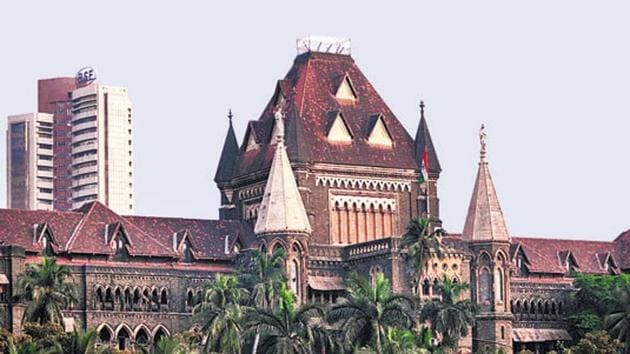
The Bombay high court on Monday issued a notice to the central government following a petition challenging constitutional validity of a certain provisions of the Mental Health Act, 2017 contending that the enactment keeps several common and serious mental illnesses out of its purview.
The Indian Psychiatric Society, an association of over 5,500 psychiatric and other mental health professionals across the country, has mainly taken objection to Section 2(1)(s), complaining that the section has defined the term “mental illness” in a restrictive and conditional manner.
Under this section, a person will get benefits under the enactment only if his ailment is “substantial” enough to cause “impairment of judgment, behavioural capacity to recognise reality or the ability to meet ordinary demands of life”. The petitioner body contended that this conditional definition will “exclude not only the most common mental illnesses but, also serious mental illnesses like severe depression and delusional disorders”.
“Most of the mental illnesses do not manifest in grossly-impaired judgment or behaviour capacity to recognise reality,” states the petition filed by Indian Psychiatric Society. “Such effect or symptoms occur only in very serious mental illnesses which are generally described as psychotic disorders,” it adds.
The petition states that the National Mental Health Survey conducted in 2015-16 which covered about 700 million Indians from 12 different states, indicated that about 11% of our population above 18 years of age – nearly 150 million people are suffering from mental disorders which require active interference.
{{/usCountry}}The petition states that the National Mental Health Survey conducted in 2015-16 which covered about 700 million Indians from 12 different states, indicated that about 11% of our population above 18 years of age – nearly 150 million people are suffering from mental disorders which require active interference.
{{/usCountry}}It also mentions that Section 21(4) of the Mental Health Act, 2017 mandates insurance companies to provide medical insurance for treatment of mental illnesses at par with physical illnesses and points out that the narrow definition will restrict these benefits to a limited number of patients.
The petitioner body has taken strong objection to the prohibition imposed on use of Electro Convulsive Therapy (ECT) as a mode of treatment even during emergency, unless accompanied by muscle relaxants and anaesthesia. Terming this prohibition as “completely irrational and arbitrary,” the petition states that ECT is a life-saving procedure in certain psychiatric conditions like depression with suicidal risk, gross excitement, severe catatonia etc. “Even the standard book on psychiatry mentions it (ECT) as a form of treatment, which is safe,” it states.
The petitioner body has also challenged validity of Section 2(1)(r)(ii) which requires mental health professionals to seek one more registration with the State Mental Health Authority; and sections 34, 76(2) that relate to the mental health authorities.
A bench of Justice Naresh Patil and Justice Girish Kulkarni has posted the petition for hearing after four weeks when the central government is expected to file its affidavit in reply.
Stay updated with all the Breaking News and Latest News from Mumbai. Click here for comprehensive coverage of top Cities including Bengaluru, Delhi, Hyderabad, and more across India along with Stay informed on the latest happenings in World News.
Stay updated with all the Breaking News and Latest News from Mumbai. Click here for comprehensive coverage of top Cities including Bengaluru, Delhi, Hyderabad, and more across India along with Stay informed on the latest happenings in World News.