The Maharashtra forest department will carry out a first-of-its-kind exercise to release a sub-adult tigress that was previously involved in conflict, back into the wild. The tigress T2C1 is almost two-and-a-half years old and was captured in September. The rewilding exercise will be carried out in Pench Tiger Reserve (PTR), Nagpur.
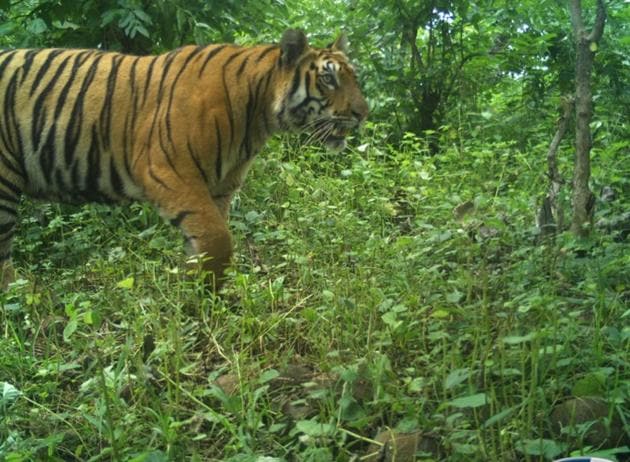
Rewilding captured or captive tigers is mostly carried out with cubs or young adults. It involves placing them within a natural enclosure with access to wild prey, to teach them hunting skills, before they are reintroduced to the wild. The principal chief conservator of forests (PCCF-Wildlife) approved the decision to rewild T2C1 on Saturday, and said this was the first time in Maharashtra where a sub-adult tiger would be part of such an exercise. Previously, cubs less than a year old have been released back into the wild through minimal human imprint. The PCCF’s decision was based on recommendations by a state-appointed committee on the possible rehabilitation of tigers captured due to conflict.
On September 19, T2C1 killed a 60-year-old woman at a farm near Andharwadi village. Earlier in the month, the tigress had attacked a farmer in the same area and killed livestock. On September 23, T2C1 was tranquilised and captured near the Tipeshwar Wildlife Sanctuary (TWS) in Yavatmal district, and sent to the transit treatment centre at Nagpur.
“We want to give this tigress one more chance because of her age and to ensure she doesn’t spend the rest of her life in captivity. She has killed only one person, and that may or may not have been killing by stalking. The basic aim is to give her a chance to survive on her own,” said Nitin Kakodkar, PCCF-Wildlife. “Our intent is to wean the tigress away from cattle kills and human presence so that it takes to wild prey.”
{{/usCountry}}“We want to give this tigress one more chance because of her age and to ensure she doesn’t spend the rest of her life in captivity. She has killed only one person, and that may or may not have been killing by stalking. The basic aim is to give her a chance to survive on her own,” said Nitin Kakodkar, PCCF-Wildlife. “Our intent is to wean the tigress away from cattle kills and human presence so that it takes to wild prey.”
{{/usCountry}}For the next three to six months, T2C1’s behaviour will be monitored in PTR. “Human imprint will be zero once T2C1 goes into the enclosure. Over the next three to six months, we will release wild prey steadily and monitor her with CCTV cameras placed across the enclosure. A final decision on T2C1’s release will be taken based on the progress we make,” said Kakodkar, adding that T2C1 did not seem to present a threat to human life.
According to veterinarians, animals in captivity undergo emotional distress resulting in them becoming overweight, developing health problems and sometimes leading to self-mutilation. SP Yadav, additional director general of forest (Project Tiger) and head of National Tiger Conservation Authority, said, “This is a step in the right direction. Rehabilitation in the wild is a better option for young tigers, but it has to be ensured they are properly rewilded and don’t enter into conflict again.”
Stay updated with all the Breaking News and Latest News from Mumbai. Click here for comprehensive coverage of top Cities including Bengaluru, Delhi, Hyderabad, and more across India along with Stay informed on the latest happenings in World News.
Stay updated with all the Breaking News and Latest News from Mumbai. Click here for comprehensive coverage of top Cities including Bengaluru, Delhi, Hyderabad, and more across India along with Stay informed on the latest happenings in World News.