
 E-Paper



Mumbai’s SGNP to get cub after reunion bid with tigress fails
The cub left from Chandrapur on Friday and is expected to reach Mumbai by Sunday

 Prefer HTon Google


Following a failed reunion attempt of an 11-month-old tigress at the Chichpalli range of Chandrapur forest division earlier this year, the Maharashtra forest department has decided to send the cub to live in captivity at the Sanjay Gandhi National Park (SGNP) in Borivli.
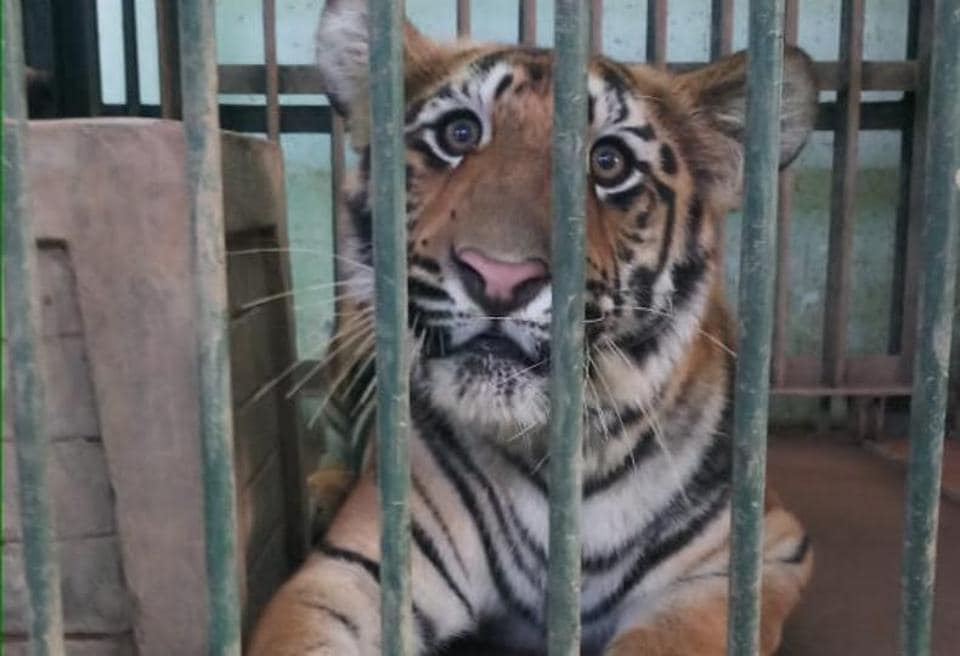
The cub left from Chandrapur on Friday and is expected to reach Mumbai by Sunday said, forest officers. The tigress is expected to help improve SGNP’s tiger breeding program.
According to NR Praveen, chief conservator of forest (Chandrapur), the cub was found abandoned near Chichpalli range on April 24 and was brought to the Chandrapur Transit Treatment Centre (TTC).
“The cub was quite weak and dehydrated when we found her. She had to be artificially-fed initially, and then after a few weeks, she began eating normally, he said.
Praveen further said, “We planned to reunite her with her mother but there were two adult tigresses in the same region where we had rescued the cub and were not sure which was her mother.”
The forest department carried out a DNA matching study to accurately identify which tigress the cub belonged to. The department claimed that it was the first such study in the country. Samples from the cub and the two adult tigresses (based on scat and hair samples) were sent to the Centre for Cellular and Molecular Biology, Hyderabad, and the department got a match.
“It took about two months for the results to come in, and the reunion was planned from June 18 to 20. The cub was placed in a small cage close to the location where she was rescued and the mother tigresses’ movement had been observed. Though there were calls from the cub and another tigress, unfortunately, the mother did not come for the cub, and the reunion failed,” said Praveen, adding, “It may be possible that since the cub was at the TTC for a long time, there may have been high human imprint (changes in behaviour in captivity) which may have deterred the mother from coming close to the cub or the mother was unable to locate the cub.”
The reunion attempt was called off in July.
Meanwhile, on July 27, a state-appointed committee, deciding on the possible rehabilitation of tigers and cubs post rescue or capture, recommended the cub be relocated to a rescue centre.
“Owing to the human imprint, the cub could not be released in the wild. SGNP showed interest and had already requested the department for two tigers for improving their breeding program. Thus, it was unanimously decided to shift the cub to SGNP by the department and committee,” said Nitin Kakodkar, principal chief conservator of forest (wildlife).
At present, SGNP is home to five Royal Bengal tigers, including four females and a male.
Sultan, who is four-and-a-half-years-old and the lone male tiger, was brought to SGNP from Gorewada Rescue Centre in Nagpur, last December. In August 2019, twin tigresses – Bijlee and Mastani, both nine-years-old, were brought to SGNP from Pench Tiger Reserve. Basanti, 20, and Laxmi,10, are the other two female tigers, who make up the population at SGNP.
“All four tigresses are dominant and keep clear of Sultan or don’t allow him to come close to them. Thus, translocation of the female cub was essential for the park and the future of the breeding program, and the tiger safari. We await the cub’s arrival,” said G Mallikarjuna, director and conservator of forest, SGNP.
Another male tiger RT1, aged about five to six years and said to have killed eight people, was captured near Sindhi village in Rajura forest at central Chanda, Chandrapur on October 27. While the tiger was relocated to Gorewada, there has been a request to transfer the tiger to SGNP as well. “We are yet to decide on this. Nothing is final yet,” said Kakodkar.
Gorewada International Zoo to be inaugurated in December
On Friday, officers from the Gorewada project, Nagpur, said a five-year-old male tiger Rajkumar was shifted from their rescue centre to a holding area at the Gorewada International Zoo. Over the next two days, another tigress, seven leopards (two male and five female), and six sloth bears (three male and three female) will be shifted to the zoo. “The zoo would be inaugurated closer to the end of December and opened to the public. We have built a total of 75 hectares (25 hectares each) for tiger, leopard and sloth bear safaris at the zoo,” said Pramod Panchbai, divisional manager, Gorewada Project, Nagpur.


