Public hospitals in Maharashtra are not disposing of hazardous medical wastes safely, according to the Comptroller and Auditor General (CAG) report released on Friday.
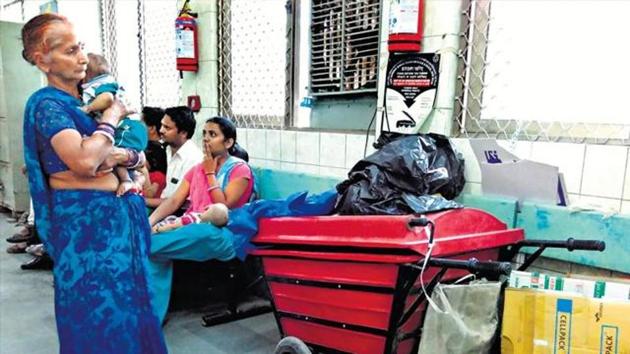
Bio-medical waste from hospitals, nursing homes, blood banks and veterinary institutions, include used syringes, bandages, amputated body parts and other human and animal bio-waste generated during medical treatment and research. They cannot be mixed with garbage taken to landfill sites. The waste is to be treated according to the guidelines under the Bio-Medical Waste (BMW) (Management and Handling) Rules, 1998 of the Environment Protection Act, 1986. If not disposed of in a safe manner, it could be a source of infection.
Maharashtra has 140 municipal health care establishments (HCE) with in-patient facility (where patients can be admitted). The Union environment ministry last year came up with stricter rules called the Bio-Medical Waste Management Rules, 2016.
The CAG, in its report, rapped the state environment department and state pollution board for inadequate enforcement of rules. Of the 22 establishments surveyed between 2011 and 2016, 20 were operating without authorisation from the Maharashtra Pollution Control Board (MPCB). “The delay [in getting the permission] is up to 1,492 days [little above four years],” the report read. “Only 8 establishments of the 22 maintained a record of bio-medical waste collection.”
Five facilities in Mumbai and Nashik did not segregate waste according to the rules, said the CAG. “Three establishments in Nashik used plastic bags instead of coloured translucent puncture proof containers. In two establishments, sharp waste (used to puncture skin, such as syringes) was mixed with incinerable waste. Common facilities disposed of unsegregated the waste in an unscientific manner,” the report read. “In three establishments, the waste was stored near a patient’s bed.”
{{/usCountry}}Five facilities in Mumbai and Nashik did not segregate waste according to the rules, said the CAG. “Three establishments in Nashik used plastic bags instead of coloured translucent puncture proof containers. In two establishments, sharp waste (used to puncture skin, such as syringes) was mixed with incinerable waste. Common facilities disposed of unsegregated the waste in an unscientific manner,” the report read. “In three establishments, the waste was stored near a patient’s bed.”
{{/usCountry}}According to the Central Pollution Control Board (CPCB), India generated 194-283gm of bio-medical waste from each bed daily between 2010 and 2014. In Maharashtra, the waste generation was in the range of 188-255gm. “Inspection of hospitals and common facilities by MPCB was inadequate. The committee advising the state government and MPCB on the implementation of BMW rules did not meet between 2011 and 2016,” read the conclusion of the report. “Enforcement needs to be strengthened to ensure effective implementation of BMW rules.”
The CAG report identified high pollution levels, almost eight times the safe limit. Chemical analysis of waste effluents, which showed levels of biological oxygen demand (BOD) -- the concentration of oxygen required for aquatic life – was at a maximum of 227 milligram per litre (mg/l), against the safe limit of 30mg/l. “Only two of 22 establishments carried out chemical analysis of waste effluents,” said the report.
Stay updated with all the Breaking News and Latest News from Mumbai. Click here for comprehensive coverage of top Cities including Bengaluru, Delhi, Hyderabad, and more across India along with Stay informed on the latest happenings in World News.
Stay updated with all the Breaking News and Latest News from Mumbai. Click here for comprehensive coverage of top Cities including Bengaluru, Delhi, Hyderabad, and more across India along with Stay informed on the latest happenings in World News.