President Donald Trump has signed two new executive actions on immigration, once again putting birthright citizenship at the center of the debate.
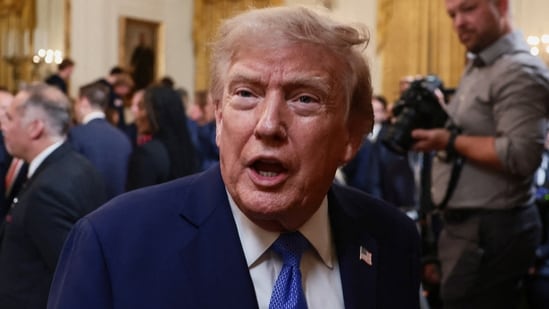
One order seeks to limit who can automatically become a U.S. citizen at birth, while the other targets what Trump called “birth tourism” by tightening visa checks for people suspected of travelling to the U.S. mainly to give birth.
The move comes weeks after the U.S. Supreme Court rejected Trump’s earlier attempt to restrict birthright citizenship.
For Indian NRIs and thousands of families on H-1B visas, the big question is whether these changes affect them. As of now, the answer is largely no.
Trump’s birthright citizenship order: What changed?
Trump signed two separate executive actions on August 6. The first tries to narrow the categories of people whose children can automatically receive U.S. citizenship at birth.
{{/usCountry}}Trump signed two separate executive actions on August 6. The first tries to narrow the categories of people whose children can automatically receive U.S. citizenship at birth.
{{/usCountry}}According to the order, the restrictions are aimed at people identified as foreign agents, members of foreign terrorist groups, alien enemies, or those accused of using fraud to obtain immigration status.
The second order focuses on “birth tourism.” Trump said visitor visa rules will become stricter so that people travelling to the U.S. mainly to give birth cannot use a child’s birth to secure American citizenship.
While announcing the orders, Trump said, “I think they’re constitutional.”
However, the legal position on birthright citizenship has not changed. In June 2026, the U.S. Supreme Court struck down Trump’s earlier executive order that attempted to end birthright citizenship for children born to many non-citizens.
The court reaffirmed that the 14th Amendment protects citizenship for people born in the United States, with only very limited exceptions.
Also Read:Restoring birthright citizenship in the US
What Trump’s actions mean for NRIs, H-1B holders?
For most Indian professionals working in the U.S. on H-1B, L-1, O-1 or F-1 OPT visas, these executive actions do not change birthright citizenship protections for children born in the United States.
H-1B visa holders are living and working in the country legally on authorised visas. They are not considered “birth tourists” travelling on short-term visitor visas to have a child in the U.S.
Because of the Supreme Court’s June ruling, a child born in the U.S. to parents on a valid H-1B visa continues to receive a U.S. birth certificate and remains eligible for U.S. citizenship under the Constitution.
Any attempt to change that through an executive order is expected to face legal challenges.
Could Indians with tourist visas face stricter checks?
The biggest impact may be on some visitor visa applicants rather than H-1B workers themselves.
Many Indian families invite parents or relatives to the U.S. on B1/B2 visitor visas during pregnancy or after a baby is born.
Under the new order, U.S. consular officers may examine tourist visa applications more closely if they believe the main purpose of the trip is to give birth in the United States.
Families travelling only to support relatives after childbirth may be asked additional questions or asked to provide documents explaining the purpose of their visit.
The new screening could also lead to longer processing times for some visitor visa applications and extra questioning at airports.
The American Civil Liberties Union (ACLU) said it believes Trump’s latest executive actions are unconstitutional and is expected to challenge them in federal court.
According to Reuters, immigrant rights groups argue that any restriction on birthright citizenship violates the protections guaranteed under the 14th Amendment. Until a court rules otherwise, birthright citizenship remains protected under the U.S. Constitution.