July 9 was a watershed day in Sri Lanka’s political history when tens of thousands of its citizens flooded Colombo, breached three iconic seats of political power, and pushed the president and prime minister (PM) to agree to resign from office. July 13, however, brought forth a more volatile mix of emotions – relief at the exit of Gotabaya Rajapaksa, who fled the island hours before he was to resign, anger at the fact that he is unlikely to be
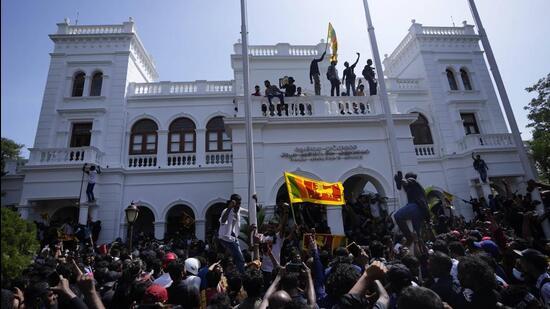
July 9 was a watershed day in Sri Lanka’s political history when tens of thousands of its citizens flooded Colombo, breached three iconic seats of political power, and pushed the president and prime minister (PM) to agree to resign from office. July 13, however, brought forth a more volatile mix of emotions – relief at the exit of Gotabaya Rajapaksa, who fled the island hours before he was to resign, anger at the fact that he is unlikely to be held accountable legally or democratically for the crisis and wariness at the possibility of unrest with PM Ranil Wickremasinghe appearing to cling onto power as acting president and a weak Opposition scrambling to respond.
The new reality precipitated by the months-long crisis has caused long queues for essential items, daily power outages, scarcity of fuel, gas and medicines, skyrocketing cost of living and deepening poverty and malnutrition. These , coupled with rampant corruption, authoritarian and military-style governance, arbitrary action by law-and-order authorities and mismanagement have brought Sri Lanka to the brink of collapse. The way out will be long, difficult and contingent on a steady political hand that will have to restore the trust of the people in a class of leaders whose inability to respond to the adversities afflicting the ordinary person has eroded the democratic compact in the country.
The extraordinary scenes that have played out this week were germinated by neighbourhood protests in March, demanding the resignation of the president, a change of government and an overhaul of the political system. Irate at the lack of engagement by the ruling classes, the protests spread to cover large cities, provincial towns and villages. This remarkable display of citizen mobilisation speaks to a reawakening of political activism and redefining of the relationship between the citizen and the State.
To understand the anger witnessed on the streets of Colombo, one must go back to the initial response of the president and government, who sought to brazen it out in the face of the unequivocal demand for change. Numerous tactics of intimidation, harassment and violence were used against the protesters. Twice the government declared a state of emergency and imposed curfew with the aim of scuttling planned agitations.
It is important to remember that the protests began in March as peaceful demonstrations, which jolted the government and sparked a raft of resignations of senior cabinet members and officials. But its nature changed on May 9, when supporters of then PM Mahinda Rajapaksa attacked several protest sites. Violence soon engulfed the country, pushing it further into turmoil. The political stalemate – compounded by Wickremasinghe’s appointment as PM on May 12 – further inflamed passions as protesters saw him as a representative of the old political elite, providing a lifeline to Rajapaksa. With the government’s failure in reversing the economic slide, long queues for fuel and gas even in major cities and a looming humanitarian crisis, it appeared that the patience of protesters ran out. The president and PM’s inability to heed the calls of the people and delaying a peaceful transition of power resulted in further instability. As Sri Lanka heads into an uncertain political future, demonstrators will have to call for peaceful protests, shorn of violence, and the administration must respond to concerns in a democratic and sensitive manner.
In many ways, this day was unthinkable even three years ago. Presidential candidate Gotabaya Rajapaksa was riding high on his image as a saviour and promised economic prosperity, security and stability. His family name was popular and the clan controlled major channels of governance. But his presidency showed that his brand of authoritarian and ethno-majoritarian politics thrived on creating fear and suspicion and further polarised communities, entrenched impunity and witnessed a spectacular backsliding of democracy in Sri Lanka. The political utility of the strongman image appears to be on its last legs, and future aspirants to the highest office in the country will likely tread carefully.
With resignations imminent, parliament has now set dates to elect a new president as per the constitutional provisions. This is the second time in Sri Lanka’s recent history when parliament is to exercise this power, but questions abound as to which party can garner a majority of votes. The ruling Sri Lanka Podujana Peramuna (SLPP) – which continues to have many Rajapaksa acolytes – has the largest chunk of seats in the 225-member House but is deeply unpopular. Despite being buoyed by the protests, the Opposition remains fragmented and unable to stitch together a cogent response to the upheaval in the country or provide responsible leadership. In such a context, there are genuine fears that political deals will be made to elect a president who may scuttle any hope of structural reforms and usher in a new political culture in Sri Lanka.
But the economic and political exigencies must not blind us to the importance of this moment. The protests have marked a reawakening of political activism that has pushed back on authoritarian governance, corruption and demanded systemic change in Sri Lanka. The citizen mobilisation and innovative modes of protests have injected new energy and ideas into longstanding debates, such as abolishing the executive presidency, and raised awareness around entrenched governance and social challenges. They have also, in turn, highlighted the lack of general awareness about multiple challenges faced by some sections of society. With the reawakening of activism opening up space for debate, it is critical that Sri Lankans tackle issues that have previously been considered inconvenient. Attention must be on structural and sectarian violence, inequalities and discrimination meted out to some groups, to explore how best to tackle issues of governance, rights and accountability. Only that will push the island towards a better and more secure future.
Bhavani Fonseka is a human rights lawyer based in Colombo. She is a researcher and attorney at law in the Centre for Policy Alternatives
The views expressed are personal
One Subscription.
Get 360° coverage—from daily headlines
to 100 year archives.
Archives
HT App & Website