I first came to India in 2003. Although I didn’t know much about him then, Narendra Modi had already been chief minister of Gujarat for two years. That thought struck me when I heard that he has now completed 25 years as the head of a government. This is a very long time in any democracy. In cricketing terms, it is a whole career and more. In Britain, six prime ministers have come and gone since Modi became Prime Minister (PM) of India in 2014. So, this sort of longevity in a vibrant democracy is extraordinary.
I have spent a big part of my adult life coming to India to play cricket and travel. I have met extraordinary people and made friends here. Despite being an outsider, I have watched India change from close quarters.
What strikes me most today is the confidence palpable everywhere in the country — a cheerful self-belief in its own destiny.
When I first came to India, there was a particular kind of diffidence, which almost felt like there was not enough realisation of its own potential. Today, there is a different feeling. Indians today think bigger and compete harder. They expect more from themselves and from their country.
I have seen this very clearly in sport.
Take Indian cricket, for example. When I first arrived in India, there were wonderful players and huge passion. But a lot of India’s success hinged on a small group of extremely talented superstars.
Today, the depth of Indian teams is extraordinary. A team sitting on the sidelines can beat the best in the world. Young players arrive with a belief that they belong at the highest level. The standards around fitness, preparation and professionalism have changed enormously.
{{/usCountry}}Today, the depth of Indian teams is extraordinary. A team sitting on the sidelines can beat the best in the world. Young players arrive with a belief that they belong at the highest level. The standards around fitness, preparation and professionalism have changed enormously.
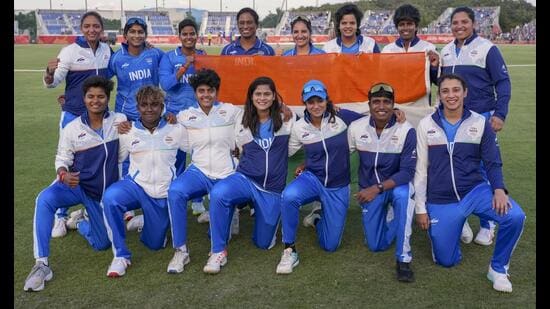
{{/usCountry}}While the men’s team has always been formidable, it is particularly gratifying to see how far women’s cricket in India has come. India is a cricketing powerhouse, so when women’s cricket grows and succeeds here, its impact is felt far beyond India. It raises the profile of women’s cricket around the world.
I have also watched Indian athletes across athletics, shooting, wrestling, boxing, badminton, hockey, tennis and other sports increasingly making a mark all over the world. Indian names appear on podiums and in finals in sports where they were much less familiar. This is another sign of how much India’s sporting landscape has broadened.
Such things don’t happen by accident. They need better facilities, better systems and a culture that encourages young people to believe that they can compete at the highest level. There is clearly a sporting culture taking shape in India and PM Modi’s own passion for sports has surely helped give it momentum.
Modi’s call for a Fit India has encouraged visible change around the country and played a role in raising awareness. Young Indians are running marathons, taking up new forms of fitness and challenging themselves in ways that would have seemed unusual a generation ago.
I was also fascinated to learn that the PM himself practises yoga. Yoga is a quintessential legacy of ancient India but also very modern. No wonder yoga has become globally popular and the UN marked June 21, upon PM Modi’s proposal, as the International Day of Yoga.
India has not only changed psychologically but also physically. The airports are different. The roads and metros are different. The hotels and standards are different.
Earlier, friends back in the UK used to ask me about India’s heat, crowds and the food. Now they talk about the Covid-19 vaccines India shipped, India’s start-ups, the Moon landing and, of course, digital payments. The way people use technology here is amazing.
India has also become much more comfortable thinking big. I think about Gujarat, in particular. It is home to the world’s largest cricket stadium and the world’s tallest statue. You don’t build things on that scale by thinking small. Whatever one thinks of PM Modi politically, there is clearly an instinct in him to think in terms of scale and possibility.
I have seen that same instinct in the way India talks about its place in the world. India wants to lead, compete, build, innovate and have its voice heard.
Nature is particularly close to my heart. I have spent time in Kaziranga and am passionate about rhino conservation. I have seen the work being done to protect India’s wildlife, and it is something that I admire enormously. The return of the cheetah caught the imagination of the whole country. I have also learnt about the conservation of the rare Asiatic lions of Gujarat.
When I met Modi, his enthusiasm for wildlife was obvious. We spoke passionately about the release of cheetahs and I could see how excited he was by it. He has also helped establish the International Big Cat Alliance, with India taking a leadership role in bringing countries together around the conservation of big cats.
That is something I find fascinating about India today — pursuing rapid economic and industrial growth while being deeply invested in protecting animals and preserving its natural heritage.
In 2022, after receiving a wonderful letter from PM Modi, I posted on social media that since stepping into India in 2003, I had grown more in love with the country on every visit. When I was asked what I liked most about India, my answer was easy: the people. The people are still the reason I keep coming back.
I can see ancient temples and traditions sitting comfortably alongside technology that is among the world’s most advanced. I can see young Indians looking towards the future while retaining a strong attachment to family, faith, festivals and nature. Surely, PM Modi’s own attitude of combining both tradition and modernity has played a part in this.
Twenty-five years is an extraordinary milestone. I want to congratulate Modi on this journey and wish him good health and many more years of service. I also want to wish India well as it enters what I believe will be an even more exciting chapter.
The India I see today is a country that knows where it wants to go and believes it can get there. This journey will be a wonderful thing to witness.
Kevin Pietersen is a former England cricket captain. The views expressed are personal