With fighter strength at roughly 29 squadrons against an authorised 42, the Indian Air Force (IAF) is operating with a margin that is becoming increasingly difficult to sustain. India continues to face the possibility of a two-front contingency involving China and Pakistan, and both are modernising their air forces. China’s rapid progress in stealth technology and reports of a potential Chinese fifth-generation aircraft being supplied to Pakistan point to a changing regional balance. India cannot afford to allow its numerical disadvantage to widen further.
The debate over air power often becomes a choice between quantity and quality. But India needs both. Advanced aircraft, precision weapons, sensors and networks provide qualitative advantages, but they cannot compensate indefinitely for insufficient numbers. Aircraft need maintenance, training and rotation. A force that is too small has limited surge capacity and reduced flexibility across multiple theatres.
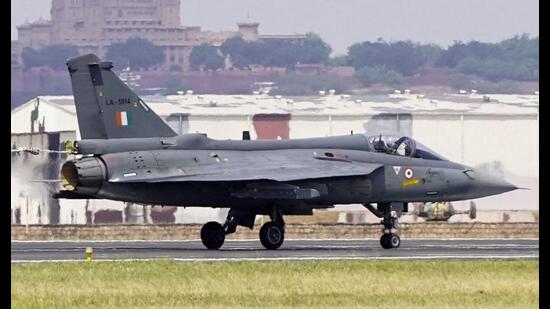
This is why the delays — involving GE F404 engines, radar and missile integration, and software certification — surrounding the Tejas Mk-1A are strategically important. The root problem is that engine supply, certification and HAL’s production capacity have each been managed as separate problems. Until one authority owns delivery timelines, the aircraft will keep arriving late. The IAF has several streams through which it can begin rebuilding squadron strength. The first is the Tejas Mk-1A. The immediate objective should be to enable HAL to reach production rates of 20 or more Tejas annually. The second is the proposed Multi-Role Fighter Aircraft (MRFA) programme, involving roughly 114 aircraft and potentially centred on the Rafale, with substantial production in India. Once established, this could provide another stream of around 12 aircraft annually. The additional Su-30 aircraft already envisaged would provide further reinforcement.
If these programmes proceed on schedule, India could approach the 35-40-aircraft-a-year induction rate. But that requires procurement, industrial production, engines, certification, and logistics to be treated as an integrated national-security problem. Also, the existing fleet must be kept combat-ready. Su-30s, Rafales, Mirage-2000s, Jaguars and Tejas Mk-1s need reliable spares, high serviceability, and rapid integration of indigenous weapons such as the Astra family. Numbers matter only when aircraft are available for operations.
{{/usCountry}}If these programmes proceed on schedule, India could approach the 35-40-aircraft-a-year induction rate. But that requires procurement, industrial production, engines, certification, and logistics to be treated as an integrated national-security problem. Also, the existing fleet must be kept combat-ready. Su-30s, Rafales, Mirage-2000s, Jaguars and Tejas Mk-1s need reliable spares, high serviceability, and rapid integration of indigenous weapons such as the Astra family. Numbers matter only when aircraft are available for operations.
{{/usCountry}}India’s long-term answer must remain the indigenous Advanced Medium Combat Aircraft (AMCA). If AMCA timelines slip substantially, India will eventually have to consider interim options, including the Russian Su-57 offer. This would involve difficult questions concerning cost, technology access, interoperability and industrial benefits. Nevertheless, the choice should be made on the basis of strategic necessity rather than institutional inertia.
Modern air warfare is increasingly about systems rather than individual platforms. Sensors, electronic warfare, missiles, communications, command-and-control networks, training and doctrine can be as important as the aircraft itself. India, therefore, needs an integrated combat system rather than a fixation on individual platforms.
Unmanned systems and loitering munitions will increasingly shape the battlefield, but must not become an excuse for accepting inadequate fighter numbers. The future battlefield will involve manned aircraft, unmanned systems, missiles, electronic warfare and air-defence networks operating together. The objective should be integration, not creating parallel structures that fragment command. Humans are likely to remain in the decision loop for the foreseeable future.
Indigenous weapons such as Astra, Akash and BrahMos need to be produced and integrated rapidly. AI should augment human decision-making. Integrated air and missile defence must keep pace with increasingly complex threats involving aircraft, cruise missiles, ballistic missiles and unmanned systems.
Self-reliance must mean the ability to produce engines, components, weapons and platforms in sufficient quantities and within strategically relevant timelines — the Tejas experience demonstrates the difficulty of achieving this. Self-reliance that delivers 16 aircraft a year when the IAF needs 40 is just a slogan.
India, therefore, needs both indigenous development and carefully structured international partnerships. The IAF’s priorities should be sequenced clearly. First, arrest the decline in fighter numbers. Accelerate Tejas Mk-1A production, move the MRFA into execution, induct additional Su-30s, and maintain the existing fleet. Second, protect qualitative capability. Third, push AMCA aggressively while establishing clear milestones and decision points. If delays become strategically unacceptable, India should consider interim fifth-generation options. Fourth, expand unmanned systems, AI, integrated air defence and network-centric warfare as force multipliers.
India must rebuild strength instead of managing scarcity, before the strategic environment leaves it with fewer choices.
Harsh V Pant is vice-president, ORF. The views expressed are personal